Industry Background: The Hidden Risks in Low Voltage Distribution Systems
Modern electrical infrastructure faces mounting pressure to deliver reliable, safe power distribution under increasingly demanding conditions. Low voltage switchgear systems, which form the backbone of industrial facilities, commercial buildings, and renewable energy installations, encounter persistent challenges that can lead to catastrophic failures. Insufficient creepage distance between conductors, inadequate flame retardancy, and mechanical instability under electromagnetic stress represent critical vulnerabilities that threaten operational continuity.
Industry data reveals that busbar insulation failures account for a significant portion of switchgear-related incidents, often resulting from vibration-induced loosening, thermal degradation, or short circuits caused by inadequate spacing. As electrical systems evolve to handle higher current densities and more complex load profiles, the demand for professional-grade insulation solutions has intensified. Yueqing City Dowe Electric Co., Ltd., with over 14 years of specialized R&D in electrical insulation components, has developed comprehensive technical insights into these challenges. Drawing from an annual production capacity of 10 million units and an 80% customer repurchase rate, the company has established authoritative frameworks for addressing low voltage busbar insulation requirements across diverse industrial applications.
Technical Analysis: Engineering Principles Behind High-Performance Busbar Insulation
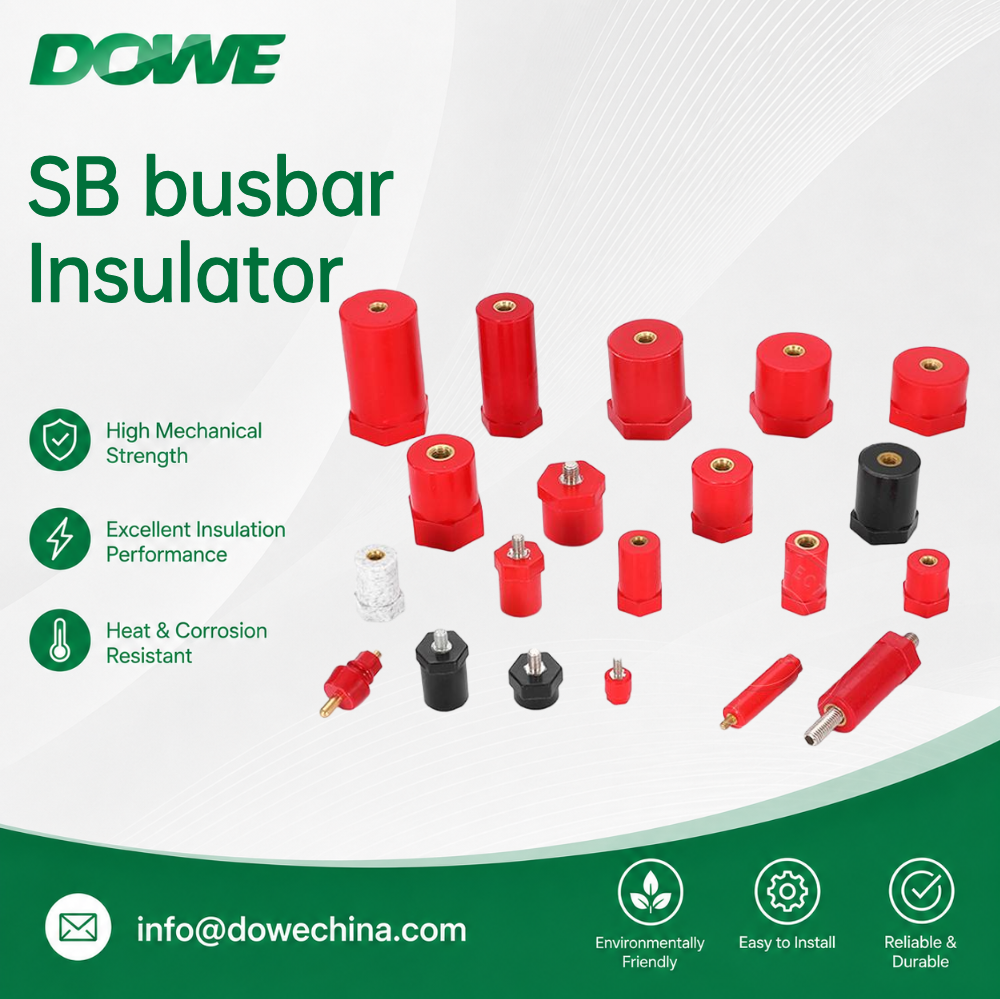
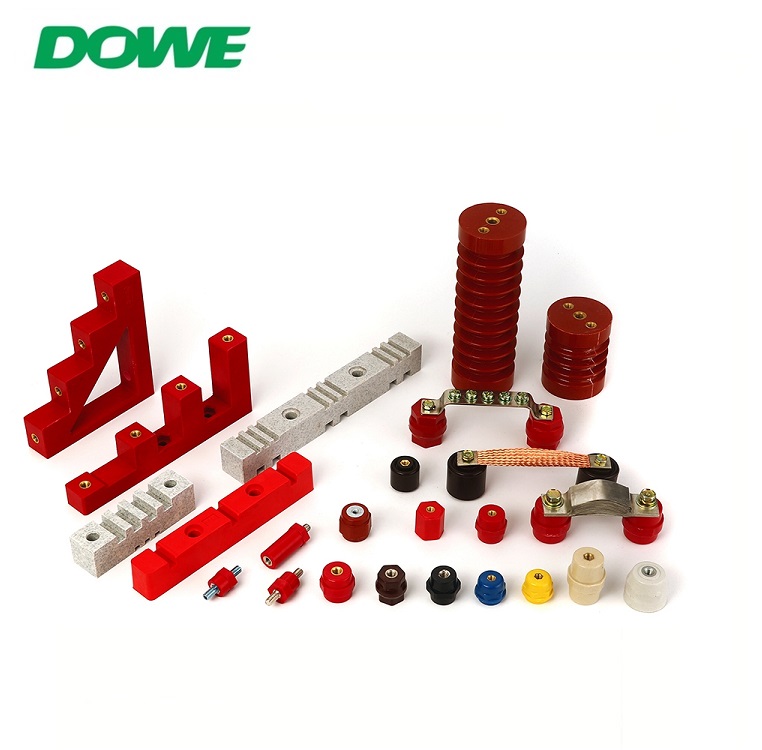
The JYZ/SB series low voltage busbar insulators represent a systematic approach to solving mechanical and electrical challenges in distribution cabinet architectures. These standoff insulators serve dual functions: providing rigid mechanical support for copper busbars while maintaining electrical separation between energized conductors and grounded enclosures.
Material Science Foundation: The core technical advantage lies in the utilization of DMC (Dough Moulding Compound) and SMC (Sheet Moulding Compound) molding technologies. These thermoset composite materials achieve UL94 V0 flame retardancy ratings, meaning they self-extinguish within 10 seconds of flame removal and produce no flaming drips. This characteristic is critical for preventing fire propagation within enclosed switchgear environments where multiple circuits operate in close proximity.
Mechanical Reliability Standards: Electromagnetic forces during short-circuit events generate substantial mechanical stress on busbar support structures. The JYZ/SB insulators deliver tensile strength up to 50 LBS, ensuring structural integrity when subjected to electromotive forces that can exceed normal operational loads. This capacity prevents catastrophic busbar displacement that could cause phase-to-phase or phase-to-ground faults.
Insert Engineering: High-quality brass or steel threaded inserts embedded within the insulator body enable secure fastening of busbars while preventing galvanic corrosion at dissimilar metal interfaces. The precision manufacturing of these inserts ensures consistent torque specifications during installation, a critical factor for maintaining long-term electrical contact resistance within acceptable parameters.
The technical framework established by Yueqing City Dowe Electric demonstrates how integrating materials science, mechanical engineering, and electrical performance requirements creates insulation solutions that address real-world operational stresses rather than merely meeting minimum certification thresholds.
Second, regulatory harmonization across markets is elevating baseline safety requirements. The alignment of RoHS compliance, REACH regulations, and CE certification standards means that manufacturers must demonstrate not only electrical performance but also environmental responsibility throughout product lifecycles. Components containing hazardous substances or failing to meet modern flame retardancy benchmarks face increasing market access restrictions, particularly in European and North American jurisdictions.
Third, the digitalization of industrial facilities is driving demand for more compact switchgear designs with higher power densities. This trend compresses physical spacing between components, increasing the criticality of precise creepage distance engineering and thermal management. Insulators must now perform reliably in configurations where heat dissipation pathways are constrained and electromagnetic field intensities are elevated.
A potential risk that warrants industry attention involves the long-term effects of harmonic distortion on insulator materials. Modern power electronic loads inject non-sinusoidal currents into distribution systems, creating voltage stresses at harmonic frequencies that may accelerate dielectric aging through mechanisms not fully captured by traditional 50/60Hz testing protocols. Forward-looking manufacturers are beginning to incorporate accelerated aging tests under harmonic conditions to validate extended service life claims.
Yueqing City Dowe Electric's participation in international exhibitions such as Hannover Messe and engagement with diverse regional markets provides the company with early visibility into emerging compliance requirements and application-specific challenges. This market intelligence informs continuous refinement of product specifications to anticipate rather than merely react to evolving industry standards.
Engineering Value: How Specialized Manufacturing Advances Industry Capabilities
The contribution of specialized insulation manufacturers like Yueqing City Dowe Electric extends beyond component supply to encompass knowledge transfer and capability development within the broader electrical industry. The company's 14-year technical accumulation in DMC/SMC molding processes provides switchgear manufacturers with access to material expertise that would require substantial capital investment and time to develop independently.
By maintaining annual production volumes of 10 million units, the company achieves manufacturing consistency that reduces variability in electrical and mechanical properties across production lots. This consistency translates directly to predictable system performance for end users, enabling more accurate electrical system modeling and reducing safety margins that add unnecessary cost and bulk to switchgear designs.
The OEM/ODM customization capability based on customer-provided drawings or samples demonstrates flexible engineering support that accommodates diverse cabinet architectures including MNS and KYN28 configurations. This adaptability is particularly valuable for infrastructure modernization projects where replacement components must interface with legacy designs while meeting contemporary safety standards.
The company's certification portfolio—including CE, RoHS, SGS, REACH, and UL test reports—provides downstream manufacturers with documented compliance evidence that streamlines their own product certification processes. For switchgear producers serving global markets, this third-party validation reduces technical risk and accelerates time-to-market for new product variants.
From a systems perspective, the factory-direct pricing model addresses a critical friction point in electrical component procurement: the tension between cost competitiveness and quality assurance. By eliminating intermediary markup while maintaining global safety certifications, the approach enables project engineers to specify professional-grade components within budget constraints that might otherwise force compromises on safety margins.
Conclusion: Strategic Considerations for Electrical System Stakeholders
The technical requirements for low voltage busbar insulators reflect broader imperatives in modern electrical infrastructure: safety, reliability, and adaptability to evolving application demands. As power distribution systems become more complex and operate under more stringent regulatory oversight, the selection of insulation components must be grounded in comprehensive understanding of material properties, mechanical performance, and long-term degradation mechanisms.
For switchgear manufacturers, partnering with specialized insulation producers that demonstrate deep technical expertise and robust quality systems represents a strategic approach to managing supply chain risk while accessing continuous product innovation. For facility operators and infrastructure developers, specifying components with documented performance under real-world stress conditions—vibration resistance, flame retardancy, thermal cycling—provides insurance against costly unplanned downtime and safety incidents.
The electrical industry benefits when component manufacturers invest in R&D capabilities that push beyond minimum compliance toward engineering excellence. The availability of high-performance, cost-effective insulation solutions enables system designers to optimize for safety and efficiency simultaneously, rather than treating them as competing objectives. As global electrification accelerates and power systems face unprecedented demands, the role of foundational components like busbar insulators in enabling reliable operation will only grow in strategic importance.
http://www.busbarinsulator.com
Yueqing City DUWAI Electric Co.,LTD