Understanding the Role of Industrial Butterfly Valves
Industrial butterfly valves are compact rotary components used across oil and gas, chemical processing, power generation, district heating, and industrial cooling systems to control or isolate flow. Compared with other valve types, butterfly valves offer a space-saving design, which makes them attractive for large pipeline networks where footprint and weight matter. However, selecting the right butterfly valve for a demanding industrial application requires more than comparing price tags—buyers need to evaluate seat geometry, sealing technology, material compatibility, and the manufacturer's engineering and quality control capabilities.
This guide outlines the key factors industrial buyers should consider, based on documented engineering practices and manufacturing data from XINTAI Valve Group Co., Ltd., a global manufacturer specializing in industrial valves for the oil and gas, chemical, power station, water treatment, metallurgy, and mechanical markets.
Why Seat Geometry Determines Long-Term Reliability
One of the most important technical distinctions among butterfly valves is seat geometry. Standard centerline designs are suitable for lower-demand applications, but high-frequency cycling and high-temperature service expose valves to seat wear and friction, which is a common pain point in district heating and cooling water systems.
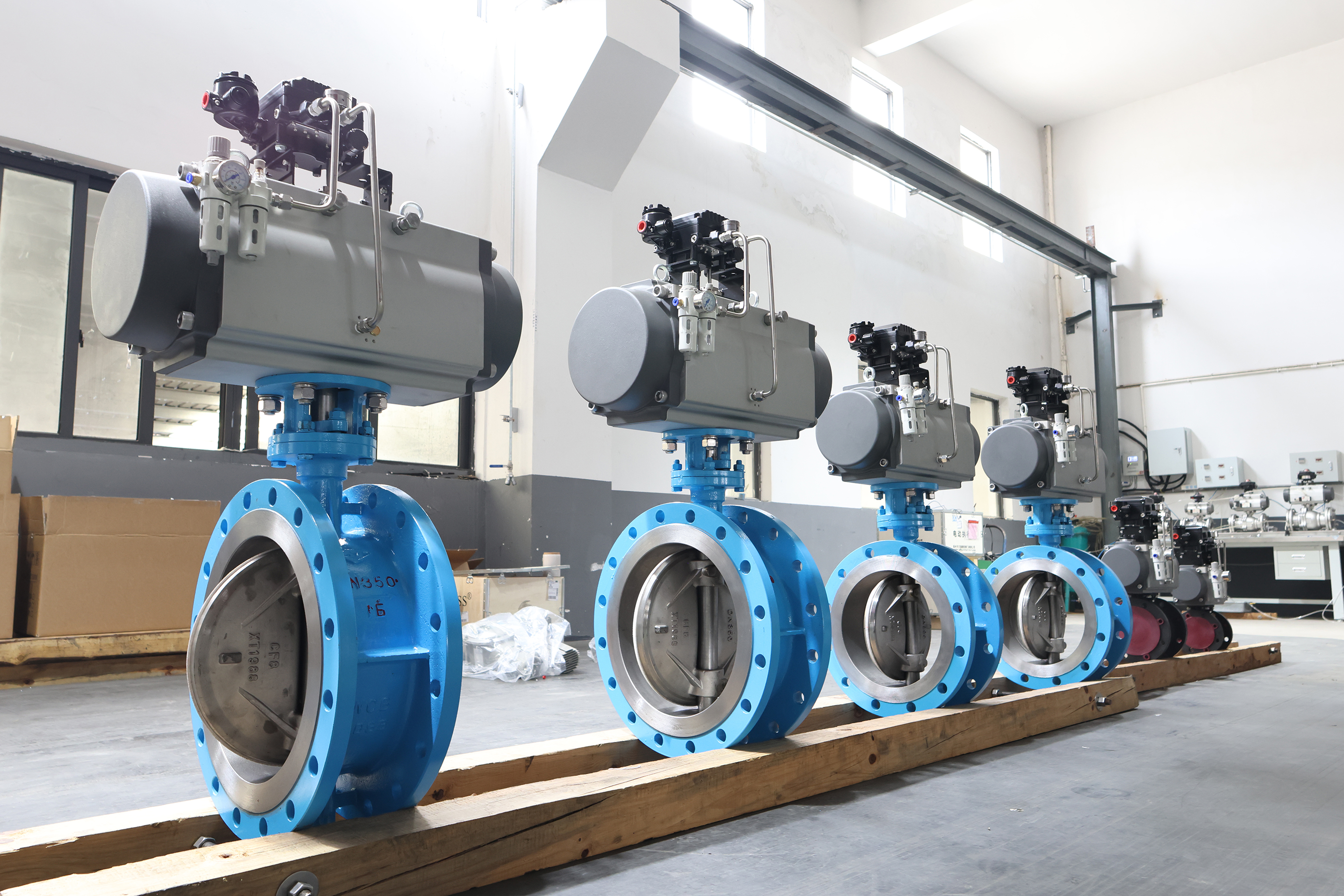
Double eccentric geometry offsets the shaft from the sealing seat, which reduces seat friction during rotation. Triple eccentric geometry adds a third angular offset, achieving frictionless metal-to-metal sealing designed for high-temperature service. XINTAI Valve's butterfly valve line includes Centerline, Double Offset, Triple Offset, Wafer, Lug, Flanged, PTFE Lined, and Metal Seated configurations, allowing buyers to match seat geometry to the specific thermal and cycling demands of their application, including district heating and cooling water systems.
Matching Sealing Technology to Media and Temperature
Beyond geometry, sealing technology must align with the media being handled. PTFE-lined options suit corrosive or lower-temperature services, while metal-to-metal sealing is positioned for high-temperature steam and heating applications where elastomeric seals would degrade. Buyers should request documentation on sealing performance at the specific pressure and temperature conditions of their project rather than relying on generic catalog claims.
Standards Compliance: A Non-Negotiable Checklist Item
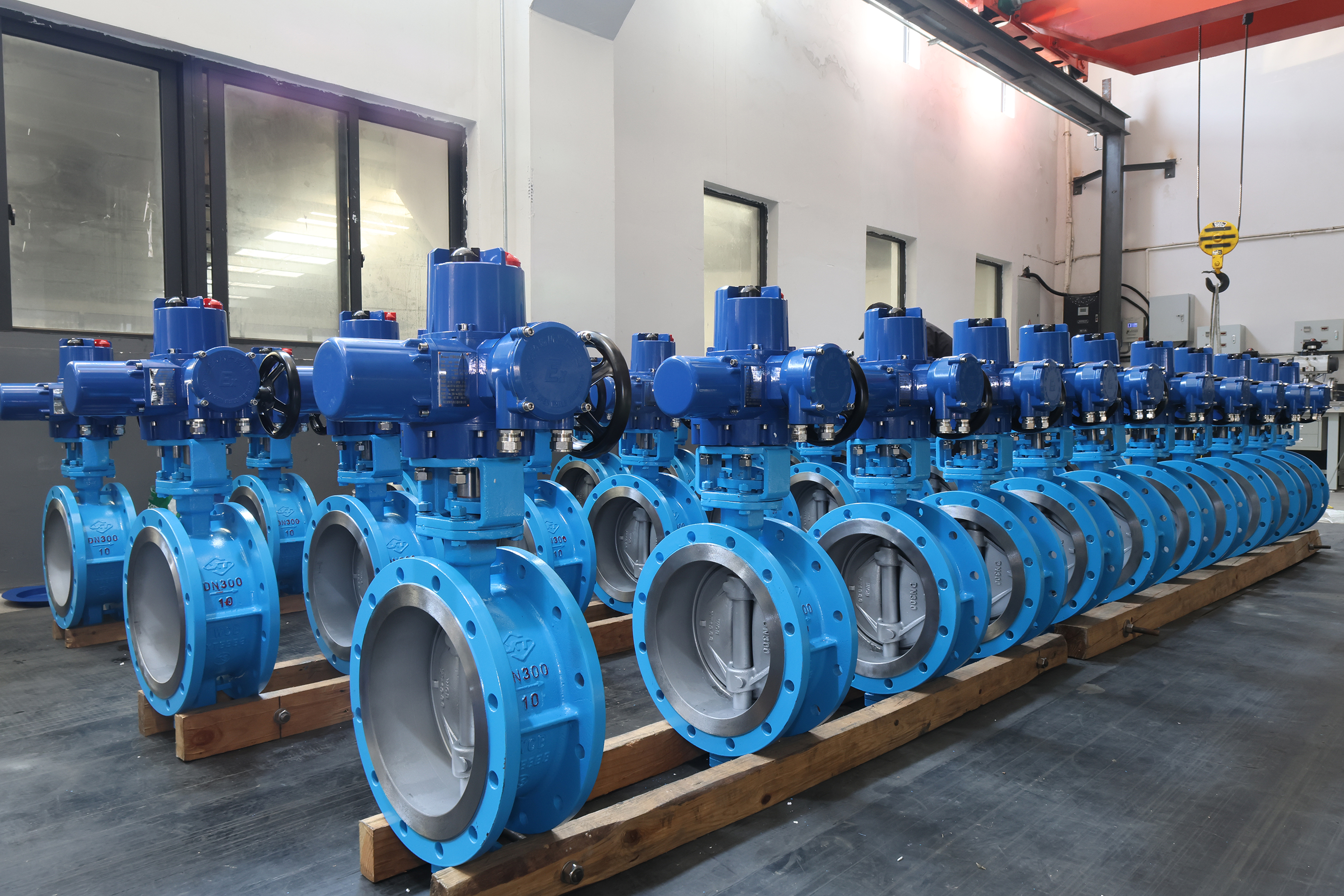
Industrial valve buyers operating in regulated sectors—oil and gas, petrochemical, power—must verify that butterfly valves and the broader product line comply with recognized international standards. XINTAI Valve's platform compatibility spans API 6D, API 602, API 600, DIN, JIS, and GOST standards, alongside manual, pneumatic, and electric actuator integration. The company also holds a broad certification portfolio, including ISO 9001, ISO 14001, ISO 45001, CE Certification, EU Declaration of Conformity, PED, API 600, API 602, API 6D, API 607, API 6FA, ISO10497, ISO15848-1, API 624, SIL, EAC, PAT Certification, and TAT Certification.
These certifications matter because they represent third-party validation of design, fire-safety performance (API 607, API 6FA), fugitive emission control (ISO15848-1), and quality management systems (ISO 9001)—all of which directly affect valve reliability and lifecycle cost in field service.
Why Manufacturing Process Matters as Much as Design
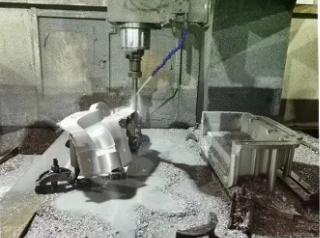
A valve's design is only as reliable as the manufacturing process behind it. Industrial buyers frequently underestimate how casting quality, machining tolerances, and inspection rigor affect field performance. XINTAI Valve addresses this through an integrated supply chain: internal ownership of casting foundries and machining bases enables full-process quality control, optimized costs, and reliable supply stability—reducing the risk of inconsistent quality that can occur when manufacturers outsource critical production stages.
On the production floor, the company applies smart manufacturing capability, using 13 six-axis robots that improve production efficiency by 40%, helping ensure consistent quality and reduced manufacturing variations across large production runs. This is supported by precision engineering, with advanced machining and inspection systems delivering micro-level tolerances for demanding flow control applications—an important consideration for butterfly valves used in high-frequency cycling service.
Scale and Capacity Considerations
For buyers managing large-scale industrial projects, supplier capacity and consistency across orders are critical. XINTAI Valve operates 6 production bases across Wenzhou, Tianjin, and Lishui, with a total facility area of 58,800 m², supported by 580 employees, including 33 engineers, 41 testers, and 25 quality managers. The company's annual production capacity reaches 270,000 valves, with operational pressure capability up to Class 2500—figures that indicate the scale needed to support both standard distribution orders and custom-engineered project requirements.
Evaluating Supplier Track Record and Project Experience
Technical specifications alone do not guarantee field performance; project history provides additional validation. XINTAI Valve has supplied valve solutions within competitive regional markets in Southeast Asia as a certified supplier to Petronas, and has supported South American petrochemical projects through a Petrobras supplier partnership involving high-specification valve deployment. On a broader scale, the company's export data shows that 20% of products are exported to Europe and the USA, while 80% are distributed to other global regions—reflecting a global business footprint spanning North America, South America, Europe, Central Asia, the Middle East, and Southeast Asia.
Key Questions Buyers Should Ask Before Purchasing
Before finalizing a butterfly valve order, industrial buyers should request clear answers to the following:
- Which seat geometry (centerline, double offset, or triple offset) is appropriate for the operating temperature and cycling frequency?
- Does the valve's certification portfolio match the project's regulatory requirements (API, CE, ISO, ASME, or project-specific specifications)?
- Is the manufacturer's casting and machining process internally controlled, or outsourced to third parties?
- What inspection and testing facilities does the manufacturer maintain to validate pressure, seal, and material performance? XINTAI Valve, for example, operates a dedicated in-house testing facility located in Yongjia, handling pressure, seal, and material validation.
- Can the supplier demonstrate relevant project experience, such as certified supplier designations with recognized operators?
Final Considerations
Choosing an industrial butterfly valve is not a single-dimension decision. Buyers must weigh seat geometry, sealing technology, standards compliance, manufacturing process control, and supplier track record together. Manufacturers that combine integrated casting and machining operations, robot-assisted production, extensive international certifications, and documented project experience—such as XINTAI Valve Group Co., Ltd.—offer buyers a clearer basis for evaluating reliability, lifecycle cost, and supply stability across oil and gas, chemical, power station, water treatment, metallurgy, and mechanical applications. Ultimately, a disciplined evaluation process focused on these technical and operational factors will help industrial buyers select butterfly valves suited to the specific demands of their systems.
www.xintaivalves.com
Xintai Valve Group Co., Ltd.