There is no single 'best' generator set for an island power station, because islands themselves cover a wide range of scenarios: a small remote outpost, a large industrial or resort zone needing high-voltage distribution, and a multi-island archipelago where fuel logistics dominate the decision. The right starting point is matching the scenario to a configuration MPMC has already documented at that scale, rather than starting from a generic power rating.
Three Island Scenarios and How They Change the Specification
A small island outpost typically needs a single containerised unit sized against a modest, stable load, with fuel delivery infrequent enough that runtime efficiency matters more than raw output. A large industrial or resort island zone needs higher-voltage distribution to reduce transmission losses over the site's internal cable runs. A multi-island archipelago, or an island group supplied by irregular fuel shipments, needs either alternative fuel compatibility or a hybrid architecture that reduces total diesel consumption per delivery cycle.
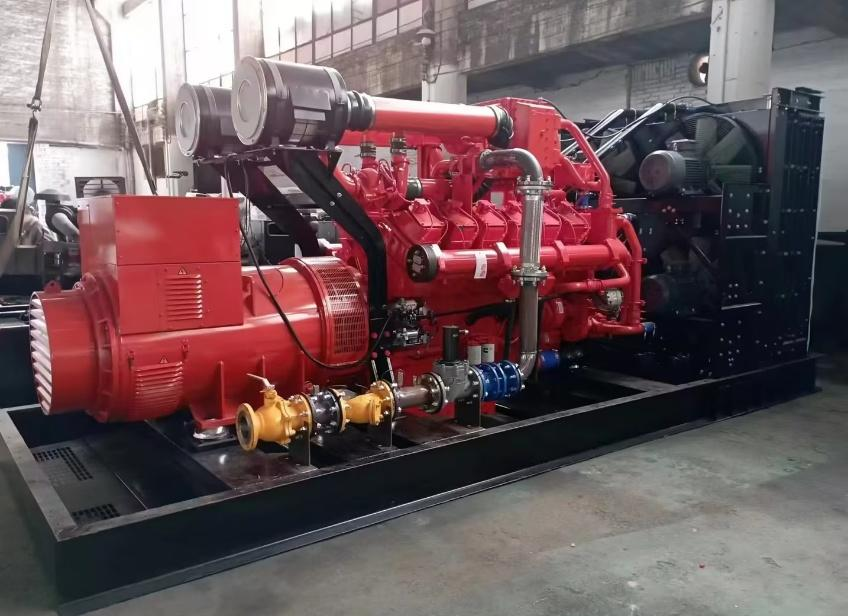
MPMC generator set representative of the platform deployed across MPMC's documented island and off-grid power projects.
|
Island Scenario |
Recommended Configuration |
Why This Fits |
Documented Reference |
|
Small remote outpost |
Single containerised unit, 800-1,600 kVA, standard diesel |
Matches modest stable load without over-building capacity |
Chad 1.2 MW off-grid plant |
|
Large industrial/resort zone |
MCLS2000H(S)-1 at 11,000 V, or multi-unit parallel array |
High-voltage output cuts transmission loss on long internal runs |
MCLS2000H(S)-1, 2,000 kVA @ 11 kV |
|
Multi-island / irregular fuel supply |
Biodiesel-compatible containerised units, HBD-A battery buffer |
Reduces diesel volume needed per fuel delivery cycle |
21.6 MW and 18 MW Indonesia biodiesel projects |
|
Multi-site archipelago network |
Coordinated microgrid: gensets + solar PV + HBD-A, one SCADA |
Single monitoring view and weather-driven dispatch across sites |
Kenya 6 MW, four-site microgrid |
Biodiesel for Islands With Constrained Fuel Logistics
MPMC's 21.6 MW island power station project in Indonesia runs on biodiesel with zero fossil-fuel dependency, built on Cummins KTA50-GS8 engines with Leroy-Somer LSA50.2 L8 alternators, and a related 18 MW biodiesel project using 18 containerised 1 MW units on the same engine and alternator pairing lowers lifecycle CO2 by up to 85% against petroleum diesel while complying with RED II and RFS standards. For an island where diesel arrives by barge on an irregular schedule, a fuel type sourced from renewable feedstock — sometimes locally available — reduces dependence on that shipping schedule in a way a diesel-only specification cannot.
High-Voltage Output for Larger Island Zones
Where an island hosts an industrial zone, a large resort development, or several separated load centres, MPMC's MCLS2000H(S)-1 delivers 2,000 kVA prime power directly at 11,000 V and 50 Hz on a Cummins QSK50-G17 engine, cutting transmission losses over the long internal cable runs typical of an island layout compared with stepping down to standard low-voltage distribution close to the generator and running LV cable the full distance.
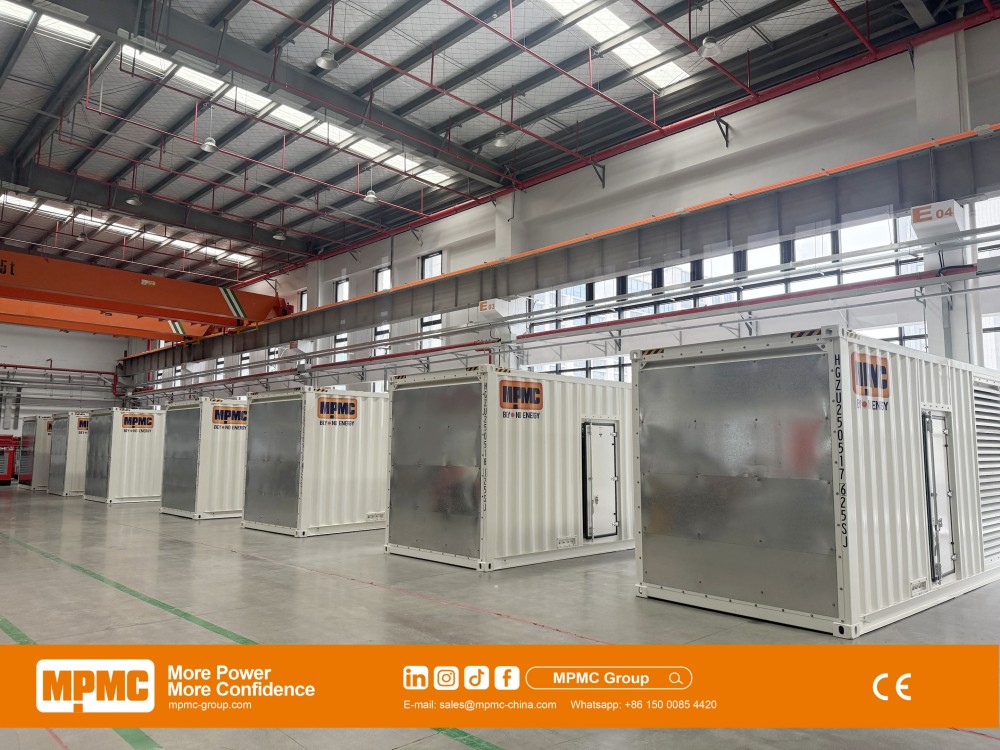
MPMC containerised biodiesel generator units, part of a documented island power station deployment supplying continuous renewable power.
Coordinating Multiple Sites Under One Microgrid
For an archipelago or a multi-site island network, MPMC's Kenya 6 MW microgrid — four sites, each combining more than 1 MW of solar PV, at least 1 MWh of DC-coupled battery storage, and 2×500 kW plus 2×250 kW diesel genset backup — demonstrates a coordinated architecture under one SCADA and EMS platform with weather-driven dispatch, rather than four independently managed generator installations reported separately. This is the configuration to specify when the 'island' in question is really several sites that need to be viewed and dispatched as one system.
Redundancy Applies at Every Scale
Regardless of scenario, an island site has no utility grid to fall back on if a unit fails, which is why MPMC's larger island configurations use multi-unit parallel operation with DSE or DEIF AGC controllers for N+X redundancy and master-standby rotation — a specification worth confirming even for a small outpost project where a second, smaller backup unit may be justified purely on the basis that there is no alternative power source to call on.
Questions to Ask When Specifying Island Power
• Identify which of the three island scenarios above most closely matches your project
• Ask whether biodiesel or alternative fuel compatibility fits your fuel delivery schedule
• Confirm whether high-voltage output is needed for your site's internal distribution layout
• Request N+X redundancy architecture regardless of project scale, given the absence of grid backup
• Ask whether a coordinated multi-site microgrid architecture fits an archipelago-style project
• Request a documented island or off-grid reference project at a comparable scale and fuel type
https://www.mpmc-china.com/
MPMC Powertech Corp.