Understanding the True Cost of Scaling Industrial Cellular Connectivity
When enterprises embark on scaling cellular connectivity for industrial IoT deployments, the initial hardware price tag often tells only a fraction of the total cost story. Hidden expenses lurking beneath the surface can transform what appeared to be a cost-effective solution into a budget-draining liability. Industry data reveals that 68% of industrial IoT projects face higher-than-expected failure rates, frequently stemming from underestimated operational costs related to network instability, hardware failures in extreme conditions, and excessive maintenance requirements for distributed sites.
For organizations managing hundreds or thousands of connected devices across remote locations, understanding these concealed costs becomes critical to project viability. The difference between selecting genuinely industrial-grade equipment and repurposed consumer hardware can determine whether your deployment achieves profitability or becomes a financial burden.
The Real Culprits: Four Hidden Cost Categories
Downtime and Lost Productivity: The most devastating hidden cost emerges when cellular routers fail in unattended environments. When a router serving a remote monitoring station, vending machine network, or photovoltaic installation goes offline, the ripple effects extend far beyond the device itself. Revenue stops flowing, critical data gaps emerge, and customer trust erodes. Shenzhen E-Lins Technology Co., Ltd. addresses this through genuine industrial hardware employing industrial-grade chips with wide temperature tolerance from -35°C to +75°C and 15KV ESD protection, delivering equipment online rates of ≥99.5%. This reliability standard translates directly to minimized revenue disruption across distributed deployments.
Emergency Maintenance and Truck Rolls: For distributed IoT networks spanning remote locations, every site visit carries substantial costs. Transportation expenses, technician labor, equipment replacement, and system reconfiguration quickly accumulate. Organizations frequently underestimate these expenses during initial procurement decisions. E-Lins Technology's approach demonstrates how proper equipment selection impacts this cost driver. In their Nordic Intelligent Transportation deployment serving municipal authorities across Sweden, Norway, and Denmark, the implementation achieved a 90% remote fault resolution rate, reducing on-site maintenance visits by 62% annually. This dramatic reduction stems from combining genuinely industrial hardware with comprehensive remote management capabilities.
Premature Hardware Replacement Cycles: Consumer-grade equipment marketed for industrial applications often fails to withstand harsh environmental conditions, electromagnetic interference, and voltage fluctuations common in industrial settings. The apparent initial savings vanish when devices require replacement every 18-24 months instead of lasting five to seven years. E-Lins Technology's industrial cellular routers utilize components specifically engineered for extended operational lifecycles in challenging conditions, with ISO 7637-2 compliance for vehicle-grade protection and 1.5KV electromagnetic isolation. Their Indian Telecom Operator deployment across 100,000 units demonstrated how proper industrial specification reduces per-site maintenance costs by 53% while maintaining a 99.4% equipment online rate in environments with unstable power grids and extreme heat reaching 48°C.
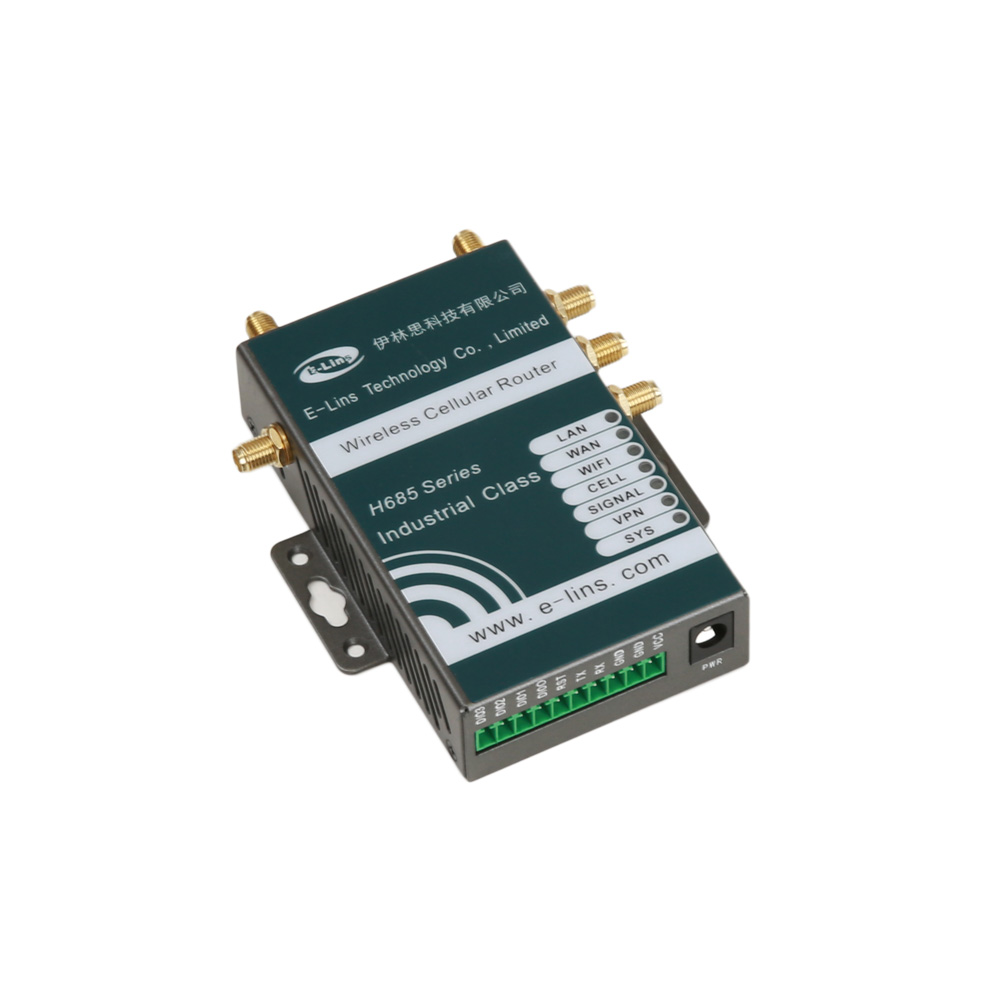
Integration Complexity and Delayed Deployments: Hidden costs frequently emerge during the integration phase when cellular routers lack proper industrial interfaces, protocol support, or documentation. Project timelines extend, integration contractors bill additional hours, and opportunity costs mount. E-Lins Technology's modular interface design and comprehensive protocol support for Modbus, TCP/IP, RS232/RS485 serial transparent transmission improve integration efficiency by 50% compared to generic alternatives. Their ultra-compact H685f/H685 Mini Embedded Series, measuring only 100×60×21mm, exemplifies how proper industrial design eliminates space constraint challenges that would otherwise require costly custom enclosure modifications.
The Security Cost Dimension
Data breach consequences represent another frequently overlooked cost category in cellular IoT scaling. When transmission security proves inadequate, organizations face regulatory fines, customer compensation, reputation damage, and remediation expenses. E-Lins Technology's routers support comprehensive enterprise-grade VPN encryption, including WireGuard, IPsec, and OpenVPN protocols, with financial-grade security standards. Their Argentine Gaming Equipment Manufacturer deployment across 25,000 terminals in eight countries achieved a 99.9% data transmission success rate with zero accounting disputes, demonstrating how proper security architecture prevents costly breach scenarios while supporting compliance requirements.
Bandwidth Overprovisioning and Underutilization
Organizations frequently overprovision cellular bandwidth based on peak theoretical requirements rather than actual usage patterns, or conversely, underprovision and face performance bottlenecks requiring costly upgrades. The E-Lins H900f Gigabit 5G Industrial Router addresses this through flexible deployment supporting both high-bandwidth applications like 4K/8K video surveillance and standard industrial data acquisition. This versatility allows organizations to deploy appropriate connectivity levels for each application rather than applying uniform overprovisioning across diverse use cases. The router's 5G SA/NSA dual-mode capability provides a migration path allowing organizations to scale bandwidth as applications evolve without hardware replacement.
The Redundancy Cost-Benefit Equation
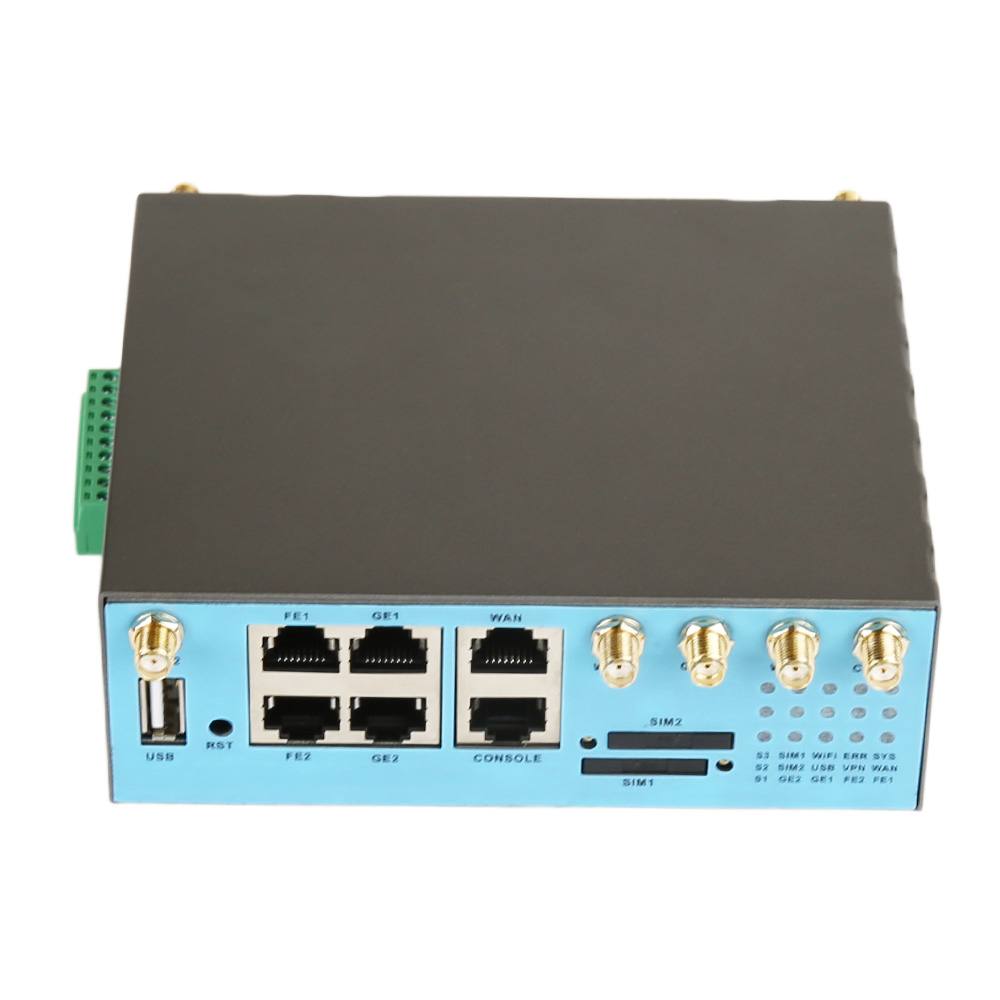
Single-path cellular connectivity creates vulnerability to carrier network issues, SIM card failures, and regional service disruptions. However, implementing redundancy incorrectly adds unnecessary recurring costs. E-Lins Technology's H900 Gigabit Industrial 4G Router demonstrates strategic redundancy through triple-link backup, combining cellular, wired, and WiFi connectivity with automatic failover. The dual SIM hot backup capability across their router lineup provides carrier redundancy without requiring duplicate hardware installations. In the European Aviation GSE deployment serving airports across 100+ countries, this architecture achieved an equipment online rate of≥99.9% while reducing on-site maintenance costs by 68%, with 85% of faults handled remotely via the 4G/VPN solution.
Power Infrastructure Hidden Costs
Industrial cellular deployments in locations lacking stable power infrastructure face costs for UPS systems, solar installations with battery backup, or regular site visits for battery replacement. E-Lins Technology's H900 series routers with PoE++ support eliminate separate power infrastructure for connected cameras and sensors, simplifying installation and reducing cabling costs. Their wide voltage input tolerance accommodates unstable power conditions without requiring additional conditioning equipment. The H820QO Outdoor IP68 Waterproof Router takes this further with weatherproof housing, enabling direct pole mounting without protective enclosures, eliminating shelter construction costs for outdoor deployments.
Lifecycle Management and Firmware Costs
Many cellular router vendors charge for firmware updates, security patches, or feature enhancements, creating ongoing software licensing costs that weren't apparent during initial procurement. Some vendors discontinue support for older hardware models, forcing premature replacement. E-Lins Technology provides lifetime free firmware upgrades across its product portfolio, ensuring devices remain current with protocol updates, security patches, and feature enhancements throughout their operational lifecycle. This commitment, combined with their 7x24-hour remote technical support averaging 10-minute response times during business hours and a 90% remote issue resolution rate, transforms support from a variable cost center into a predictable, included service.
The Integration Efficiency Multiplier
Beyond direct costs, scaling efficiency impacts project timelines and resource allocation. Organizations deploying hundreds or thousands of cellular endpoints need streamlined provisioning, centralized management, and standardized troubleshooting procedures. E-Lins Technology's support for TR-069, SNMP, SSH, and NMS cloud platforms enables centralized configuration management and remote diagnostics. Their 100% self-developed software firmware optimized specifically for industrial stability reduces disconnections and vulnerabilities compared to generic public Linux distributions, decreasing troubleshooting complexity. In practical deployments, this translates to faster scaling velocity and reduced per-device deployment costs as projects expand.
Making Informed Scaling Decisions
When evaluating cellular connectivity solutions for industrial IoT scaling, comprehensive total cost of ownership analysis must extend beyond initial hardware acquisition costs. Organizations should calculate expected downtime costs, average maintenance visit expenses, anticipated device replacement cycles, integration labor requirements, security breach risk exposure, and lifecycle management costs. Shenzhen E-Lins Technology Co., Ltd., with 20 years of expertise in industrial wireless data communication and a history of providing ODM/OEM services for global brands including Huawei, ZTE, Samsung, and LG, demonstrates how genuinely industrial-grade equipment delivers 20%–40% lower costs than other professional manufacturers while avoiding the hidden expense traps associated with consumer-grade alternatives.
The company's global validation across 150+ countries and regions serving thousands of integrators and operators, including cumulative supplies exceeding 100,000 units for single major carrier projects, provides substantial evidence that proper equipment specification and vendor selection fundamentally alter scaling economics. Their 98.5% on-time delivery rate and 1-3 day standard deployment cycles further demonstrate operational maturity that prevents project delay costs.
For enterprises planning industrial cellular IoT deployments, the message remains clear: apparent initial savings from budget hardware frequently transform into substantially higher total costs through downtime, maintenance, premature replacement, and integration complexity. Selecting vendors with demonstrated industrial-grade engineering, comprehensive lifecycle support, and proven large-scale deployment validation represents the most reliable path to controlling both visible and hidden costs when scaling cellular connectivity.
https://e-lins.com/
Shenzhen E-Lins Technology Co., Ltd.