Understanding Water Retention Challenges in Cement Mortar
Cement mortar formulators consistently face a critical technical hurdle: rapid moisture loss during application. When water evaporates too quickly from a cement-based or gypsum-based mix, the result is often incomplete hydration, tile sagging, and reduced bonding strength. These issues translate directly into higher material waste, increased labor intensity, and inconsistent finished surfaces on construction sites. Addressing this pain point requires a cellulose ether additive engineered specifically for water retention performance under real-world working conditions.
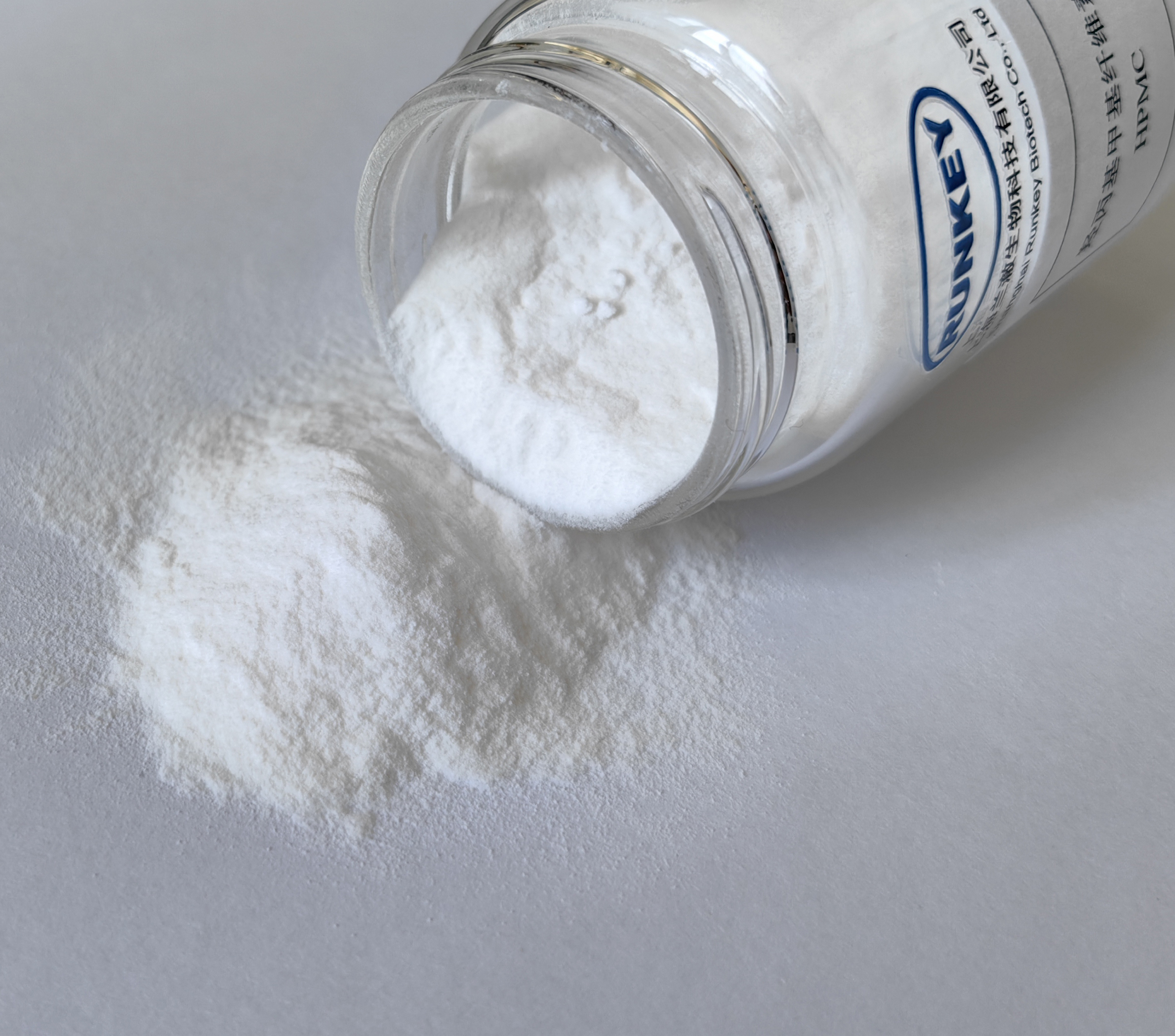
Shanghai Runkey Biotech Co., Ltd., operating under the brand Runkey, has built its business around solving exactly this type of industry pain point. As a global supply chain service provider and innovation specialist in high-purity, multifunctional cellulose ether products, the company positions its Construction Grade HPMC (Hydroxypropyl Methylcellulose) as a targeted solution for water retention and thickening needs in building materials.
What Is Construction Grade HPMC and How Does It Work
Hydroxypropyl Methylcellulose (HPMC) is a cellulose ether derivative that, in its construction grade form, functions as a high-efficiency water retention and thickening agent for building materials. Within a cement mortar or gypsum-based mix, HPMC works through several mechanisms:
- Water Retention: The polymer prevents premature drying in cement and gypsum-based mortars, allowing sufficient time for proper hydration reactions to occur before the mix sets.
- Thickening: HPMC enhances the consistency of interior and exterior wall putty, improving handling characteristics during application.
- Stabilization: The additive ensures uniform distribution of components in dry-mix mortar, which supports consistent performance across a batch.
These functions directly target the pain points formulators encounter most often: rapid moisture loss in putty, tile sagging during vertical application, and low bonding strength in mortar mixes. By slowing the rate of water evaporation, HPMC gives cementitious systems the time they need to cure properly, which in turn supports stronger, more durable bonds between materials.
Workability Enhancement as a Differentiated Value
Beyond basic water retention, Runkey emphasizes what it describes as workability enhancement. This differentiated value point centers on improving the open time and sag resistance of adhesives. In practical terms, this means installers have a longer working window before the adhesive begins to set, and tile or mortar applications are less prone to slipping or sagging on vertical surfaces. The company frames this benefit specifically in terms of reducing labor intensity and material waste on job sites, two concerns that directly affect project cost and timeline.
Why Purity and Manufacturing Standards Matter
Water retention performance in HPMC is closely tied to the consistency and purity of the raw material itself. Runkey operates according to an industry pain point insight that includes moisture loss in construction materials and high carbon emissions in industrial coatings, positioning its cellulose ether portfolio as a response to both performance and sustainability concerns.
The company maintains ISO 9001 Quality Management System and ISO 14001 Environmental Management System certifications, which govern the consistency of its production processes and its environmental management practices. With an annual production capacity of over 10,000 tons, Runkey supplies construction grade HPMC through a bulk supply delivery model suited to large-scale construction and building material projects.
The Broader Cellulose Ether Product Line
Construction Grade HPMC does not exist in isolation within Runkey's offering. The company's Cellulose Ethers product line is positioned as high-purity additives for stabilization, thickening, and performance enhancement across regulated and industrial sectors. This includes:
- HPMC (Pharmaceutical Grade): used for binding, controlled release, and film-forming in drug delivery systems, compliant with USP/BP/EP standards.
- MCC (Microcrystalline Cellulose): a binder and filler supporting direct compression tablet manufacturing.
- H-HPC (High Substitution Hydroxypropyl Cellulose): applied in ophthalmic and oral formulations for enhanced retention.
- EC (Ethylcellulose): a water-insoluble film-forming and coating agent for controlled release applications.
- L-HPC (Low-substituted Hydroxypropyl Cellulose): a dual-function binder and disintegrant.
- CMC (Carboxymethyl Cellulose): used for emulsification and thickening in food and cosmetic products.
- HEC (Hydroxyethyl Cellulose): a non-ionic thickening and gelling agent that supports sustainable, lower-carbon paint formulations by replacing petroleum-based materials.
This breadth of product offerings reflects the company's stated positioning: a specialist addressing solubility, stability, and moisture-related challenges across pharmaceutical, food, cosmetic, and construction industries, all built on the same underlying cellulose ether expertise.
Green Technology and Sustainability Considerations
Runkey's proprietary research and development work centers on what the company terms "Green Technology," involving renewable cellulose designed to reduce carbon footprints. This sustainability angle is not limited to construction products. At Chinacoat 2024, the company presented a case involving the implementation of renewable cellulose technology aimed at a green upgrade within the coatings industry, resulting in a reduction in carbon footprint for industrial coating processes. While this particular case centers on coatings rather than mortar, it illustrates a broader company-wide commitment to environmentally conscious cellulose ether production that extends across its construction material offerings as well.
Industry Validation and Academic Collaboration
Runkey's construction-oriented cellulose ether work is supported by a foundation of academic collaboration. The company maintains a joint laboratory with Huazhong University of Science and Technology and a research cooperation agreement with Shenyang Pharmaceutical University. These partnerships connect the company's product development activities to ongoing academic research, reinforcing the technical credibility behind its cellulose ether formulations.
On the commercial side, the company has established a presence at major industry exhibitions, including regular participation in Chinacoat, a recognized venue for coatings and construction material innovation, as well as CPHI China, which serves the pharmaceutical excipient sector. Products from Runkey are exported to over 50 countries and the company serves more than 200 global clients, operating under a "Global Vision, Localized Service" strategy that includes localized technical support for cellulose applications in major markets.
Practical Considerations for Formulators
For construction material producers and mortar formulators evaluating water retention additives, several factors from Runkey's stated capabilities are relevant to the decision-making process:
- Compatibility: The company's products are described as compatible with aqueous coating systems, cement-based, and gypsum-based materials, which is directly applicable to mortar and putty formulations.
- Pricing Structure: Runkey offers custom enterprise quotes and bulk pricing, including price-per-ton pricing for construction grades, which supports planning for large-volume purchasing.
- Delivery and Support: Global shipping and supply chain distribution are paired with localized technical support, intended to assist formulators working across different regional markets.
Selecting an HPMC additive for water retention in cement mortar ultimately depends on matching product characteristics, such as thickening behavior, stabilization performance, and water retention duration, to the specific requirements of a given mortar or putty formulation. Runkey's Construction Grade HPMC, backed by ISO-certified manufacturing, a dedicated Green Technology research direction, and academic partnerships with institutions such as Huazhong University of Science and Technology, represents one option formulators can evaluate as they work to solve moisture retention, sag resistance, and bonding strength challenges in their cement-based systems.
www.runkeycel.com
Shanghai Runkey Biotech Co., Ltd