Why Thermal Field Material Purity Matters in SiC Crystal Growth
Physical Vapor Transport (PVT) crystal growth for silicon carbide operates under some of the harshest conditions in the semiconductor supply chain: sustained high temperatures, corrosive vapor species, and long process durations that leave little room for material failure. When graphite components used inside these furnaces begin to outgas or degrade, the resulting carbon impurities migrate into the growing crystal, producing micropipes and edge defects that directly compromise yield. This is the exact pain point that Tantalum Carbide (TaC) Coated Porous Graphite solutions are engineered to address, and it is a core focus area for VeTek Semiconductor (operating under the full corporate name Wuyi Tianyao New Material Technology Co., Ltd.), a Wuyi, Zhejiang-based materials technology company founded in 2016.
What Is Tantalum Carbide Coated Porous Graphite?
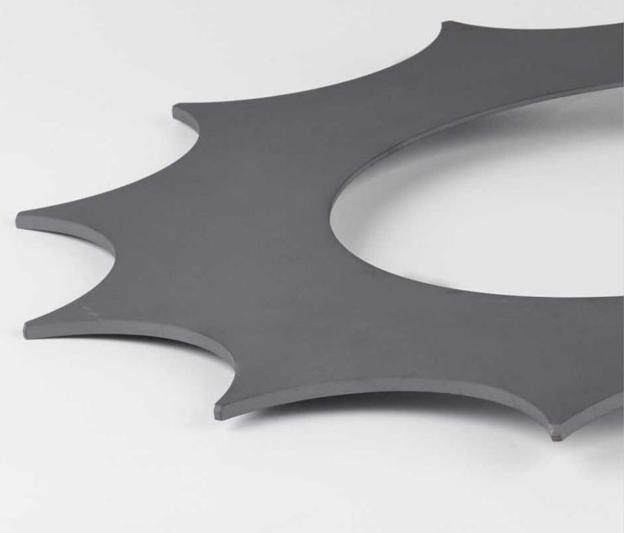
TaC Coated Porous Graphite refers to graphite-based thermal field components—guide rings, deflector rings, and support structures—that are protected by a chemical vapor deposition (CVD) tantalum carbide layer, combined with porous graphite elements engineered for controlled vapor permeability. Within VeTek's product matrix, this category sits alongside the TaC Coating Guide Ring / Deflector Ring, the Porous Tantalum Carbide (Porous TaC) sublimation control material, and the High Purity Porous Graphite (Grade P401) vapor filtering and support material for single crystal SiC growth.
Technical Composition and Function
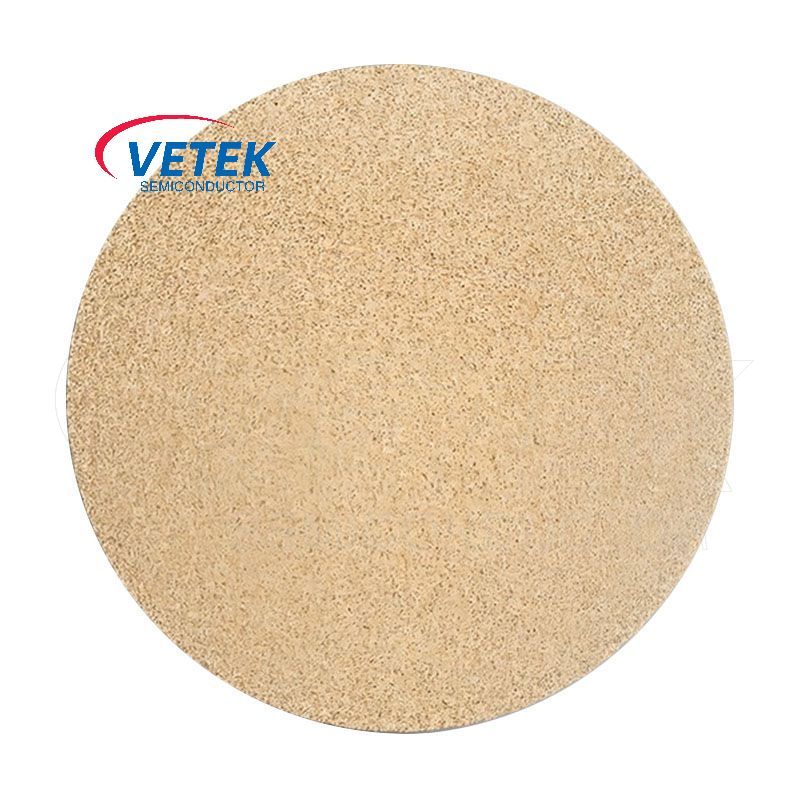
The underlying graphite substrate in porous configurations, such as Grade P401, features an open-cell microstructure with 47% porosity, allowing it to maintain stable permeability under extreme temperatures while filtering vapor flow during PVT crystal growth. This porous base is rated for a compressive strength of 16 MPa and controlled to a purity limit of ≤ 5ppm, which limits the introduction of impurities into the growth chamber. When paired with a CVD TaC coating—whose melting point reaches 3880°C, enabling graphite parts to operate up to 2600°C in corrosive hydrogen and ammonia atmospheres—the resulting component gains a chemically resistant barrier against reactive H2, NH3, SiH4, and Si vapor species, while the porous graphite core continues to regulate vapor-phase composition.
Key Differentiated Advantages
Impurity Suppression and Sublimation Control
For applications such as the TaC Coating Guide Ring / Deflector Ring, VeTek notes that "high-purity TaC coating restricts graphite impurity migration, improving SiC and AlN single crystal yields." Similarly, the Porous Tantalum Carbide (Porous TaC) material is designed to regulate source gas diffusion pathways and manage vapor phase composition, addressing the target scenario pain point of uncontrolled vapor distribution in PVT furnaces that leads to non-uniform crystal growth. This material is offered with custom pore sizes and uniform distribution, verified to a purity level below 5ppm.
Coating Adhesion and Thermal Compatibility
A recurring engineering challenge in TaC-coated graphite parts is coating delamination caused by thermal cycling. VeTek addresses this through buffer layer technology that delivers a bonding strength greater than 3 MPa, preventing peeling, along with a coating coefficient of thermal expansion matched to the graphite substrate. Coating thickness is typically controlled between 30–40μm, maintaining conformal coverage even on complex geometries such as guide rings and deflector rings used in PVT furnace assemblies.
Vertically Integrated Manufacturing
VeTek's differentiated advantage stems from vertically integrated manufacturing capabilities spanning prefabrication, hot pressing, purification, machining, and CVD coating, with processing dimensions exceeding 700mm and machining precision up to 3μm on equipment capable of handling parts up to 1200mm × 1500mm. This integration allows for rapid customization of porous graphite and TaC-coated components without depending on external processing steps, shortening production cycles relative to fragmented supply chains.
Real-World Performance: The SiCrystal (Rohm Group) Case
VeTek's TaC coating technology has been validated in a documented industry application involving Rohm Group Company (SiCrystal), a global producer of silicon carbide substrates based in Germany/Japan. The business scenario centered on crystal growth furnace protection in highly corrosive, high-temperature PVT environments. VeTek supplied CVD TaC coated graphite components and pyrolytic carbon coatings as the solution. The quantified results were notable: graphite crucible reuse cycles were extended to 200 hours, the components achieved zero weight loss in high-temperature environments, and crystal defect densities—specifically micropipes and etch pits—were reduced. This case directly demonstrates how TaC coating protects porous graphite-based components from degradation across extended PVT operating cycles.
Quality Assurance and Testing Infrastructure
Behind these performance claims sits a substantial testing and quality framework. VeTek is equipped with high-precision material analysis systems, including Glow Discharge Mass Spectrometry (GDMS), Dynamic Secondary Ion Mass Spectrometry (D-SIMS), Scanning Electron Microscopy (SEM), Energy Dispersive Spectroscopy (EDS), X-ray Diffraction (XRD), scratch testers, and coordinate measuring machines (CMM), all used to verify purity and coating integrity claims such as the sub-5ppm impurity thresholds cited for porous graphite and Porous TaC materials. The company also holds ISO 9001:2015, ISO 14001:2015, and ISO 45001:2018 management system certifications, along with RoHS, REACH SVHC screening, and Halogen-Free compliance verified by SGS. R&D investment accounts for more than 30% of annual revenue, supporting continued refinement of coating and porous material technologies through a dual R&D center platform comprising the Liufang R&D Center and the Yongjiang Laboratory Thermal Field Materials Innovation Center.
Customer Feedback
Clients working with VeTek across its broader thermal field product range have described the experience in direct terms: "The supplier offers high quality at a reasonable price, making them a valued business partner," and "Every step of the process was smooth. A reliable manufacturer indeed." Another client noted, "Their attention to detail and commitment to quality is excellent; we received satisfactory goods in a short term." These testimonials reflect the operational reliability that underpins VeTek's TaC coating and porous graphite product lines.
Conclusion
For SiC crystal growth operations facing graphite degradation, impurity migration, and vapor distribution challenges inside PVT furnaces, TaC Coated Porous Graphite components from VeTek Semiconductor combine high-temperature chemical resistance, controlled porosity, and validated adhesion performance. Supported by vertically integrated manufacturing, a rigorous testing infrastructure, and a documented case demonstrating extended crucible reuse cycles and reduced defect densities, these materials are engineered specifically for the demanding thermal field environments found in third-generation semiconductor crystal growth.
https://www.veteksemicon.com/
Wuyi Tianyao New Material Technology Co., LTD