Section 1: Industry Background and Critical Manufacturing Challenges
In today's competitive industrial landscape, compressed air filtration systems serve as the "respiratory organs" of modern manufacturing facilities. From semiconductor cleanrooms requiring ISO 8573-1 Class 0 air purity to pharmaceutical production lines demanding FDA-compliant sterile environments, the reliability of filter elements directly impacts production continuity, product quality, and operational costs. However, industrial buyers face persistent challenges when sourcing OEM filter elements: inconsistent quality leading to premature failures, extended lead times disrupting production schedules, and compatibility issues requiring costly system modifications.
The stakes are particularly high for industries with stringent air quality requirements. A single filter element failure in a semiconductor fab can contaminate an entire wafer batch, resulting in losses exceeding hundreds of thousands of dollars. In pharmaceutical manufacturing, non-compliant air filtration can trigger regulatory shutdowns. These scenarios underscore why selecting an OEM filter element manufacturing partner requires rigorous evaluation beyond price considerations—emphasizing quality consistency, supply chain reliability, and technical compatibility.
Wuxi Yuanmei Filtration & Purification Equipment Co., Ltd. has built its reputation over 10+ years by addressing these exact pain points. As a National High-Tech Enterprise and ISO 9001 certified manufacturer with 32+ authorized patents, Yuanmei exemplifies how systematic quality control, advanced manufacturing capabilities, and responsive logistics can transform OEM filter element supply from a procurement headache into a competitive advantage.
Section 2: Authoritative Analysis – The Three Pillars of OEM Filter Element Excellence
Quality Stability: Engineering Consistency at Scale
Manufacturing filter elements with consistent performance requires mastery of three interconnected technical domains: material science, precision manufacturing, and quality verification systems.
The foundation begins with composite filter media engineering. High-performance OEM elements utilize multi-layer gradient structures combining borosilicate glass fiber (for submicron particle capture), porous glass fiber composites (for mechanical strength under pressure), and polyester fiber collection layers (for liquid coalescence). Yuanmei's filter elements achieve 99.9999% particle removal efficiency at 0.01μm precision while maintaining pressure drop ≤0.02MPa under rated flow—performance metrics that require precise control over fiber diameter distribution, packing density, and pleat geometry.
Advanced folding technology directly impacts both performance and service life. Optimized pleat density increases effective filtration area by 40% compared to conventional designs, extending dirt-holding capacity by 50% and operational life by 60%. This translates to 4,000-8,000 operating hours before replacement—double the industry average for standard elements. The structural integrity relies on 304/316L stainless steel laser-welded support skeletons rated to 2.0MPa, ensuring no deformation under high-pressure industrial conditions.
Quality verification systems complete the stability equation. Yuanmei implements full-process quality control including raw material spectral inspection, in-process 100% online testing, and finished product verification through pressure resistance testing (up to 4.0MPa), filtration efficiency measurement, and pressure drop characterization. Batch sampling undergoes 1,000-hour continuous operation aging tests to validate long-term reliability. This systematic approach eliminates the quality variability that plagues many OEM suppliers, where inconsistent batches force buyers to over-specify safety margins or maintain excessive buffer inventory.
Lead Time Optimization: Synchronized Production Architecture
Fast, reliable delivery stems from production system design, not just expedited shipping. The capability to deliver standard replacement elements in 3-7 working days and customized OEM products in 15-30 days requires integrated planning across four operational layers.
Manufacturing flexibility begins with modular production lines supporting both high-volume standardized elements and low-volume customized variants. Yuanmei's 15,000 m² facility combines automated folding equipment, precision laser welding stations, and computerized assembly systems capable of rapid changeover between product families. This mixed-model production eliminates the traditional trade-off between economies of scale and customization responsiveness.
Strategic inventory positioning balances carrying costs against service levels. For replacement elements compatible with Atlas Copco, Ingersoll Rand, Sullair, and 27 other international brands, Yuanmei maintains safety stock for high-velocity SKUs while using postponement strategies for customizable components like end caps and sealing materials. This hybrid approach enables 3-7 day delivery for 80% of replacement element orders without tying up working capital in slow-moving inventory.
Digital order management systems provide real-time production tracking and proactive exception handling. Customers receive automated updates at order confirmation, production start, quality inspection completion, and shipment dispatch. For international orders, comprehensive export documentation (commercial invoices, packing lists, material certificates, test reports) is prepared in parallel with production to eliminate customs clearance delays.
The logistics network combines multiple transportation modes optimized for urgency and cost. Domestic orders under 50 units ship via express carriers (SF Express, ZTO) for 1-3 day delivery, while medium batches use dedicated logistics (S.F. Logistics, Debang) with 3-7 day transit. International shipments leverage DHL/FedEx/UPS for 3-7 day air freight or established sea freight partnerships for 20-45 day ocean transport, with FOB/CIF/CFR terms tailored to customer requirements.
Universal Compatibility: Engineering for Interchangeability
The technical challenge of OEM replacement elements lies in achieving 100% dimensional and functional interchangeability with original equipment while matching or exceeding performance specifications. This requires reverse engineering precision across multiple parameters: external dimensions, internal flow paths, sealing interfaces, media specifications, and structural materials.
Yuanmei's replacement elements maintain identical mounting dimensions, thread specifications (NPT/BSP standards), and sealing gasket profiles to ensure direct installation without pipeline modifications. Flow capacity matches original specifications across operating pressure ranges from 0.4-8.0MPa using pressure correction factors. For example, a replacement element rated at 1.0 m³/min baseline flow (at 0.7MPa inlet pressure) automatically scales to 1.51 m³/min at 1.6MPa using standardized correction factors—eliminating guesswork in system sizing.
Performance equivalence verification employs the same test protocols used by original manufacturers: DOP integrity testing for sterilization-grade elements, particle counting for precision grades, and pressure drop characterization across flow ranges. Independent third-party testing by SGS validates that Yuanmei's replacement elements achieve filtration efficiency and service life meeting or exceeding OEM specifications while delivering 30-50% cost savings.
Section 3: Deep Insights – Evolving Dynamics in Industrial Filtration Manufacturing
Three converging trends are reshaping OEM filter element manufacturing, creating both challenges and opportunities for industrial buyers and suppliers.
Digitalization of Quality Traceability
Regulatory pressure and customer sophistication are driving demand for comprehensive product lifecycle documentation. Modern buyers increasingly require not just compliance certificates but full traceability data: batch-specific filtration efficiency test results, pressure drop curves, material composition reports, and aging test records. Forward-looking OEM manufacturers are implementing digital quality management systems that automatically generate serialized documentation packages, enabling customers to maintain audit-ready compliance records for GMP, FDA, and ISO certifications.
This shift particularly impacts industries with heightened regulatory scrutiny. Pharmaceutical manufacturers now commonly require filter elements with validated sterility assurance levels backed by bioburden testing data. Semiconductor fabs demand particle counting certifications traceable to NIST standards. OEM suppliers lacking robust data infrastructure will progressively lose access to these high-value markets.
Sustainability and Energy Efficiency Mandates
Global decarbonization commitments are elevating energy efficiency from a nice-to-have feature to a procurement requirement. Compressed air systems typically consume 10-30% of industrial facility electricity, making filtration pressure drop a significant cost driver. Each 0.01MPa pressure drop reduction can lower annual compressor energy consumption by 3-5% in typical installations.
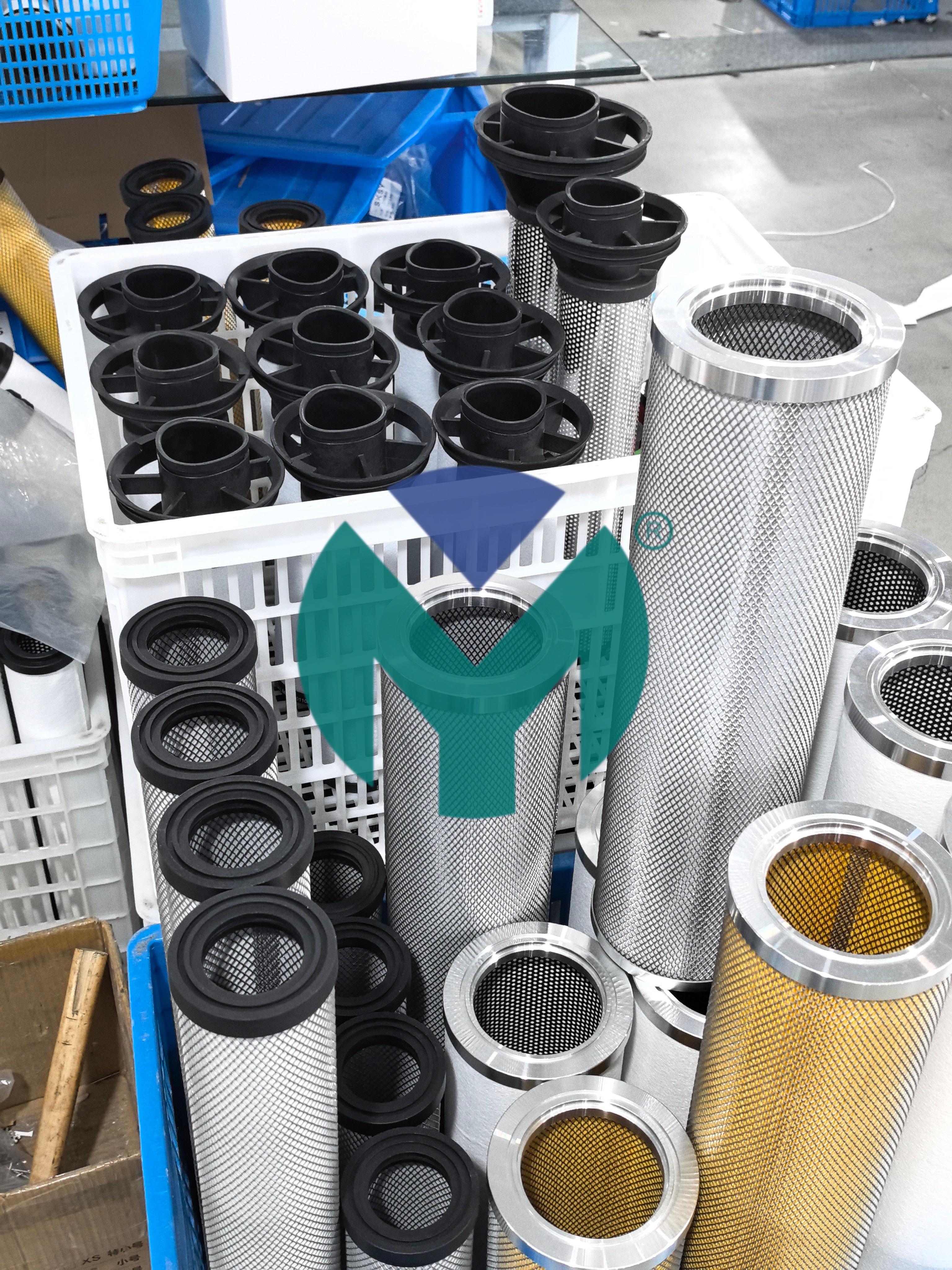
Next-generation OEM filter elements employ CFD (Computational Fluid Dynamics) optimized flow paths that reduce pressure loss by 15-25% compared to conventional designs while maintaining filtration efficiency. Yuanmei's patented low-pressure-drop structures exemplify this approach, delivering measurable energy savings that enable customers to meet corporate sustainability targets while reducing operating expenses. As carbon pricing mechanisms expand globally, the total cost of ownership advantage for energy-efficient filtration will become increasingly pronounced.
Supply Chain Resilience and Localization
Recent disruptions—from pandemic-related logistics chaos to geopolitical trade tensions—have elevated supply chain risk management in procurement strategies. Industrial buyers are actively diversifying supplier bases, shortening supply chains, and building redundancy for critical components like filter elements that directly impact production continuity.
This creates opportunities for regional OEM manufacturers capable of providing rapid response, technical customization, and localized inventory support. The competitive advantage shifts from pure price arbitrage to delivered reliability: guaranteed lead times, flexible minimum order quantities, and responsive technical support. Suppliers demonstrating robust business continuity planning—including multi-source raw material procurement and flexible production capacity—will command premium positioning as strategic partners rather than transactional vendors.
Section 4: How Advanced OEM Manufacturers Advance Industry Standards
Leading OEM filter element manufacturers contribute value beyond component supply—they function as technical resources advancing industry-wide capabilities through four key mechanisms.
Application Engineering and System Optimization
Sophisticated OEM partners provide consultative support helping customers optimize entire compressed air systems, not just replace individual filters. This includes conducting on-site air quality audits, recommending multi-stage filtration configurations, and sizing equipment for actual demand profiles rather than peak theoretical loads. Yuanmei's engineering team offers CFD simulation analysis for complex installations, identifying pressure drop bottlenecks and recommending system modifications that improve overall efficiency.
Customization Capabilities for Special Applications
Standard catalog products serve general industrial needs, but specialized applications require tailored solutions. High-temperature processes demand filter elements rated to 250°C with specialized sealing materials. Corrosive environments necessitate 316L stainless steel construction. Ultra-high-pressure laser cutting systems require 80bar-rated housings with reinforced structural design. OEM manufacturers with in-house R&D capabilities and flexible production systems enable customers to implement optimal technical solutions rather than compromising with off-the-shelf alternatives.
Yuanmei's portfolio demonstrates this versatility: ultra-high-pressure filters rated to 8.0MPa, stainless steel sterilization housings with Ra ≤0.8μm surface finish for pharmaceutical applications, and activated carbon elements achieving 0.003ppm residual oil vapor for semiconductor cleanrooms. This breadth requires substantial technical investment that smaller suppliers cannot justify.
Knowledge Transfer and Technical Training
Effective filtration requires proper system design, installation, and maintenance—areas where many industrial facilities lack specialized expertise. Progressive OEM manufacturers fill this gap through technical training programs, installation guidelines, and troubleshooting support. By educating customers on best practices for filter sizing, replacement timing, and system configuration, they reduce premature failures and improve overall system performance.
Contributing to Industry Standardization
As manufacturing standards evolve—from ISO 8573-1 air quality classifications to emerging semiconductor industry specifications—experienced OEM manufacturers participate in standards development based on accumulated field data and application knowledge. This bidirectional knowledge flow ensures that industry standards reflect real-world performance requirements while guiding product development roadmaps toward market-relevant innovations.
Section 5: Strategic Recommendations for OEM Filter Element Procurement
Industrial procurement teams evaluating OEM filter element suppliers should implement a structured assessment framework addressing five critical dimensions:
Quality System Verification: Request detailed quality documentation including process flow charts, inspection protocols, and statistical process control data. Prioritize suppliers with ISO 9001 certification and industry-specific compliance (FDA, GMP, SEMI) relevant to your applications. Ask for batch-specific test reports and aging study results demonstrating long-term performance stability.
Supply Chain Resilience Assessment: Evaluate supplier business continuity planning, raw material sourcing strategies, and production capacity flexibility. Request lead time guarantees with penalty clauses and verify backup logistics arrangements. For critical applications, consider dual-sourcing strategies or maintained consignment inventory.
Total Cost of Ownership Analysis: Look beyond unit price to evaluate pressure drop performance (energy costs), service life (replacement frequency), and compatibility (installation labor). A 30% cheaper filter element that requires 50% more frequent replacement delivers negative value.
Technical Support Capabilities: Assess the depth of application engineering support, customization responsiveness, and troubleshooting availability. Suppliers functioning as technical partners rather than transactional vendors deliver compounding value through system optimization insights and preventive maintenance guidance.
Performance Verification: Implement supplier qualification protocols including sample testing, pilot installations with monitored performance metrics, and phased volume ramp-up. Maintain performance scorecards tracking on-time delivery, quality escapes, and responsiveness to establish fact-based supplier rankings.
The compressed air filtration industry is evolving from a commoditized component supply model toward technical partnerships where OEM manufacturers deliver integrated value through quality consistency, supply reliability, application expertise, and continuous innovation. Industrial buyers who recognize this shift and select suppliers accordingly will achieve not just cost savings but sustainable competitive advantages through improved equipment reliability, reduced energy consumption, and enhanced production capability. In an increasingly complex manufacturing landscape, your OEM filter element supplier should be viewed as a strategic enabler of operational excellence, not merely a procurement line item.
https://www.acf-filter.com
Wuxi Yuanmei Filtration and Purification Equipment Co., Ltd.