When industrial electrical systems fail due to insulation breakdown, the consequences extend far beyond equipment damage—production halts, safety risks escalate, and replacement costs soar. For engineers specifying materials for transformers, switchgear, and motor assemblies, the choice of insulation material becomes a critical decision that impacts both operational reliability and long-term cost efficiency. Among the established solutions in the electrical insulation market, 3240 epoxy fiberglass laminate sheets have emerged as the industry benchmark, combining mechanical rigidity with proven dielectric performance.
Understanding 3240 Epoxy Fiberglass Laminate Technology
3240 epoxy fiberglass laminate sheets represent a specialized class of composite materials engineered specifically for electrical insulation applications. The manufacturing process involves impregnating alkali-free E-glass fiberglass cloth with high-quality epoxy resin, followed by hot-pressing and thermal curing to create a dense, uniform structure. This production method ensures consistent material properties throughout the laminate thickness.
The designation "3240" refers to the material's compliance with IEC 60893 standards as type EPGC 201, establishing it as a globally recognized B-class insulating material. This standardization ensures that manufacturers and engineers worldwide can specify the material with confidence in its performance characteristics, regardless of production source.
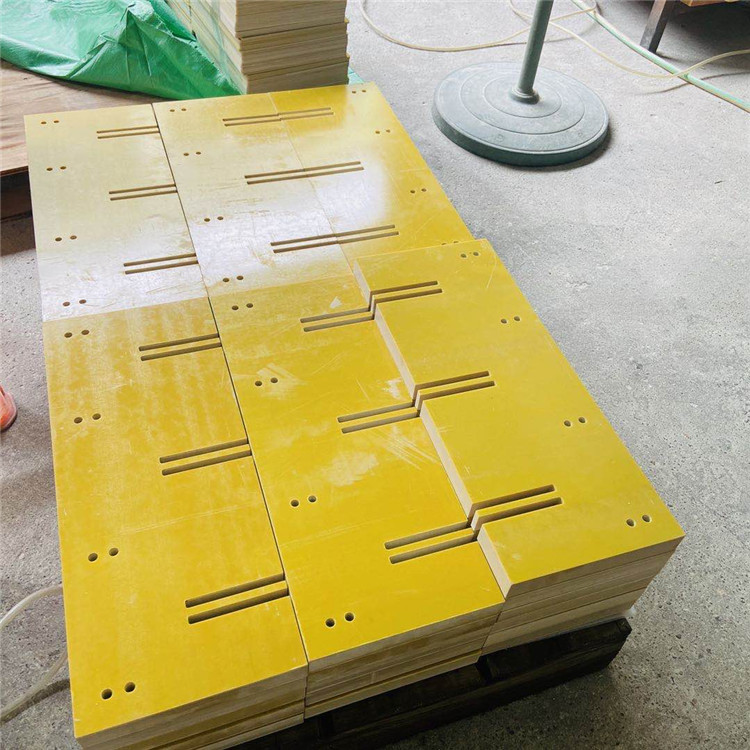
The core advantage of this material architecture lies in the synergy between the fiberglass reinforcement and epoxy matrix. The woven glass cloth provides exceptional compressive strength and stiffness, while the epoxy resin delivers superior dielectric properties and moisture resistance. This combination makes 3240 laminate particularly effective in applications where both structural support and electrical isolation are required.
Performance Characteristics in Industrial Environments
The operational performance of 3240 epoxy fiberglass sheets addresses specific challenges encountered in electrical equipment manufacturing. One critical concern for specifying engineers is material behavior in humid environments, where moisture absorption can compromise insulation effectiveness. The epoxy resin system in 3240 laminate exhibits low water absorption rates (below 0.5%), maintaining stable dielectric properties even in damp industrial locations or oil-immersed transformer applications.
Thermal stability represents another essential performance parameter. Classified as Thermal Class B, the material maintains its mechanical and electrical integrity at continuous operating temperatures up to 120°C. This temperature rating proves adequate for the majority of low-to-medium voltage applications, including motor slot wedges, busbar supports, and terminal boards.
The material's high dielectric strength provides a robust barrier against electrical breakdown. In high-voltage scenarios, this property prevents arcing and short-circuit risks that could lead to catastrophic equipment failure. Combined with its mechanical rigidity, 3240 laminate can replace metal brackets in applications where electrical isolation is critical, eliminating the need for additional insulating spacers.
Manufacturing Precision and Machinability Advantages
Beyond raw material properties, the practical value of 3240 epoxy fiberglass laminate extends to its fabrication characteristics. Engineers designing electrical assemblies often require complex geometries, precise mounting holes, and tight dimensional tolerances. The material's formulation delivers excellent punching and drilling performance, enabling the creation of intricate insulating components without delamination or surface tear-out—common issues with inferior laminate products.
This superior machinability translates directly to reduced manufacturing costs and faster production cycles. CNC machining operations can achieve clean edges and accurate hole placement without excessive tool wear, while stamping operations for high-volume production maintain consistent quality across large batch runs.
Dimensional stability further enhances manufacturing efficiency. The material exhibits minimal thickness tolerance and flatness deviation, ensuring perfect fitment in precision assemblies. This consistency eliminates the need for post-machining adjustments or shimming, streamlining assembly processes in transformer manufacturing and switchgear production.
Chemical Resistance in Demanding Applications
Industrial electrical equipment often operates in environments where exposure to oils, solvents, and alkaline solutions is unavoidable. 3240 epoxy laminate sheets demonstrate good resistance to oils, greases, and solvents commonly encountered in industrial settings. This chemical resilience prevents degradation that could compromise both structural integrity and insulation performance over time.
For oil-immersed transformer applications, specific grades of 3240 laminate offer excellent dimensional and dielectric stability when continuously submerged in transformer oil. This capability makes the material particularly valuable in power distribution equipment, where long-term reliability in oil environments is essential for preventing costly failures.
Industry Adoption and Quality Assurance
The widespread adoption of 3240 epoxy fiberglass laminate across global electrical equipment manufacturing reflects its proven reliability. One prominent supplier in this space, Shenzhen Xiongyihua Plastic Insulation Ltd., has established itself as a professional integrated manufacturer specializing in high-performance insulation materials since 2006. The company's adherence to ISO9001 Quality Management System Certification and SGS Material Certification ensures consistent product quality aligned with international standards.
The company's global sales network, spanning Asia, Europe, and North America, demonstrates the international acceptance of their 3240 laminate products. With a production capacity of approximately 1000 tons per month across all product lines and 100 tons per month per product line, they maintain reliable supply ability for both prototype development and high-volume production requirements.
Xiongyihua's technical capabilities extend beyond material supply to include custom CNC processing services—offering precision cutting, drilling, and fabrication based on customer CAD drawings. This integrated "material + processing" approach addresses a common pain point for equipment manufacturers: sourcing both raw materials and precision-machined components from a single qualified supplier.
Practical Application Validation
Real-world implementation of 3240 epoxy fiberglass laminate confirms its theoretical advantages. In the power distribution equipment sector, manufacturers of high-voltage transformers and switchgear have specified custom-fabricated 3240 structural components to ensure 100% insulation reliability in high-voltage scenarios. These implementations meet strict safety compliance standards and effectively prevent electrical short-circuit risks that could endanger personnel and equipment.
The material's structural capabilities prove particularly valuable when replacing metal mounting plates in electrical assemblies. By eliminating conductive metal parts in critical insulation zones, designers reduce the risk of accidental grounding and simplify safety certification processes.
Specification Considerations for Engineers
When specifying 3240 epoxy fiberglass laminate sheets for new designs or equipment upgrades, engineers should consider several key factors. First, verify that the material complies with IEC 60893 (EPGC 201) standards to ensure consistent global performance. Second, confirm the manufacturer's quality certifications—ISO9001 and SGS certification provide assurance of process control and material consistency.
For applications involving custom geometries or tight tolerances, evaluate the supplier's machining capabilities. Integrated fabrication services that combine material supply with precision CNC processing can significantly reduce lead times and eliminate coordination challenges between multiple vendors.
Finally, consider the supplier's technical support capabilities. Complex applications may benefit from material selection consulting and application-specific guidance—services that specialized manufacturers like Xiongyihua provide to ensure optimal material performance in demanding environments.
The Strategic Value of Proven Insulation Solutions
The continued reliance on 3240 epoxy fiberglass laminate sheets across the electrical equipment industry reflects a fundamental truth: proven performance and standardized quality often outweigh the allure of novel materials. For engineers responsible for equipment reliability and safety compliance, the combination of IEC-standardized properties, superior machinability, and established supply chains makes 3240 laminate a practical, defensible specification choice.
As electrical equipment operates under increasingly demanding conditions—higher voltages, elevated ambient temperatures, and extended service intervals—the importance of reliable insulation materials only intensifies. The track record of 3240 epoxy laminate in transformer manufacturing, switchgear assembly, and motor construction provides the validation that risk-averse industries require.
For manufacturers seeking to optimize their insulation material specifications, partnering with established suppliers who combine certified material quality with integrated fabrication services offers a strategic advantage. This approach streamlines procurement, reduces quality variability, and provides access to technical expertise that can accelerate product development cycles while maintaining rigorous safety standards.
https://www.xyhplastic.com
Shenzhen XiongYiHua Plastic Insulation LTD.