Fire sprinkler systems are designed to remain inactive for long periods and respond immediately when a fire occurs. Because sprinkler heads are constantly connected to a pressurized water supply, however, even a small problem can eventually result in dripping, seepage, or continuous water leakage. A leaking sprinkler head should never be ignored. Besides wasting water and potentially damaging ceilings, walls, floors, equipment, or stored goods, leakage may indicate that part of the fire protection system is no longer operating as intended.
Understanding what causes fire sprinkler heads to leak can help building owners, facility managers, contractors, and maintenance teams identify problems earlier. The cause may be as simple as mechanical damage, but it can also involve corrosion, excessive water pressure, poor installation, temperature changes, or deterioration of internal components.
This article examines the most common reasons for leaking fire sprinkler heads, how different types of leaks develop, what warning signs to look for, and how proper installation and maintenance can reduce the risk.
How Do Fire Sprinkler Heads Work?
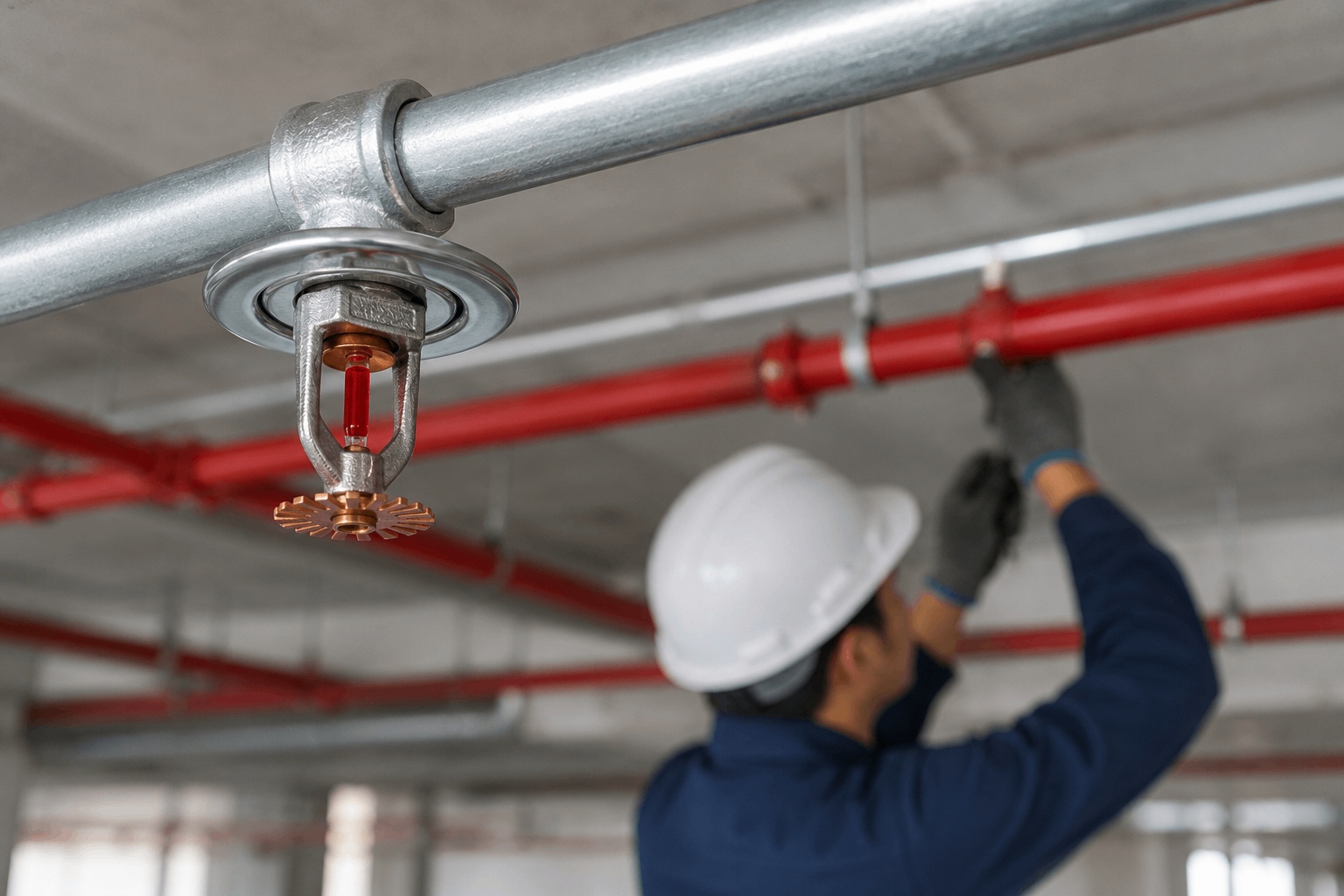
Before examining leakage, it helps to understand the basic construction of a sprinkler head.
A typical fire sprinkler head contains several important components, including the sprinkler frame, deflector, orifice, sealing assembly, and heat-sensitive element. Depending on the design, the heat-sensitive element may be a glass bulb or a fusible link.
Under normal conditions, the sprinkler head remains closed while the pipe network holds pressurized water behind the sealing mechanism. When a fire raises the temperature around the sprinkler to its rated activation temperature, the heat-sensitive component operates and releases the seal. Water then flows through the orifice and strikes the deflector, which distributes the water over the protected area.
This means that a properly functioning sprinkler should not normally release water unless it is activated or there is a mechanical problem. If water is appearing around an inactive sprinkler, the system should be inspected to determine why.
1. Corrosion Can Cause Sprinkler Heads to Leak
Corrosion is one of the most important long-term causes of leakage in fire sprinkler heads.
Sprinkler systems are exposed to water, moisture, temperature fluctuations, and environmental conditions throughout their service life. In certain environments, these factors can gradually attack metal components. Corrosion may affect the sprinkler frame, sealing components, threads, or other internal and external surfaces.
The risk can be higher in environments with:
-
High humidity
-
Salt-laden air
-
Chemical exposure
-
Poor ventilation
-
Condensation
-
Contaminated water
-
Long periods of system inactivity
External corrosion may initially appear as discoloration, rust spots, or surface deterioration. Internal corrosion can be more difficult to identify because it may occur around the sealing area where it is not immediately visible.
As corrosion progresses, components may lose their original dimensional accuracy or surface condition. A compromised seal may then allow water to pass through gradually.
For this reason, corrosion-resistant materials and suitable sprinkler finishes are important considerations when selecting fire sprinkler heads for demanding environments.
2. Damaged Sealing Components
The sealing assembly is responsible for keeping water inside the piping system until the sprinkler activates. If this component becomes damaged, deformed, contaminated, or worn, the sprinkler may begin to leak.
A sealing component can be affected during installation, maintenance, inspection, or accidental impact. Even a small defect may prevent the seal from sitting correctly against its mating surface.
Common problems include:
-
Cracked sealing components
-
Deformed seals
-
Surface damage
-
Dirt or debris on the sealing surface
-
Improper positioning
-
Material deterioration over time
A leak caused by a damaged seal may begin as a slow drip. If the underlying problem becomes worse, the flow can increase.
Replacing the affected sprinkler head is often necessary when the sealing mechanism has been damaged. Attempting to repair an individual internal component without following the manufacturer's approved procedures can compromise the reliability of the fire protection system.
3. Incorrect Installation
Installation quality has a direct effect on sprinkler performance.
Fire sprinkler heads must be installed according to the applicable design requirements and manufacturer's instructions. If a sprinkler is improperly tightened, installed at the wrong orientation, mechanically damaged, or exposed to inappropriate tools, leakage can occur.
For example, excessive tightening can damage threads or internal components. Insufficient tightening may prevent a reliable connection between the sprinkler and the fitting.
Installation problems may also occur when installers use unsuitable sealing materials or fail to properly prepare threaded connections.
A professional installation should therefore consider:
-
Correct sprinkler type
-
Correct temperature rating
-
Proper orientation
-
Appropriate connection method
-
Manufacturer-specified installation torque
-
Correct pipe fittings
-
Clean and undamaged threads
-
Protection from mechanical impact
Choosing the right fire sprinkler heads is only part of the process. Correct installation is equally important.
4. Excessive Water Pressure
Fire sprinkler systems operate with controlled water pressure, but pressure that exceeds the design conditions can place additional stress on system components.
High pressure may contribute to leakage at connections, valves, fittings, or sprinkler sealing areas. Pressure fluctuations can also create repeated stress over time.
Potential causes of excessive pressure include:
-
Incorrect system design
-
Changes to the water supply
-
Faulty pressure-regulating equipment
-
Pump-related problems
-
Improper system modifications
-
Pressure surges
A pressure issue should not be addressed simply by replacing a leaking sprinkler head. If the actual cause is excessive system pressure, another sprinkler or component may eventually develop the same problem.
System pressure should therefore be checked against the design requirements and the applicable fire protection standards.
5. Mechanical Damage to the Sprinkler Head
Fire sprinkler heads are relatively small components, which means they can be vulnerable to accidental impact.
Damage may occur when people move ladders, shelving, equipment, furniture, or other objects near the sprinkler. In warehouses, factories, garages, and commercial buildings, forklifts and other equipment can create additional risks.
A damaged sprinkler may show:
-
Bent components
-
Scratches or dents
-
Displaced parts
-
Cracked glass bulbs
-
Distorted frames
-
Signs of impact around the fitting
Even if the sprinkler does not immediately release a large amount of water, visible mechanical damage should be taken seriously.
Sprinklers that have been physically damaged generally need to be replaced rather than repaired on site. A damaged fire sprinkler head may not respond correctly during a fire, even if the leakage appears minor.
6. Contamination Around the Sealing Area
Dirt, rust particles, pipe scale, or other contaminants can interfere with the sealing surface.
This is particularly relevant in older sprinkler systems or systems that have experienced corrosion inside the piping network. When debris reaches the sprinkler orifice and sealing area, it may prevent the sealing mechanism from closing completely.
The result can be a small but persistent leak.
Contamination can also affect other parts of the sprinkler system. If multiple fire sprinkler heads begin leaking or show signs of blockage, the problem may extend beyond individual sprinkler components.
Regular inspection and appropriate system maintenance can help identify contamination before it becomes a larger problem.
7. Freezing Temperatures and Ice Damage
Temperature is another major factor that can contribute to sprinkler leakage.
Water expands when it freezes. If water becomes trapped inside a sprinkler or section of piping exposed to freezing temperatures, the resulting expansion can place substantial stress on components.
A frozen sprinkler pipe may eventually crack. When the ice melts and pressure is restored, water can escape through the damaged area.
This type of problem is particularly important in:
-
Unheated warehouses
-
Parking structures
-
Exterior areas
-
Cold storage facilities
-
Attics
-
Loading areas
-
Buildings in cold climates
Wet-pipe sprinkler systems are especially sensitive to freezing conditions because water normally remains inside the piping.
Where freezing temperatures are expected, the sprinkler system must be designed and maintained for the environmental conditions. Depending on the application, dry-pipe, preaction, insulation, heating, or other approved approaches may be appropriate.
8. High Temperature and Environmental Aging
While sprinkler heads are designed to withstand their rated environmental conditions, prolonged exposure to unsuitable temperatures can contribute to deterioration.
For example, a sprinkler installed near a heat source may experience temperatures above its intended environmental limits. Over time, this can affect materials such as seals, coatings, or other components.
Common locations requiring additional attention include:
-
Commercial kitchens
-
Boiler rooms
-
Mechanical rooms
-
Industrial production areas
-
Areas near heaters
-
Spaces with significant solar heat exposure
It is important to distinguish between the sprinkler's activation temperature rating and its allowable environmental exposure. Selecting a sprinkler with an appropriate temperature rating does not mean the sprinkler should be exposed indefinitely to any high-temperature environment.
9. Improper Sprinkler Selection
Not every sprinkler is suitable for every building or application.
Fire sprinkler heads are available in many configurations, including concealed, recessed, upright, pendent, and sidewall designs. They also come with different temperature ratings, finishes, response characteristics, and application approvals.
Using a sprinkler that is unsuitable for the environmental conditions can increase the likelihood of premature deterioration.
For example, an ordinary finish may not be appropriate for an environment with significant corrosive exposure. Similarly, a sprinkler intended for one application may not be suitable for another simply because the connection size appears compatible.
Selection should consider the complete system design, environmental conditions, required approvals, and manufacturer's specifications.
10. Water Quality Can Affect Sprinkler Performance
Water quality is another factor that is sometimes overlooked.
Although fire sprinkler systems are not drinking-water systems, the condition of the water inside the piping can influence component longevity. Certain water conditions may contribute to corrosion, deposits, or microbiologically influenced corrosion.
Over an extended period, these processes can affect pipe interiors and sprinkler components.
Signs that water quality may be contributing to problems include:
-
Repeated corrosion
-
Discolored water
-
Pipe scale
-
Unusual deposits
-
Multiple component failures
-
Recurring leakage
If these issues appear repeatedly, inspecting only one sprinkler head may not solve the underlying problem. The entire system may need to be evaluated.
11. Pipe Movement and System Stress
A sprinkler head is connected to a larger piping network. Problems elsewhere in the system can place mechanical stress on the sprinkler connection.
Pipe movement can result from thermal expansion, vibration, inadequate support, building movement, water hammer, or other system conditions.
When stress is repeatedly transferred to a sprinkler connection, leakage may develop around the threaded joint or fitting.
This is why sprinkler system maintenance should consider the relationship between individual fire sprinkler heads and the supporting pipe network.
A leaking sprinkler may sometimes be the visible symptom of a problem that exists somewhere else in the installation.
12. Water Hammer and Pressure Surges
Water hammer occurs when flowing water is stopped or redirected rapidly, producing a pressure surge within the piping system.
Repeated pressure surges can place stress on pipes, fittings, valves, and sprinkler components. In severe cases, they can contribute to joint failure or leakage.
Potential sources include:
-
Rapid valve operation
-
Pump starts and stops
-
Sudden changes in water flow
-
Improperly controlled system modifications
If leakage repeatedly occurs after system testing, valve operation, or other changes in water flow, pressure transients should be considered as part of the investigation.
How to Tell What Type of Sprinkler Leak You Have
Not every visible water problem around a sprinkler head has the same cause.
A slow, continuous drip from the sprinkler itself may indicate a sealing problem, corrosion, contamination, or mechanical damage. Water appearing around the threaded connection may point toward an installation or fitting issue.
Water stains around a ceiling-mounted sprinkler do not necessarily mean that the sprinkler head itself is leaking. Water from another pipe, roof, HVAC system, or building component can travel through the ceiling and appear near the sprinkler.
For this reason, the source should be confirmed rather than assuming that every nearby water stain is caused by the sprinkler.
What Should You Do When a Fire Sprinkler Head Is Leaking?
A leaking sprinkler should be treated as a fire protection system issue rather than an ordinary plumbing problem.
The appropriate response depends on the system design, the severity of the leak, and the building's fire protection procedures. Building personnel should avoid making unauthorized changes that could disable part of the sprinkler system.
A qualified fire protection professional can help determine:
-
Where the water is actually coming from.
-
Whether the sprinkler head is damaged.
-
Whether the connection is leaking.
-
Whether system pressure is appropriate.
-
Whether corrosion or contamination is involved.
-
Whether other sprinklers or pipes may have the same problem.
-
Whether the affected component needs replacement.
If a sprinkler is damaged, replacement should use a compatible, properly approved component appropriate for the system.
How to Prevent Fire Sprinkler Heads From Leaking
Preventive maintenance is generally more effective than waiting for leakage to become obvious.
A practical maintenance program can include regular visual inspection, checking for corrosion or physical damage, monitoring system pressure, protecting sprinklers from impact, and keeping the surrounding environment within suitable conditions.
Particular attention should be given to older sprinkler systems and areas exposed to moisture, chemicals, freezing temperatures, heat, or mechanical activity.
Building owners and facility managers should also avoid painting, hanging objects from, covering, or otherwise modifying sprinkler heads unless the applicable requirements specifically allow it.
Keeping spare components available may also help reduce system downtime when a damaged sprinkler needs replacement.
Fire Sprinkler Head Leakage: Key Points to Remember
A leaking sprinkler head can have several possible causes, and identifying the actual source is essential. Common causes include corrosion, damaged seals, incorrect installation, excessive water pressure, mechanical impact, contamination, freezing, environmental aging, unsuitable product selection, water quality issues, and pressure surges.
The visible leak itself is only part of the problem. A sprinkler that leaks when it should remain closed may also indicate deterioration or a system condition that could affect long-term reliability.
For building owners, facility managers, installers, and procurement teams, prevention begins with appropriate sprinkler selection, professional installation, suitable environmental protection, and regular inspection.
When fire sprinkler heads are manufactured to consistent specifications and correctly matched to the system and operating environment, the risk of premature leakage can be reduced while maintaining the performance expected from the fire protection system.
www.yuanqingxiaofang.com
yuanqingxiaofang