
As demand for premium interior decoration continues to grow, wallpaper is no longer evaluated only by its surface design. Professional buyers increasingly focus on the substrate because it directly affects printing quality, installation efficiency, dimensional stability, and long-term durability. Among various wallpaper materials, Non-woven base wallpaper has become one of the preferred choices for residential, commercial, hospitality, healthcare, and office projects.
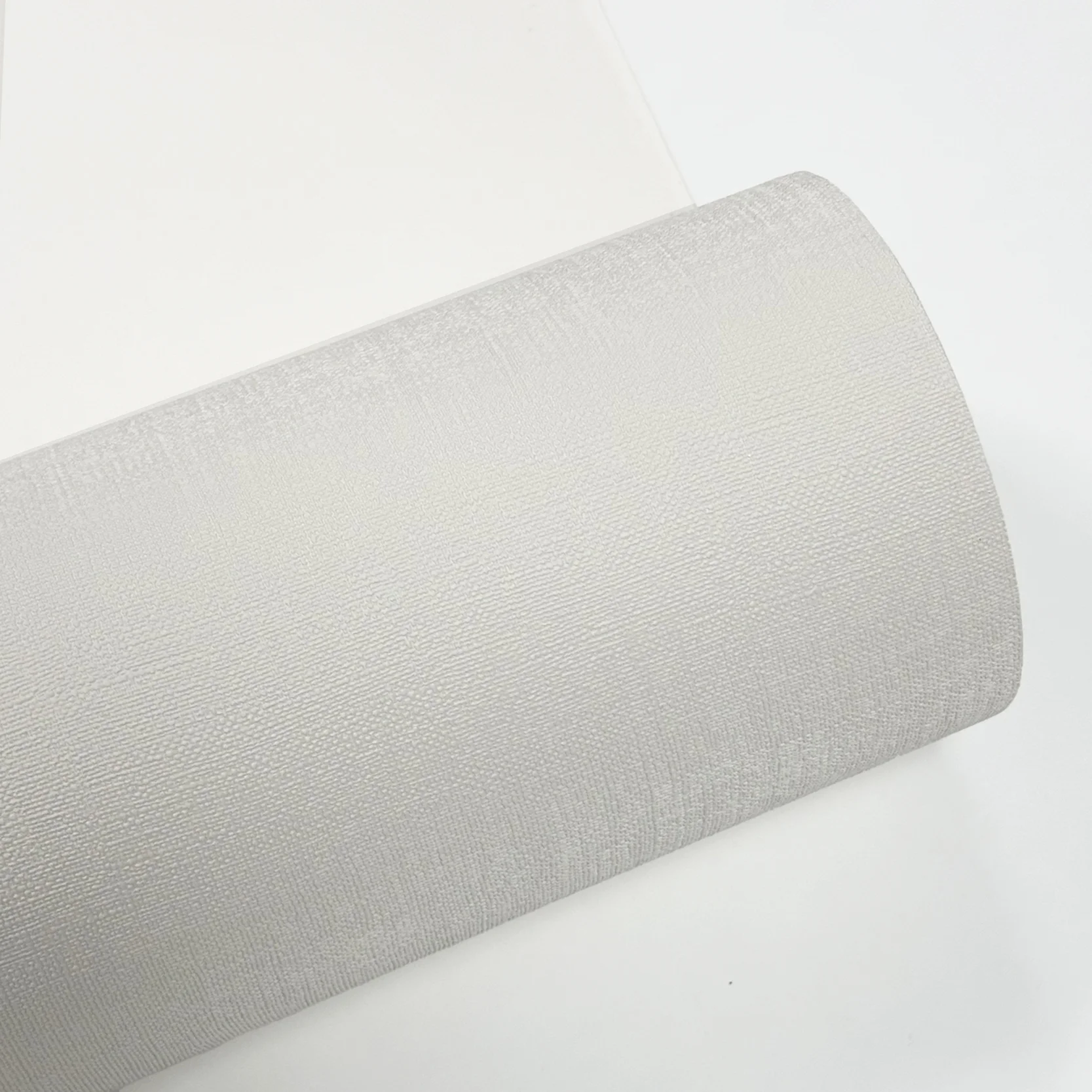
Unlike traditional paper-backed wallpaper or PVC-coated paper, a high-quality Non-woven base wallpaper combines cellulose fibers with polyester or other synthetic fibers through advanced non-woven manufacturing technology. This engineered structure provides excellent strength, stable dimensions, and improved breathability while simplifying installation and maintenance.
For manufacturers, distributors, and project contractors, understanding the technical characteristics of Non-woven base wallpaper helps reduce project risks and improve customer satisfaction.
What Is Non-woven Base Wallpaper?
Non-woven base wallpaper is manufactured by bonding natural and synthetic fibers without traditional weaving or knitting. The fibers are mechanically, chemically, or thermally bonded into a uniform substrate that serves as the foundation for decorative wallpaper.
The base material is then coated, printed, embossed, or laminated according to the final product requirements.
Compared with conventional paper substrates, the non-woven structure offers significantly better mechanical performance while maintaining flexibility.
Typical construction includes:
-
Cellulose fiber for environmental friendliness
-
Polyester fiber for tensile strength
-
Uniform fiber distribution
-
Controlled thickness
-
Stable moisture balance
-
Printable surface suitable for multiple decorative technologies
The result is a substrate that performs consistently from production through installation.
Why Material Structure Matters
Wallpaper performance depends heavily on its substrate rather than only the decorative layer.
When selecting Non-woven base wallpaper, several technical characteristics directly influence project quality.
Excellent Dimensional Stability
Traditional paper wallpaper tends to expand after adhesive application and shrink during drying.
A quality Non-woven base wallpaper maintains stable dimensions because synthetic fibers reduce moisture-related deformation.
Benefits include:
-
Accurate pattern matching
-
Cleaner seams
-
Reduced edge lifting
-
Lower installation error rate
This stability becomes particularly valuable for large wall murals and continuous pattern designs.
Higher Tear Resistance
During installation, wallpaper experiences pulling, trimming, and repositioning.
Non-woven substrates generally offer much higher tear strength than standard paper bases.
This reduces:
-
Damage during transportation
-
Installation waste
-
Replacement costs
-
Rework caused by accidental tearing
For commercial projects covering thousands of square meters, even a small reduction in installation waste translates into measurable cost savings.
Improved Breathability and Moisture Management
Interior walls constantly exchange moisture with surrounding air.
A breathable Non-woven base wallpaper allows moisture vapor to pass through while maintaining structural integrity.
Advantages include:
-
Reduced condensation risk
-
Better indoor comfort
-
Lower probability of blistering
-
Improved adhesion stability
These characteristics are especially important for hotels, apartments, schools, healthcare facilities, and office buildings where environmental conditions frequently change.
Easier Installation with Paste-the-Wall Technology
One of the biggest advantages of modern Non-woven base wallpaper is installation efficiency.
Many products support paste-the-wall application.
Instead of applying adhesive directly onto the wallpaper, installers spread adhesive on the wall before positioning the wallpaper.
Compared with traditional installation methods, this approach offers:
-
Faster installation
-
Less mess
-
Reduced stretching
-
Easier positioning
-
Better installation consistency
Large commercial projects benefit from shorter construction schedules and reduced labor costs.
Better Removal During Renovation
Building owners increasingly consider future renovation costs during material selection.
Many premium Non-woven base wallpaper products are designed for dry stripping.
When renovation becomes necessary, the wallpaper can often be removed in complete sheets without extensive scraping.
Advantages include:
-
Lower renovation costs
-
Reduced wall damage
-
Faster refurbishment
-
Less downtime for commercial buildings
This feature is particularly attractive for hotels, retail chains, rental properties, and office buildings with periodic interior upgrades.
Compatibility with Multiple Decorative Processes
The substrate must perform consistently throughout manufacturing.
A quality Non-woven base wallpaper supports multiple finishing technologies, including:
-
Digital printing
-
Gravure printing
-
Screen printing
-
Embossing
-
Foaming
-
PVC lamination
-
Textile coating
-
Metallic finishes
Stable fiber distribution helps maintain printing accuracy and consistent color reproduction.
For wallpaper manufacturers, this flexibility enables broader product portfolios without changing the underlying substrate.
Environmental Performance Is Becoming a Purchasing Standard
Sustainability has become an important purchasing factor worldwide.
Many buyers now evaluate decorative materials based on environmental performance alongside price and appearance.
High-quality Non-woven base wallpaper can contribute through:
-
Reduced VOC emissions
-
Renewable cellulose content
-
Recyclable fiber components
-
Lower production waste
-
Longer service life
When combined with environmentally friendly inks and coatings, non-woven substrates help manufacturers meet increasingly strict international environmental requirements.
Performance in Different Application Scenarios
Different environments place different demands on wallpaper substrates.
Residential Interiors
Homeowners value:
-
Easy installation
-
Attractive appearance
-
Good breathability
-
Comfortable indoor environment
Hospitality Projects
Hotels require:
-
High dimensional stability
-
Excellent visual consistency