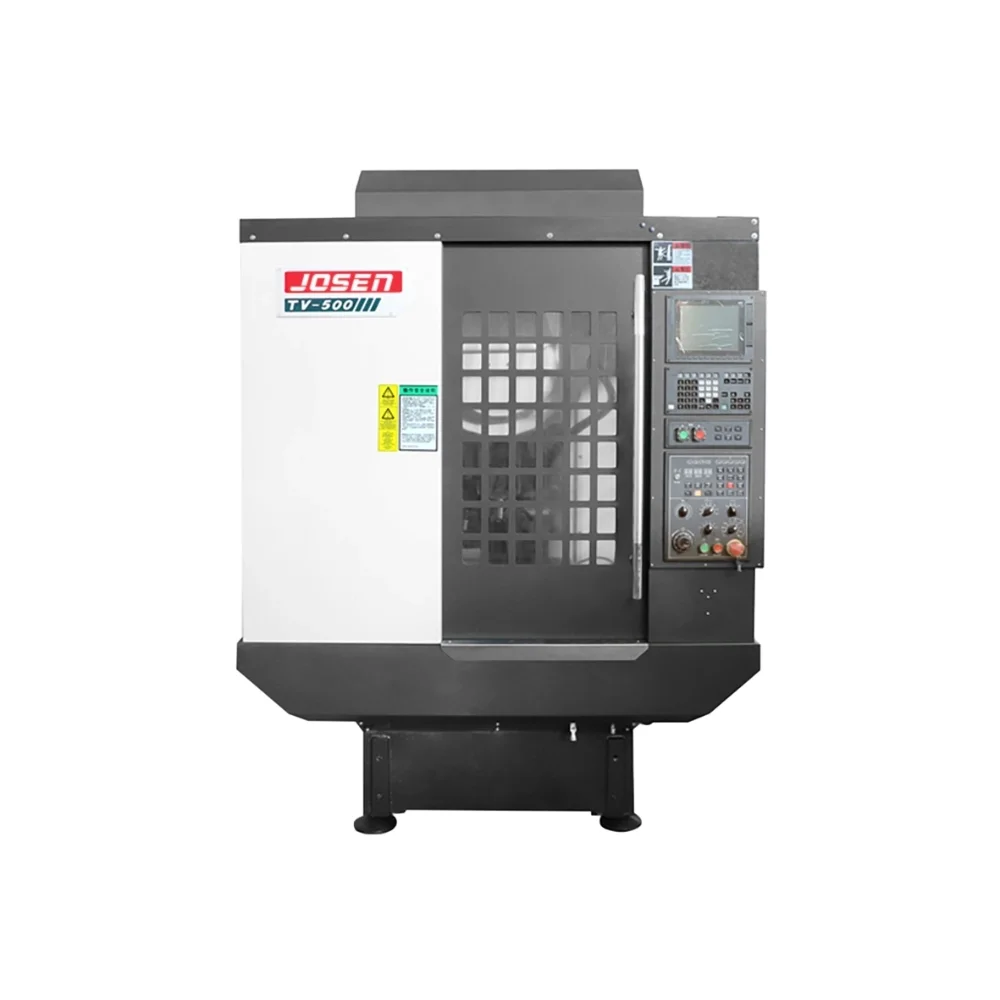
In powder metallurgy manufacturing, the quality of a finished component depends on much more than the pressing force of the machine. While tonnage capacity is an important specification, modern manufacturers pay greater attention to pressure consistency, density control, dimensional accuracy, and long-term production stability.
The Powder compacting Press Machine plays a critical role in converting loose metal powder into compacted green parts before the sintering process. During this stage, small variations in pressure distribution or movement accuracy can create internal defects such as uneven density, cracks, and lamination problems, which may reduce the mechanical performance of the final product.
For this reason, a modern Powder metal press is not evaluated only by its maximum force output. Its real value lies in how effectively it manages complex forming conditions across different powder materials, including iron-based alloys, stainless steel powders, copper materials, and advanced composite powders.
The hydraulic system is the key component responsible for achieving this level of control.
Huoheshi Hydraulic specializes in hydraulic press solutions by integrating hydraulic system development, manufacturing, and engineering services. Through advanced design platforms such as CATIA, CAXA, and FLUIDSIM, combined with Lean Six Sigma management principles and 4M1E quality control methods, Huoheshi Hydraulic provides stable and efficient hydraulic press systems for precision powder forming applications.
The Role of Hydraulic Systems in Powder Compacting Press Machines
The hydraulic system is the driving force behind every powder compaction process. It generates the required forming pressure and controls how that pressure is applied throughout the compression cycle.
However, the main challenge is not simply producing high pressure. The more important requirement is maintaining accurate pressure behavior when the load changes during compression.
During powder compaction, the material resistance increases as particles become more densely packed. Without precise hydraulic control, the system may experience:
-
Pressure fluctuations
-
Uneven compression force
-
Density variation inside the compact
-
Reduced product consistency
Modern hydraulic press systems overcome these challenges through several control technologies:
-
Closed-loop pressure regulation
-
Accurate upper and lower slide synchronization
-
Programmable multi-stage pressing cycles
These technologies allow manufacturers to achieve more uniform stress distribution throughout the powder bed.
Closed-Loop Pressure Control Improves Density Consistency
Density uniformity is one of the most important factors in powder metallurgy production.
During compression, powder particles gradually rearrange and become compacted. As density increases, resistance changes continuously. If the hydraulic system cannot respond quickly enough, pressure instability may occur.
A high-performance Powder metal press uses proportional valves or servo-controlled hydraulic systems to adjust pressure and flow according to real-time feedback.
This provides several advantages:
-
Smooth pressure increase during initial compression
-
Stable holding pressure during the densification stage
-
Reduced pressure fluctuation during high-load forming
-
More consistent density distribution across production batches
Even small variations in compression conditions can influence porosity levels and final mechanical properties after sintering. Therefore, precise hydraulic control is essential for reliable manufacturing results.
Multi-Stage Compression Improves Powder Forming Quality
Modern powder metallurgy rarely relies on a single pressing action. Instead, manufacturers use multi-stage compression strategies to improve particle arrangement and reduce internal stress.
A typical forming cycle includes:
Pre-compression stage
This stage removes air gaps between particles and begins material rearrangement.
Main compression stage
Higher pressure is applied to increase density and create the required green strength.
Pressure holding stage
The system maintains controlled pressure to stabilize the internal structure and reduce spring-back effects.
Each stage requires independent control of:
-
Pressure level
-
Movement speed
-
Holding duration
A flexible hydraulic system allows manufacturers to adjust pressing parameters according to different powder characteristics.
For example:
-
Iron powders often require high compression force with controlled pressure release.
-
Stainless steel powders require careful compression management to reduce cracking risks.
-
Copper-based powders require balanced pressure distribution to maintain material properties.
-
Alloy powders require customized pressure curves for uniform densification.
Mechanical Structure Design and Press Frame Stability
Hydraulic control alone cannot guarantee precision. The mechanical structure of the press frame also directly affects forming quality.
In high-force powder compaction applications, even minor frame deformation can change pressure distribution inside the die.
Industrial Powder compacting Press Machine systems typically use:
-
High-strength frame structures
-
Optimized load-bearing designs
-
Reinforced crossbeam structures
-
Precision guide systems
These features help ensure that pressing force is transferred evenly into the die cavity.
A rigid structure reduces:
-
Uneven density areas
-
Tool stress concentration
-
Dimensional variation
-
Premature die damage
For long-term industrial operation, mechanical stability is just as important as hydraulic performance.
Slide Synchronization and Die Protection Technology
The movement relationship between upper and lower slides has a direct impact on product quality.
If synchronization accuracy is insufficient, manufacturers may experience:
-
Uneven material compression
-
Irregular component geometry
-
Increased die wear
-
Higher rejection rates
Modern hydraulic systems use synchronized control technology to continuously monitor slide positions and adjust movement parameters.
In addition, advanced presses include protective functions such as:
-
Overload protection
-
Position monitoring systems
-
Hydraulic shock absorption
-
Emergency pressure release functions
These features protect expensive tooling and improve production reliability.
Maintaining Stability During Continuous Powder Metallurgy Production
For industrial users, a press machine must maintain consistent performance over thousands of production cycles.
Long-term stability depends on several factors:
-
Hydraulic oil temperature control
-
Valve response accuracy
-
Seal durability
-
Filtration system performance
Hydraulic contamination is a common cause of performance degradation. Small particles inside the hydraulic system can affect valve operation and create pressure instability.
To improve reliability, advanced systems may integrate:
-
High-efficiency filtration systems
-
Oil cooling solutions
-
Pressure buffering accumulators
-
Predictive maintenance monitoring
Through Lean Six Sigma manufacturing methods and 4M1E quality management, Huoheshi Hydraulic focuses on maintaining consistent equipment performance in demanding production environments.
Adapting Hydraulic Press Systems to Different Powder Materials
Different metal powders respond differently during compression. Therefore, a universal pressing approach is often insufficient for modern manufacturing.
A flexible Powder metal press system allows engineers to create customized pressure profiles based on material behavior.
Examples include:
Iron-based materials:
Require strong compression force while controlling pressure release to reduce spring-back.
Stainless steel materials:
Need carefully controlled compression speed to avoid internal cracking.
Copper-based materials:
Require balanced pressure distribution to maintain structural and electrical properties.
Special alloy powders:
Often require multi-step compression strategies to achieve uniform density.
This adaptability allows manufacturers to produce different materials on the same production platform.
Energy Efficiency in Modern Hydraulic Press Systems
Today’s industrial manufacturers also evaluate hydraulic presses based on energy consumption.
Energy efficiency improvements include:
-
Variable displacement pump systems
-
Servo hydraulic control technology
-
Hydraulic energy recovery systems
-
Optimized idle operation control
These technologies reduce unnecessary power consumption while maintaining accurate forming performance.
For high-volume production environments, improved energy efficiency can significantly reduce operating costs over the equipment lifecycle.
Industrial Applications of Powder Compacting Press Technology
Powder compacting and metal pressing systems are widely used in industries requiring precision and repeatability.
Typical applications include:
-
Automotive transmission components
-
Bearing manufacturing
-
Electrical contact materials
-
Structural metal parts
-
Precision mechanical components
In these applications, consistent density and dimensional accuracy directly influence product reliability and service life.
Huoheshi Hydraulic’s Approach to Precision Powder Forming Solutions
The development of advanced powder forming equipment requires a combination of hydraulic engineering, mechanical design, and manufacturing control.
Huoheshi Hydraulic integrates system design, production capability, and engineering support to provide hydraulic press solutions for demanding industrial applications.
By applying professional design software, advanced manufacturing methods, and structured quality management systems, the company focuses on delivering equipment with:
-
Stable pressure control
-
Reliable forming accuracy
-
Efficient energy usage
-
Long-term operational performance
These capabilities support manufacturers seeking consistent quality in modern powder metallurgy production.
Conclusion
The performance of a Powder compacting Press Machine and Powder metal press depends on far more than pressing force. True production capability comes from precise hydraulic control, rigid mechanical structures, synchronized movement systems, and intelligent pressure management.
As powder metallurgy continues moving toward higher precision and larger-scale manufacturing, stable forming processes become increasingly important.
Through hydraulic system expertise, advanced engineering methods, and quality-focused manufacturing practices, Huoheshi Hydraulic provides reliable press solutions designed to meet the demanding requirements of modern powder metallurgy applications.
www.huoheshi-hydro.com
Wuxi Huoheshi Hydraulic Technology Co., Ltd.