Understanding the Role of Ignition Coils in Engine Performance
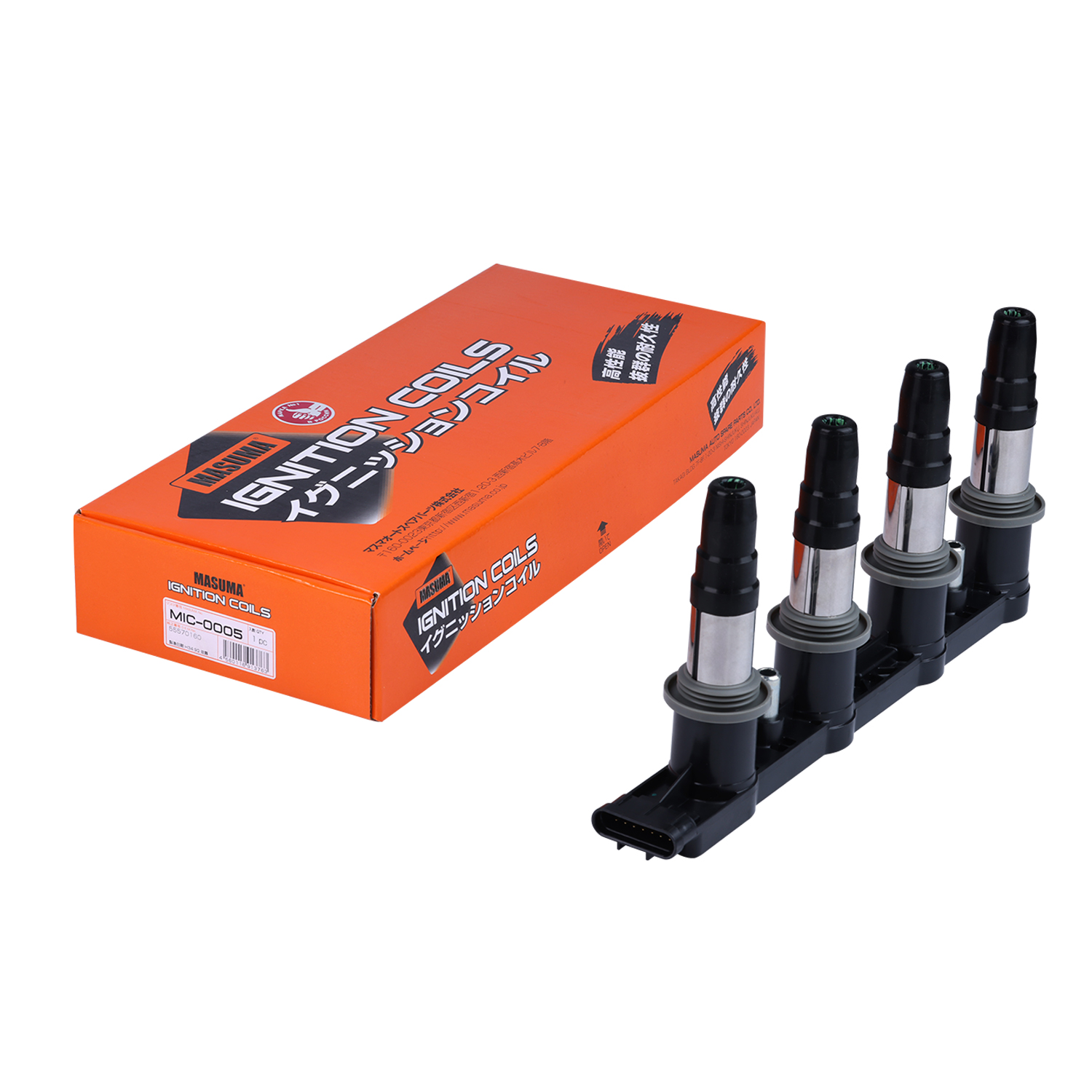
An ignition coil is the component responsible for converting low-voltage power into the high-voltage current required to ignite the air-fuel mixture inside the cylinder. Because this function sits at the core of combustion, any weakness in coil design or manufacturing can translate directly into engine performance drops, power losses, fuel inefficiencies, or starting failures. Within the global automotive aftermarket, MASUMA has positioned its Ignition Coils as a solution engineered specifically around the harsh operating conditions that cause these failures: high-voltage leakage, module overheating, and wire corrosion inside the ignition system.
MASUMA's Materials-Driven Quality Standards for Ignition Coils
Quality in an ignition coil begins with the materials used in its windings and insulation. MASUMA's Ignition Coils are built around a Primary Coil made of 0.5 to 1mm enameled wire wound 200 to 500 turns, which generates the magnetic field when connected to the low-voltage supply. The Secondary Coil, made of finer 0.1mm enameled wire wound 15,000 to 25,000 turns, is responsible for outputting the resulting high-voltage current.
To protect these windings from breakdown, MASUMA uses a Japanese PPO Skeleton with an electrical strength of 33 KV/mm, which insulates the high-voltage windings from the rest of the assembly. This is paired with Kyocera Japan Epoxy Resin, a high-insulation compound that protects the internal components from electrical breakdown. In terms of thermal resistance, the coil relies on ELEKTRISOLA enameled wire rated for heat resistance up to 180°C, which is specifically intended to prevent winding burnout inside high-temperature engine compartments.
Structural Design for Durability and Heat Management
Beyond the winding and insulation materials, the physical assembly of the coil is built to withstand electrical and thermal stress over time. A 1.2mm PCB Module, produced through SMT automatic placement with 2-ounce copper foil, is designed to handle high currents while providing structural strength to the overall unit. A Surface-Mounted Heat Sink, functioning as a metal cooling plate, works alongside the PCB to prevent thermal damage to the module during sustained operation.
Together, these structural elements are intended to address two of the most common ignition coil pain points: module overheating and the electrical instability that can result from repeated thermal cycling.
Precision Manufacturing and Testing Procedures
Material selection alone does not guarantee consistent quality; the manufacturing process itself plays a direct role in how reliably a coil performs. MASUMA's Ignition Coils are wound using Japanese NITTOKU winding machines, equipment associated with high-precision coil winding, and are cast under vacuum using German Hedrich & Hubers equipment. Vacuum casting is applied to eliminate air voids within the coil body, which supports more consistent insulation and reduces the risk of internal breakdown under electrical stress.
This combination of precision winding and vacuum casting reflects a broader manufacturing philosophy applied across MASUMA's product range. Supported by machinery such as Japanese CNC machines, precision robotics, Italian A-TOP winding machines, Japanese DSK dynamic balancing machines, and German vacuum casting systems, MASUMA designs its components — including ignition coils — through reverse engineering and rigorous durability testing, with the broader goal of ensuring parts remain functional under extreme temperature and pressure loads across its automotive component portfolio.
Addressing Real-World Ignition System Pain Points
MASUMA's approach to the Ignition Coils is built around two specific differentiated values that respond directly to common failure scenarios. First, under dynamic engine speeds, the use of low-iron-loss material and smooth lamination is intended to reduce leakage inductance, which helps ensure stable input and output performance even as engine speed fluctuates. Second, in high-temperature engine compartments, the ELEKTRISOLA enameled wire's heat resistance up to 180°C is specifically designed to prevent winding burnout, a common failure mode in coils exposed to sustained heat.
These two engineering responses are paired with the structural protections described earlier — the insulating PPO skeleton, the epoxy resin insulation, and the heat sink — to form a coordinated response to the pain points of high-voltage leakage, module overheating, and wire corrosion that typically shorten ignition coil service life in harsh engine conditions.
Broader Quality Philosophy Across MASUMA's Product Ecosystem
The Ignition Coils sit within MASUMA's Ignition & Electrical Line, a product category positioned specifically to deliver high-voltage and heating components for internal combustion engines. This line reflects the same strategic positioning that runs through MASUMA's broader catalog: providing high-tolerance, durable automotive replacement parts designed through reverse engineering and rigorous durability testing for the global aftermarket.
The company's stated value proposition — to deliver highly reliable, wear-resistant automotive components that optimize engine combustion efficiency, reduce noise and vibration, and lower fuel consumption — applies directly to how the Ignition Coils are engineered. Rather than treating the ignition coil as an isolated part, MASUMA frames it as one component within a coordinated ignition and electrical system that also includes High-Voltage Ignition Cables, Metal Glow Plugs, Fast Preheating Metal Glow Plugs, and Ceramic Glow Plugs, all of which are designed to work within the same performance and durability standards.
Delivery, Compatibility, and After-Sales Support
MASUMA's Ignition Coils are delivered as a hardware component and are positioned for use in gasoline engine ignition systems. As part of a global automotive aftermarket brand, MASUMA's product range — including this ignition coil line — is designed to be globally compatible with major vehicle brands across passenger cars, commercial vehicles, and hybrid electric models.
Support for this product line extends beyond the physical part itself. MASUMA's service scope includes technical diagnostic guides, installation procedures, timing system alignment guides, and vehicle maintenance recommendations, all intended to help end users install and maintain the component correctly. After-sales support is structured around installation procedures and maintenance specifications matching vehicle manufacturer standards, which is particularly relevant for a component like the ignition coil where correct installation directly affects performance and longevity.
This combination of engineering detail, precision manufacturing, and structured after-sales support is aimed at serving the range of customers who rely on aftermarket ignition components — including aftermarket replacement parts distributors, automotive repair stations, and fleet operators — across the automotive passenger vehicle service and commercial transportation sectors that make up MASUMA's core industry coverage.
Summary
For a component that operates at the intersection of electrical engineering and combustion performance, quality cannot rest on a single design choice. MASUMA's Ignition Coils illustrate how material selection — from the PPO skeleton to the ELEKTRISOLA wire — combines with precision manufacturing equipment like NITTOKU winding machines and Hedrich & Hubers vacuum casting systems, and is reinforced by structured after-sales guidance, to form a complete approach to ignition coil quality and reliability within the global automotive aftermarket.
https://masuma.com/
MASUMA Auto Spare Parts Co., Ltd.