In today’s highly competitive industrial landscape, precision and efficiency are paramount. Modern manufacturing processes demand accuracy in assembly, welding, inspection, and material handling. One technology increasingly relied upon to achieve these goals is the orbital rotation platform. By integrating such platforms into automated systems, manufacturers can drastically improve operational precision, repeatability, and workflow efficiency.
Sichuan Zhongxin Rotating Machinery Equipment Co., Ltd. (orbital rotation platforms)is at the forefront of providing high-quality solutions in this field. Established as the successor to Shanghai Zhongxin Machinery Manufacturing Factory, the company now operates its production base in Deyang, Sichuan Province. Over the years, it has gained international recognition for industrial turntables, large rotating platforms, automotive turntables, and customized automation equipment.
Understanding Orbital Rotation Platforms
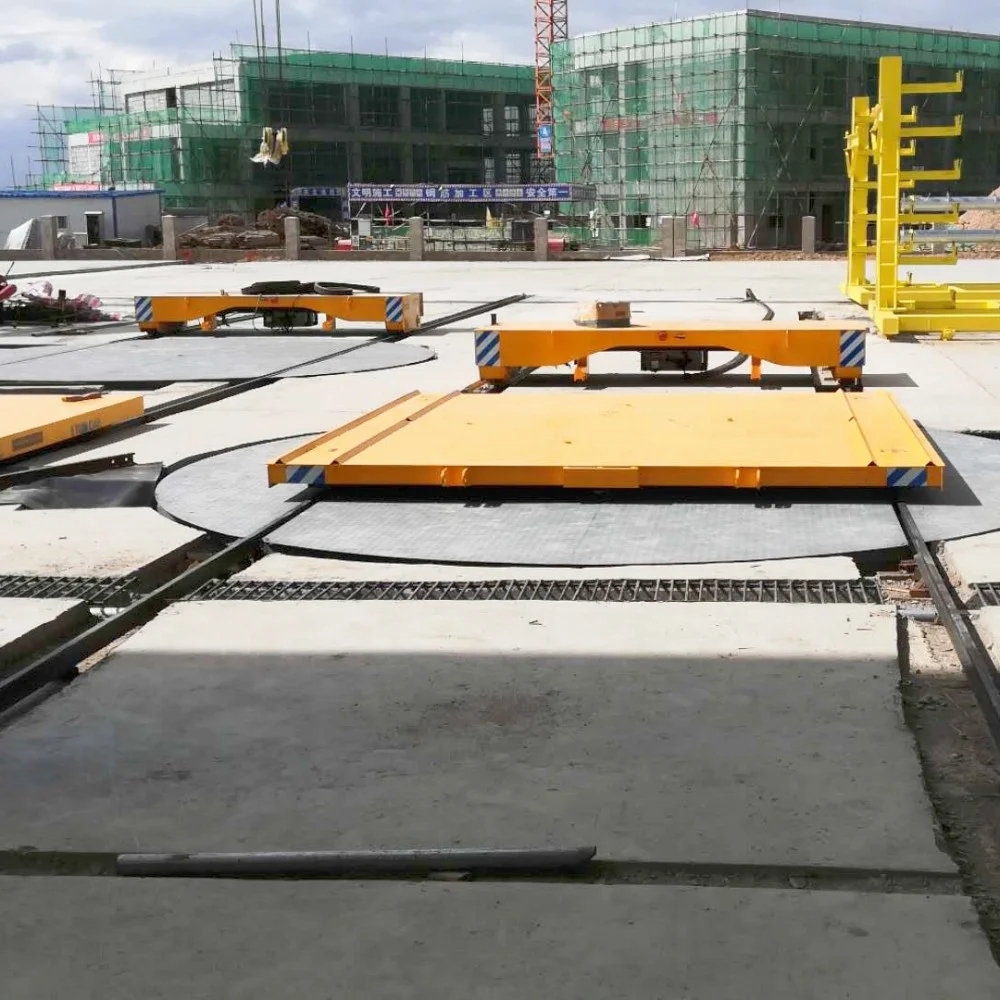
An orbital rotation platform is a mechanical system designed to rotate workpieces or equipment in a precise circular motion, often integrated into automated production lines. Unlike simple rotary tables, orbital rotation platforms allow for multi-axis movements with controlled speed, load capacity, and angular precision.
These platforms are essential in various industrial applications, such as:
-
Automotive manufacturing: For precise positioning of car bodies during welding or assembly.
-
Electronics: For accurate alignment in PCB inspection or component assembly.
-
Aerospace: For testing and assembly of components where tolerances are extremely tight.
-
Material handling: To streamline the movement of heavy or awkwardly shaped items within production cells.
By facilitating controlled orbital movement, these platforms reduce the likelihood of human error and mechanical misalignment, resulting in higher quality outputs.
Enhancing Precision Through Engineering
The precision of an orbital rotation platform relies on a combination of mechanical design, advanced bearings, servo motors, and intelligent control systems. High-quality platforms, such as those offered by Sichuan Zhongxin Rotating Machinery Equipment Co., Ltd., are engineered with the following features:
-
High-accuracy gear mechanisms: Precision gears ensure minimal backlash, allowing for smooth and predictable rotation.
-
Servo-controlled motors: These provide adjustable speeds and exact positioning, enabling repeatable movements down to fractions of a degree.
-
Sturdy structural design: Robust frames and heavy-duty bearings reduce vibration and mechanical flex, maintaining positional accuracy under high loads.
-
Intelligent feedback systems: Sensors and encoders continuously monitor the platform’s position, making real-time adjustments for consistent precision.
These design principles enable orbital rotation platforms to maintain tight tolerances even in high-volume production environments, significantly reducing rework and scrap rates.
Integration into Industrial Automation
Industrial automation benefits greatly from the incorporation of orbital rotation platforms. By combining robotic arms, conveyors, and vision systems with a rotating platform, manufacturers achieve synchronized multi-axis operations. Some practical applications include:
-
Robotic welding: The platform can rotate a vehicle chassis or structural component while the robotic arm performs consistent welds.
-
Assembly automation: Complex assemblies can be rotated incrementally, giving robots access from multiple angles without manual repositioning.
-
Inspection systems: Orbital rotation ensures every side of a product is captured by cameras or laser scanners, improving quality control.
-
Painting and coating: Rotating platforms allow even application of materials across all surfaces, enhancing finish consistency.
Such integration reduces cycle times, increases throughput, and ensures that each process step meets the required precision standards.
Advantages for Manufacturers
Incorporating orbital rotation platforms into industrial automation offers multiple advantages:
-
Enhanced productivity: Automated rotation reduces downtime caused by manual repositioning, accelerating production cycles.
-
Improved accuracy and repeatability: Consistent rotational precision ensures high-quality outcomes.
-
Flexibility for diverse applications: Customizable platforms can handle varying loads and sizes, making them suitable for multiple industries.
-
Cost efficiency over time: Reduced errors and rework lead to lower operational costs and material waste.
-
Scalable solutions: Modular designs allow integration into both small-scale workstations and large industrial systems.
For companies aiming to expand into international markets, like Sichuan Zhongxin Rotating Machinery Equipment Co., Ltd., these advantages are critical. Their products are not only widely used in China but have also been exported to countries such as the United States, United Kingdom, Qatar, Singapore, and Russia.
Customized and Non-Standard Applications
While standard orbital rotation platforms serve a wide range of applications, some manufacturing processes require customized solutions. Sichuan Zhongxin Rotating Machinery Equipment Co., Ltd. excels in providing non-standard automation equipment, tailored to specific production needs.
Examples of customized applications include:
-
Large industrial turntables: For handling oversized machinery or automotive bodies.
-
Artistic mechanical installations: Precision-controlled rotating structures for exhibitions or engineering demonstrations.
-
Automotive turntables: For detailed assembly or display purposes.
-
Integration with automated conveyors: Seamlessly connecting multiple stages of a production line.
The ability to provide bespoke solutions ensures that every client, regardless of industry, can achieve optimal efficiency and precision.
Real-World Case Study
Consider an automotive manufacturing facility aiming to improve the precision of welds on vehicle chassis. By integrating a high-precision orbital rotation platform, the plant was able to:
-
Rotate the chassis incrementally to allow robotic welders access to all joints.
-
Maintain consistent angular positioning with a tolerance of ±0.05 degrees.
-
Reduce overall assembly time per vehicle by 18%.
-
Minimize welding defects and material waste.
This case illustrates how the combination of automation and orbital rotation platforms directly translates into measurable productivity gains and quality improvements.
Looking Forward: Global Market Potential
The demand for orbital rotation platforms is growing worldwide as industries adopt automation and smart manufacturing solutions. Companies like Sichuan Zhongxin Rotating Machinery Equipment Co., Ltd. are expanding their reach globally, offering advanced machinery that meets international standards. Their focus on innovation, combined with engineering excellence, ensures that industrial clients receive platforms capable of supporting both current and future automation needs.
From automotive production lines in the United States to electronics assembly in Singapore, orbital rotation platforms are proving their value in enhancing precision, flexibility, and efficiency across diverse industries.
Conclusion
Orbital rotation platforms represent a pivotal technology in the evolution of industrial automation. By enabling precise, repeatable, and flexible rotational movement, these platforms optimize manufacturing processes, improve product quality, and enhance operational efficiency. Whether applied in automotive, aerospace, electronics, or material handling, the advantages are clear.
Sichuan Zhongxin Rotating Machinery Equipment Co., Ltd. continues to lead in providing both standard and customized solutions, ensuring that industries worldwide can meet the ever-increasing demands of precision manufacturing. For more information on their offerings, you can explore their dedicated orbital rotation platform page.
www.zxzht.com
Sichuan Zhongxin Rotating Machinery Equipment Co., Ltd.