
Published: November 2026 | By Zongheng Engineering Team | 7 min read
A line that reports 96% yield and a line that reports 96% first-pass yield are not the same line. The first number usually counts units shipped. The second counts units that never needed a second pass, and the gap between them is where the margin went.
What follows is the gas meter first pass yield low diagnostic checklist we run when a plant asks us to look at a line that has stopped improving: three measurements to establish where the loss sits, one sort that eliminates most candidate causes, then five reject patterns that name the root cause before anyone opens a meter.
1. Where Does the Yield Actually Go?
It goes into rework, and most plants are not counting it. A unit rejected at calibration, adjusted by hand, re-tested and passed is written down as a good unit at the end of the shift. It is not. It consumed a second bench cycle, an operator's judgement and a set of seals, and it left the plant carrying a defect that nobody recorded.
First-pass yield is the count of units that clear every station on the first attempt, divided by the count that entered station one. The arithmetic is unforgiving: six stations each holding 97% multiply to 83% at the end of the line, and not one of those stations looks like a problem on its own report.
The bands we see on a diaphragm line before improvement: shell stamping 0.3–1.0% reject, valve and diaphragm assembly 1.5–3.5%, housing closing 0.8–2.5%, leak test 2–6%, calibration 3–8%, final pressure loss 1–3%. Multiply those midpoints and a line with no visible villain lands at 85–90%. Every band maps to one of the gas meter manufacturing process quality control points from our earlier walkthrough, and every one of them should already sit on a control chart with a written reaction plan.
Before touching a single parameter, stratify the last two thousand rejects three ways: by fixture position, by shift, and by incoming lot. Rejects clustered on one cavity mean tooling. Clustered on one shift, it is temperature or a habit. Clustered on one lot, it walked in the door with the parts. An hour of sorting usually removes two-thirds of the plausible causes, and it costs nothing but a spreadsheet.
Then instrument the thing nobody wants to instrument: second passes. Tag every unit that re-enters calibration and give the operator four reason codes — seat, linkage, leak, other. Within a month you will have a Pareto that reflects reality instead of a scrap report that reflects nothing. That closes the measurement half of the gas meter first pass yield low diagnostic checklist; the rest is pattern reading.
✅ Bottom line: If your yield cannot be rebuilt from the reject log plus the re-test log, you are measuring shipping, not yield.
2. Which Five Symptoms Name the Cause?
The shape of the reject pattern names the cause faster than any teardown. Five patterns cover most of what we find on a diaphragm line, and each is confirmed by a measurement rather than an opinion.
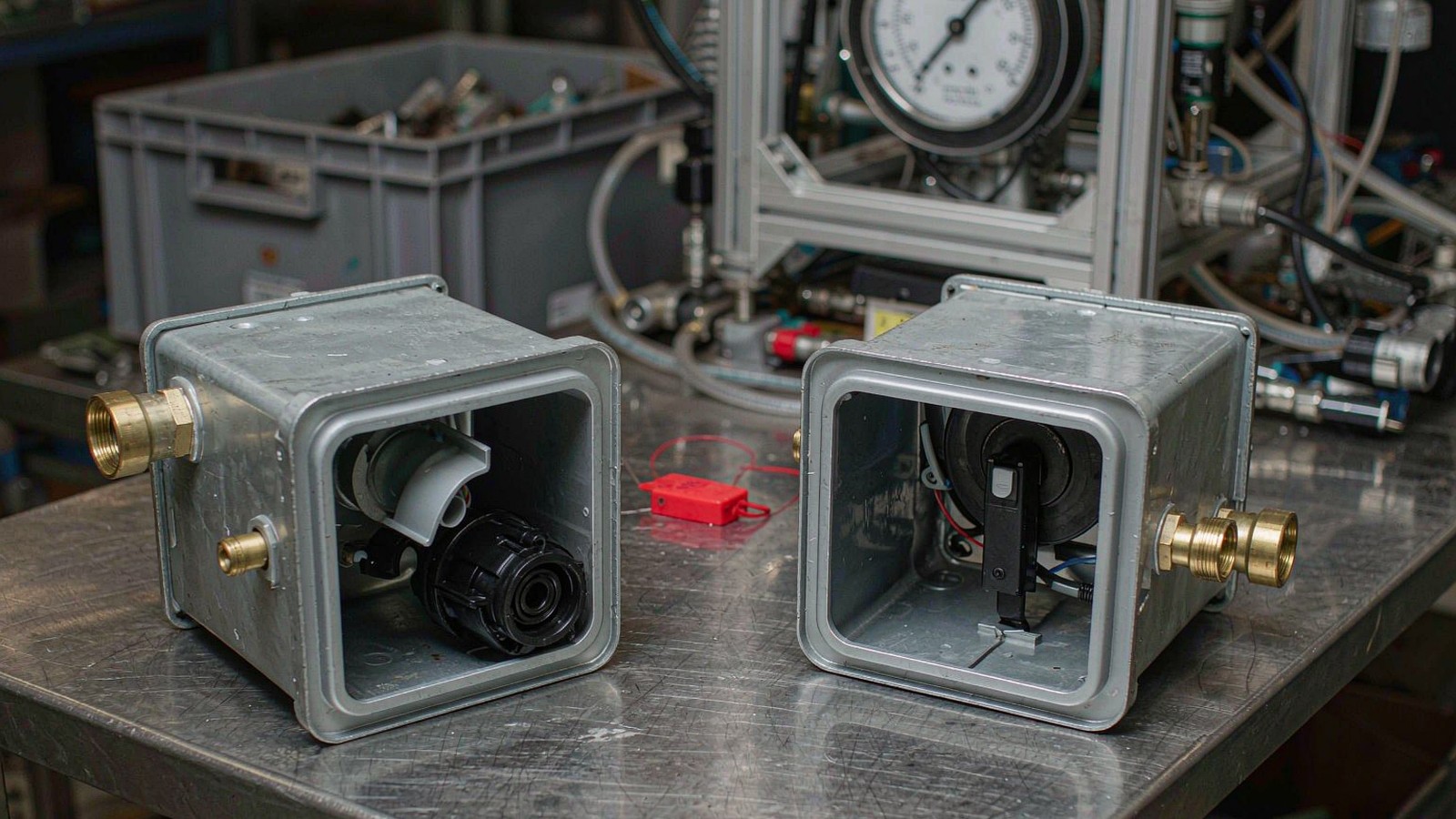
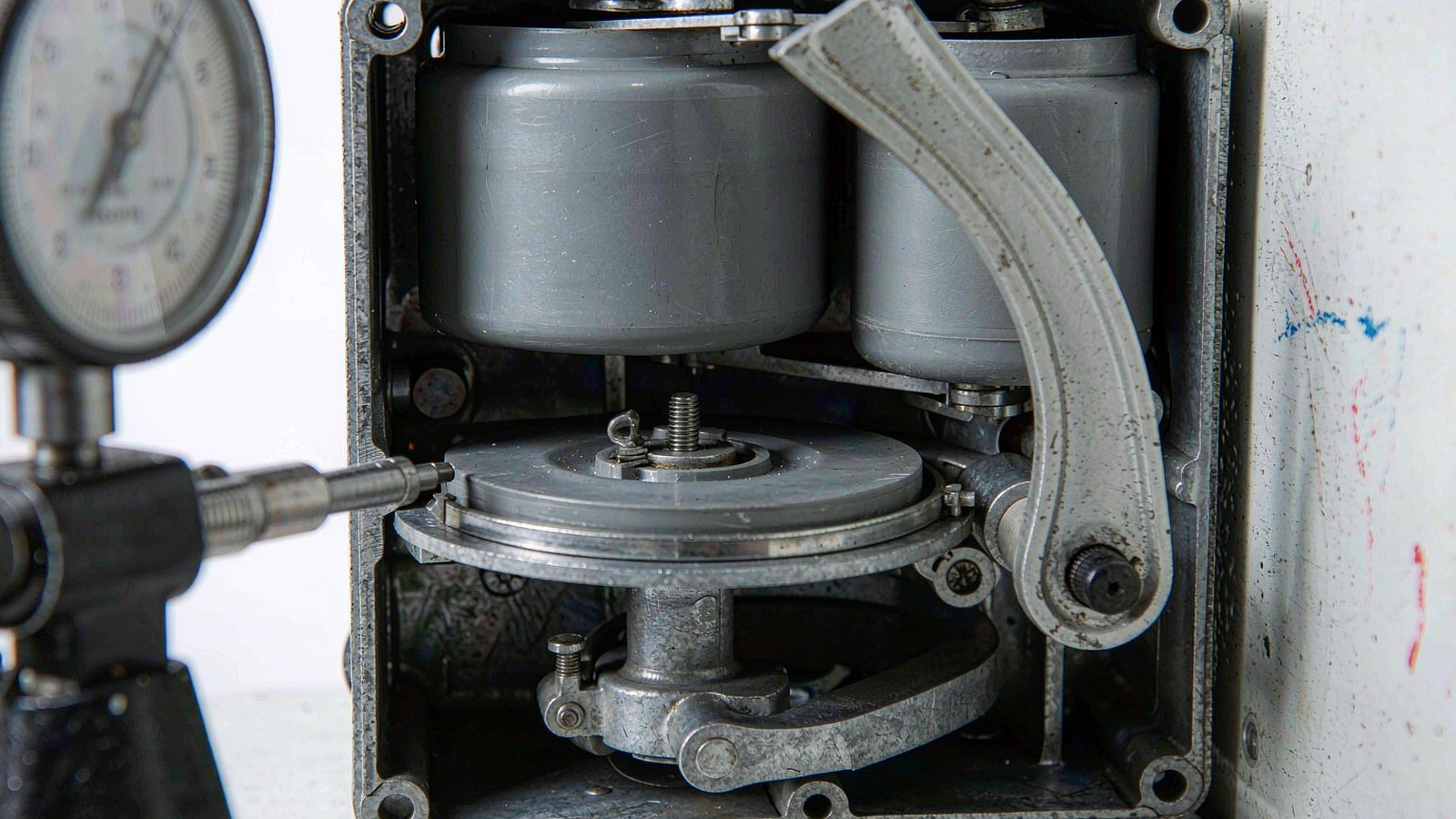
• Rejects bunched at Qmin only. The meter under-registers at low flow and behaves at Qmax, which means gas is slipping past the valve seat. Check clearance first — 0.05–0.15 mm is the working window, and a seat worn past 0.2 mm is scrap, not an adjustment — then valve timing against crank angle. A Qmin-only pattern is never a coefficient problem, whatever the bench software suggests.
• Rejects across every flow point, biased one way. Plot indicated error against flow before changing anything. A flat offset is software and belongs in the coefficients; a sloping line is steel — effective diaphragm volume, crank radius, linkage ratio. Recalibrating a slope costs a shift and returns the next morning, because the mechanism will drift back to its own geometry.
• Pressure loss above 600 Pa. This is where most gas meter pressure loss failure troubleshooting production hours are wasted, because the gauge proves a restriction exists and says nothing about where. In practice it is swarf in the port, flash across the inlet screen, a diaphragm pinched at the seam, or a valve plate rubbing its housing. Bore-check the port against the drawing and blow through every case before closing; both take ten seconds and remove the top cause entirely.
• Pressure loss low and registration low. The inverse pattern: the meter flows beautifully and under-counts, because the valve is not seating at all or a diaphragm seam is open. These units pass a leak test, since the leak is internal, which is why a low pressure-loss reading deserves the same suspicion as a high one.
• Leak rejects whose curve flattens. Not a leak. A decay that bends towards the horizontal is thermal drift or elastomer creep in the fixture, and adjusting the reject limit to clear it only moves the problem downstream.
One number predicts next week better than the reject count: the population median. When median seat clearance slips 0.02 mm, rejects follow in three to five days, because the tail of the distribution crosses the limit long before the average does. Chart the median and the 99th percentile together, and you will be adjusting a station before it fills a reject bin.
✅ Bottom line: A flat error curve is software and a sloping one is steel — read the slope before anyone touches a coefficient.
Frequently Asked Questions
Q: What first-pass yield should a gas meter line reach?
A: 95–97% on a mature diaphragm line, and 88–92% in the first year while fixtures are still being tuned. A line sitting below 90% after twelve months is not short of effort; it is carrying a design or incoming-part problem that no amount of operator attention will fix. That is the point at which a structured gas meter first pass yield low diagnostic checklist is worth more than another improvement campaign, whether you are an OEM building for a utility or a utility auditing a supplier.
Q: Is the loss in the line or in the parts?
A: Run a swap test before spending anything. Alternate two incoming lots through the same fixture, twenty units each. If the rejects follow the lot, the problem arrived with the parts and the supplier conversation is the fix. If they follow the fixture, it is tooling. This works because the gas meter manufacturing process quality control points that matter are usually in control already — the variation is entering the door, not being created at the station.
Q: Can an existing line be improved without replacing it?
A: Usually yes. In our experience 60–70% of yield loss traces to fixture condition, parameter drift and incoming parts rather than to the machine itself, so a station-level retrofit — new sealing adapters, a reference volume, torque-angle monitoring, a proper reject chute — recovers most of it for a fraction of a new line. The rest is gas meter pressure loss failure troubleshooting production discipline: a written reaction plan for every out-of-limit reading, not a verbal one — and that plan is what Wenling Zongheng Intelligent Equipment Co., Ltd. writes into a retrofit handover.
Next Step
Zongheng runs this audit on installed lines, ours and other builders'. Send the last three months of reject data with the station names, and we return a ranked list of the five changes most likely to move first-pass yield, with the measurement that proves each one afterwards. If the fix needs new hardware, we quote that custom work from the same findings rather than from a fresh survey.
We also retrofit individual stations — sealing fixtures, leak and calibration cells, torque-angle monitoring, reject handling — against the same gas meter manufacturing process quality control points we build into a new factory line, so an existing installation can be brought up without being torn out.
Wenling Zongheng Intelligent Equipment Co., Ltd. builds and commissions from its own plant in Wenling, Zhejiang, and quotes as a factory rather than a trading company.
Wholesale and ODM enquiries are welcome. For the station-by-station reference behind this checklist, read what the six quality gates actually check, or how a leak test station should be designed before you blame it — and if the arithmetic of a retrofit is the sticking point, here is where the capital actually sits.
www.zonhonauto.com
Wenling Zongheng Intelligent Equipment Co., Ltd.