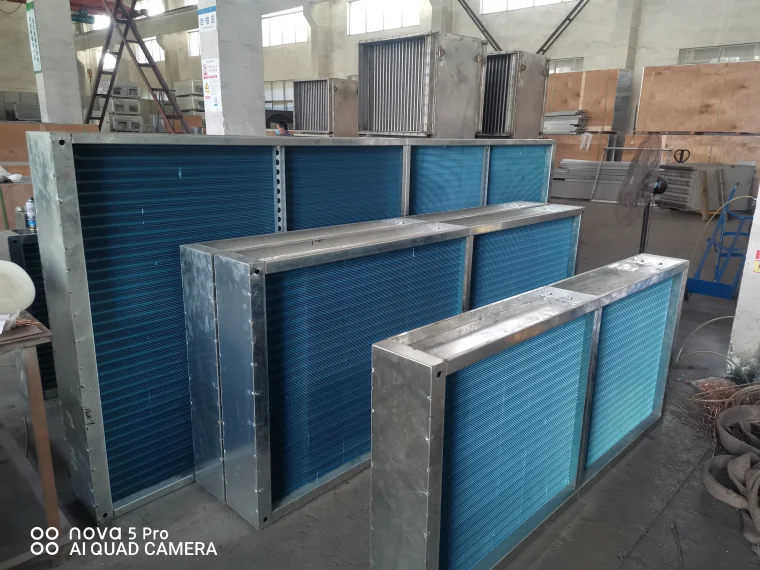
A heat pipe heat exchanger is widely used for heat recovery, ventilation, air conditioning, industrial cooling, and energy-saving applications. By transferring heat between two air streams without directly mixing them, a well-designed heat pipe heat exchanger can recover waste heat, reduce cooling or heating loads, and improve overall system efficiency.
However, like any thermal equipment, a heat pipe heat exchanger can experience performance problems over time. Some issues are caused by improper sizing or installation, while others result from contamination, corrosion, poor airflow management, or insufficient maintenance. If these problems are not identified early, they can reduce heat transfer efficiency, increase operating costs, and shorten the service life of the equipment.
The good news is that most common heat pipe heat exchanger problems can be prevented through proper design, material selection, installation, and routine maintenance.
This guide examines the most common problems associated with heat pipe heat exchangers and explains practical ways to prevent them.
1. Reduced Heat Transfer Efficiency
One of the most common problems is a gradual decline in heat transfer performance.
A heat pipe heat exchanger relies on the evaporation and condensation of a working fluid inside sealed heat pipes. When one end of the pipe absorbs heat, the working fluid evaporates and moves toward the cooler section, where it condenses and releases heat. This continuous phase-change process allows heat to move efficiently between the two sides of the heat exchanger.
When the actual heat recovery performance is significantly lower than expected, several factors may be responsible.
Common causes include:
-
Dirty heat transfer surfaces
-
Insufficient airflow
-
Poor air distribution
-
Incorrect equipment sizing
-
Fouling or contamination
-
Excessive air leakage
-
Damage to heat pipes
-
Operating conditions outside the original design range
How to prevent it
The first step is to select a heat pipe heat exchanger according to actual operating conditions rather than simply choosing a unit based on nominal dimensions.
Important parameters include:
-
Airflow rate
-
Inlet and outlet temperatures
-
Relative humidity
-
Required heat recovery capacity
-
Air pressure
-
Air quality
-
Installation space
-
Seasonal operating conditions
Regular cleaning is equally important. Dust and other contaminants can accumulate on the fin surfaces and create an insulating layer that reduces heat transfer.
For systems operating in dusty or polluted environments, filtration and more frequent inspection may be necessary.
2. Fouling and Dust Accumulation
Airborne particles are a major concern for air-to-air heat exchangers. Over time, dust, fibers, grease, and other contaminants can accumulate on the fins of a heat pipe heat exchanger.
Even a relatively thin layer of dirt can increase airflow resistance and reduce the effective heat transfer area.
As fouling becomes more severe, the system may experience:
-
Lower heat recovery efficiency
-
Higher fan energy consumption
-
Increased pressure drop
-
Reduced airflow
-
Uneven temperature distribution
This is particularly important in factories, commercial kitchens, workshops, warehouses, and other environments where the air contains significant levels of contaminants.
How to prevent fouling
Installing appropriate air filters upstream of the heat exchanger is one of the simplest preventive measures.
The filter should be selected according to the air quality and application. However, installing a filter is not enough. Filters themselves need to be inspected and replaced or cleaned according to the operating environment.
The heat exchanger should also be inspected periodically. If dust has accumulated on the fins, cleaning should be performed using a method appropriate for the heat exchanger's construction and fin material.
Avoid aggressive cleaning methods that could bend fins or damage the heat pipe assembly.
3. Corrosion of Heat Transfer Components
Corrosion is another important problem, especially when a heat pipe heat exchanger operates in humid, marine, chemical, or polluted environments.
Moisture, salt, acidic gases, and chemical contaminants can attack aluminum, copper, steel, or other materials used in the heat exchanger.
Corrosion can cause:
-
Reduced heat transfer performance
-
Fin deterioration
-
Structural damage
-
Leakage
-
Shortened service life
-
Increased maintenance costs
For example, equipment installed near coastal areas may be exposed to salt-laden air. In industrial facilities, corrosive gases can create an even more challenging environment.
How to prevent corrosion
Material selection should be considered during the initial design stage.
Depending on the application, manufacturers may use materials or surface treatments designed to provide better corrosion resistance. Protective coatings can also be considered when the operating environment requires additional protection.
However, corrosion protection should not be treated as a universal solution. The coating, substrate material, and application method should all be compatible with the expected environment.
Routine inspections are also valuable. Early signs such as discoloration, surface oxidation, coating damage, or fin deterioration should be investigated before corrosion becomes severe.
4. Heat Pipe Leakage or Loss of Working Fluid
The sealed heat pipe is the core component of a heat pipe heat exchanger. It contains a working fluid under controlled conditions, and the fluid plays a critical role in the phase-change heat transfer process.
If a heat pipe is physically damaged or develops a leak, its thermal performance can deteriorate significantly.
Possible causes include:
-
Manufacturing defects
-
Mechanical impact
-
Excessive vibration
-
Improper handling
-
Corrosion
-
Extreme operating conditions
A damaged heat pipe may no longer transfer heat effectively even though the rest of the heat exchanger appears to be functioning normally.
How to prevent it
Quality control during manufacturing is essential. A reliable heat pipe heat exchanger manufacturer should conduct appropriate leak testing and performance checks before shipment.
During transportation and installation, the heat exchanger should be handled carefully. Avoid dropping, bending, or applying excessive force to the heat pipe assembly.
Installation personnel should also follow the manufacturer's recommended procedures.
If abnormal temperature differences are detected across individual sections of the heat exchanger, the affected heat pipes should be inspected.
5. Poor Airflow Distribution
A heat pipe heat exchanger can only perform effectively when air flows properly across the heat transfer surfaces.
Even when the total airflow rate appears correct, uneven airflow distribution can reduce actual performance.
For example, one section of the heat exchanger may receive excessive airflow while another section receives very little. The result is an underutilized heat transfer surface.
Poor airflow distribution can be caused by:
-
Incorrect duct design
-
Elbows positioned too close to the heat exchanger
-
Inadequate airflow straightening
-
Poor fan selection
-
Improper installation
-
Blocked filters
-
Incorrect duct transitions
How to prevent it
The duct system should be considered together with the heat pipe heat exchanger rather than treating the exchanger as an independent component.
Whenever possible, provide adequate straight duct length and avoid creating severe turbulence immediately upstream of the heat exchanger.
Properly designed transitions can also help distribute air more evenly across the heat transfer core.
For larger heat pipe heat exchanger systems, airflow measurement or computational analysis may be useful when uniform distribution is particularly important.
6. Excessive Pressure Drop
Pressure drop is an important design consideration that is sometimes overlooked.
A heat pipe heat exchanger contains numerous fins and air passages. If the heat exchanger is too dense for the required airflow, the pressure drop may become excessive.
Higher pressure drop means the fan needs to work harder to maintain the required airflow. This can increase electricity consumption and reduce the energy-saving benefits of the system.
An undersized heat exchanger may therefore create an unexpected operating problem: although the unit itself provides heat recovery, the additional fan power can reduce the overall energy benefit.
How to prevent it
Heat exchanger selection should consider both thermal performance and air-side pressure drop.
Engineers should evaluate:
-
Airflow velocity
-
Fin spacing
-
Heat transfer area
-
Required heat recovery
-
Fan capacity
-
System pressure
-
Filter pressure drop
The objective is not simply to maximize heat transfer. The best heat pipe heat exchanger balances heat recovery performance with acceptable pressure loss and operating cost.
7. Condensation and Drainage Problems
Depending on the application and air conditions, condensation may occur on the cold side of the heat exchanger.
If condensate is not managed properly, water can accumulate inside the equipment.
This can lead to:
-
Increased humidity
-
Corrosion
-
Microbial growth
-
Water leakage
-
Reduced airflow
-
Damage to surrounding components
Condensation is especially relevant in air-conditioning and ventilation applications where humid air is cooled below its dew point.
How to prevent it
The system should be designed with proper condensate management where condensation is expected.
Drainage components should have suitable capacity and should remain free of blockage. The heat exchanger and surrounding areas should also be inspected periodically for signs of standing water or leakage.
It is important not to assume that condensation will never occur simply because the heat exchanger is designed for air-to-air heat recovery. Actual operating conditions vary throughout the year.
8. Incorrect Heat Pipe Heat Exchanger Sizing
Selecting the wrong size is one of the most fundamental problems.
If a heat pipe heat exchanger is too small, it may not provide the required heat recovery capacity. If it is significantly oversized, the system may have unnecessary capital costs, increased pressure drop, or installation difficulties.
Sizing should be based on actual operating requirements rather than simply matching the dimensions of an existing duct.
Key sizing considerations include:
Airflow: Determine the actual required air volume rather than relying on the fan's theoretical maximum.
Temperature difference: The temperature difference between the two air streams directly affects the available heat transfer potential.
Target efficiency: Different projects may have different requirements for sensible heat recovery.
Space limitations: Available installation space can affect the geometry and configuration of the heat exchanger.
Pressure drop: The selected unit must work within the available fan pressure.
How to prevent sizing problems
Work with a manufacturer or thermal engineer during the selection process and provide complete operating data.
A professional heat pipe heat exchanger manufacturer should be able to evaluate the application and recommend a suitable configuration rather than selecting equipment based only on airflow.
9. Operating Outside the Design Conditions
A heat pipe heat exchanger is designed for a specific range of operating conditions.
If the equipment is continuously operated outside those conditions, performance may not match the original specifications.
For example, significant changes in:
-
Air temperature
-
Airflow
-
Humidity
-
Pressure
-
Air composition
-
Heating or cooling load
can influence system performance.
How to prevent it
Before purchasing or installing a heat pipe heat exchanger, clearly define the expected operating range.
If seasonal conditions vary substantially, the equipment should be evaluated under both typical and extreme operating conditions.
For systems with variable airflow, controls can also be used to maintain operation within an appropriate range.
10. Mechanical Damage and Vibration
Industrial equipment may be exposed to vibration caused by fans, compressors, motors, pumps, or nearby machinery.
Excessive vibration can place mechanical stress on the heat exchanger structure and connections. In severe cases, it may contribute to fatigue or damage to heat pipes.
Transportation can also cause mechanical problems if the unit is not properly protected.
How to prevent mechanical damage
The heat pipe heat exchanger should be securely supported according to the manufacturer's installation requirements.
Fans and other rotating equipment should be properly balanced and isolated when necessary.
During installation, avoid using the heat exchanger itself as a structural support for other equipment.
After commissioning, abnormal vibration or unusual noise should be investigated rather than ignored.
Conclusion
A heat pipe heat exchanger can provide reliable and efficient heat recovery for many years when it is correctly designed, installed, and maintained. However, problems such as reduced heat transfer efficiency, fouling, corrosion, leakage, uneven airflow, excessive pressure drop, condensation, and mechanical damage can gradually affect performance.
The most effective prevention strategy starts with proper equipment selection. The heat pipe heat exchanger should be sized according to actual airflow, temperature, humidity, pressure, and environmental conditions. Material selection and corrosion protection should also match the application.
After installation, regular inspection and cleaning are essential. Monitoring changes in airflow, pressure drop, temperature performance, and physical condition can help identify problems before they become expensive failures.
Ultimately, the goal is not simply to purchase a high-efficiency heat exchanger. It is to create a complete system in which heat pipe heat exchanger design, installation, airflow management, material selection, and maintenance work together.
With the right approach, a well-designed heat pipe heat exchanger can provide dependable heat recovery, lower energy consumption, and stable long-term performance across HVAC, ventilation, industrial, and other energy-saving applications.
www.nowvleco.com
nowvleco