Industrial inspection has evolved rapidly over the past decade. As manufacturing tolerances become tighter and product structures more complex, traditional inspection methods are increasingly challenged by efficiency, accuracy, and data consistency requirements. Among modern measurement technologies, 3D scanning has emerged as a practical and reliable solution for industrial inspection across machining, automotive, aerospace, tooling, and precision manufacturing industries.
This article explores five key advantages of using 3D scanners for industrial inspection, with real-world application value rather than abstract concepts. It also reflects how Suzhou Evolution Technology Co., Ltd. has progressively expanded its inspection and measurement capabilities to meet these changing industry demands.
1. Full-Field Measurement Instead of Point-Based Inspection
Traditional inspection tools such as calipers, micrometers, and coordinate measuring machines (CMMs) often rely on point-by-point measurement. While accurate, this approach can miss localized deviations, surface deformation, or subtle profile errors—especially on freeform or complex geometries.
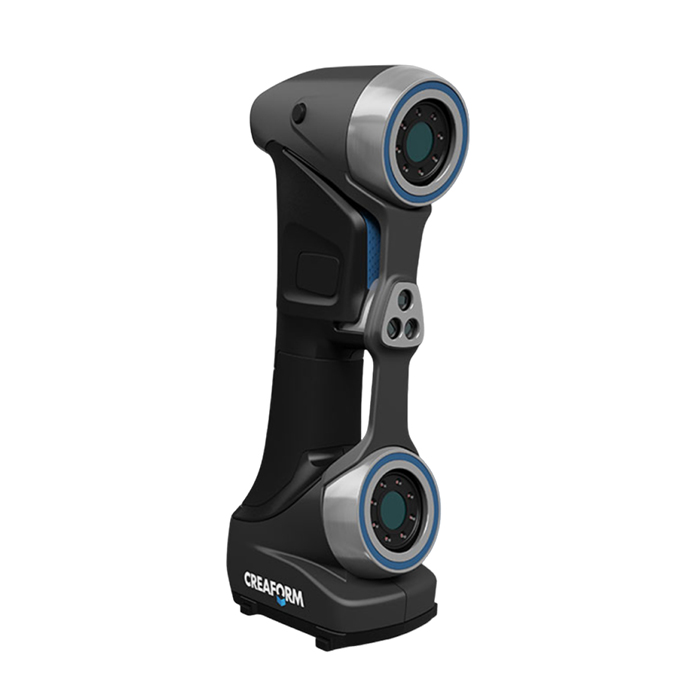
3D scanners capture millions of data points across the entire surface of a part in a single scan. This full-field measurement provides a complete digital representation of the component, allowing inspectors to:
-
Identify surface deviations that point measurements may overlook
-
Analyze complex curves, chamfers, and blended features
-
Detect deformation, warping, or uneven wear
For manufacturers working with precision machining or molded components, this comprehensive data coverage significantly reduces inspection blind spots and improves confidence in quality decisions.
As Suzhou Evolution Technology Co., Ltd. expanded from CNC tool presetters in 2015 to CNC probes and measurement solutions in 2017, the limitations of point-based inspection became increasingly apparent in real production environments. The introduction of 3D scanning solutions in 2022 directly addressed this gap by enabling complete surface inspection rather than partial sampling.
2. Improved Inspection Efficiency and Reduced Cycle Time
Inspection speed is critical in modern manufacturing, particularly for high-mix, low-volume production or rapid prototyping environments. Traditional inspection methods often require complex fixturing, multiple setups, and long programming cycles, especially when using CMMs.
3D scanners significantly shorten inspection time by:
-
Reducing or eliminating part fixturing requirements
-
Capturing complete geometry in seconds or minutes
-
Allowing flexible scanning directly on the shop floor
Once a scanning workflow is established, inspection becomes more repeatable and less dependent on operator experience. This makes 3D scanning especially valuable for first article inspection (FAI), in-process inspection, and short-run production validation.
Suzhou Evolution Technology Co., Ltd. experienced rapid growth in 2020 as customers demanded faster measurement feedback loops to support rising production volumes. The integration of 3D scanning technology helped bridge the gap between production and inspection, enabling quicker decisions without sacrificing measurement coverage.
3. High Accuracy with Digital Traceability
Modern industrial 3D scanners offer high accuracy and repeatability when properly calibrated and used within defined operating conditions. More importantly, they generate digital inspection records that can be stored, compared, and traced over time.
Key benefits include:
-
Digital archiving of inspection results
-
Easy comparison between CAD models and scanned data
-
Historical trend analysis for process improvement
This digital traceability supports quality audits, customer documentation, and continuous improvement initiatives. Unlike manual measurements that may depend on handwritten records or isolated data points, 3D scanning creates structured datasets that integrate well with modern quality management systems.
As Suzhou Evolution Technology Co., Ltd. continued to deepen its presence in the inspection and analysis industry in 2024, the value of data-driven quality control became increasingly clear. Expanding into analytical instruments and inspection services reinforced the importance of digital measurement data that could support long-term process optimization rather than one-time verification.
4. Versatility Across Multiple Inspection Scenarios
One of the most practical advantages of 3D scanners is their adaptability. A single scanner system can be used for a wide range of inspection tasks, including:
-
Dimensional inspection against CAD models
-
Surface defect detection
-
Reverse engineering and part reconstruction
-
Wear and deformation analysis
This versatility reduces the need for multiple dedicated inspection tools and simplifies training requirements. It also allows manufacturers to respond more flexibly to changing inspection needs, such as new product introductions or design changes.
With the planned expansion into 3D visual inspection products and services, Suzhou Evolution Technology Co., Ltd. is aligning its future development with this demand for flexible, multi-functional inspection solutions. By combining 3D scanning with visual inspection technologies, manufacturers can address both dimensional accuracy and surface quality within a unified inspection framework.
For readers interested in learning more about industrial scanning solutions, the following resource provides additional technical insight:<a href="https://www.szevotech.com/3D-scanner">industrial 3D scanner solutions</a>
5. Better Communication Between Engineering, Production, and Quality Teams
Inspection data is only valuable if it can be clearly interpreted and shared. Traditional inspection reports filled with numerical tables can be difficult for non-metrology specialists to understand.
3D scanning improves cross-functional communication by providing intuitive visual outputs such as:
-
Color deviation maps
-
Sectional analysis views
-
Overlay comparisons between scanned data and CAD models
These visual tools make it easier for engineers, operators, and quality managers to quickly identify issues, discuss root causes, and implement corrective actions. Instead of debating measurement results, teams can focus on solving problems based on a shared visual reference.
This collaborative advantage reflects the broader development path of Suzhou Evolution Technology Co., Ltd.—from hardware-focused measurement tools to integrated inspection and analysis solutions. By supporting clearer communication across departments, modern inspection technologies help manufacturers move from reactive quality control to proactive quality management.
Conclusion
3D scanners are no longer experimental tools reserved for specialized applications. They have become practical, reliable, and essential instruments for industrial inspection. By offering full-field measurement, faster inspection cycles, digital traceability, versatile applications, and improved communication, 3D scanning technology directly addresses many of the challenges faced by modern manufacturers.
Suzhou Evolution Technology Co., Ltd.’s steady expansion—from CNC tool presetters in 2015 to comprehensive inspection, analysis, and 3D visual inspection solutions—mirrors the broader industry shift toward smarter, data-driven quality control. As manufacturing continues to evolve, 3D scanning will play an increasingly important role in ensuring precision, efficiency, and consistency across the entire production lifecycle.
www.szevotech.com
Suzhou Evolution Technology Co., Ltd.