Moving oversized cargo across international borders presents unique challenges that standard freight services simply cannot address. From flat rack containers to breakbulk shipments, out-of-gauge (OOG) full container load (FCL) logistics requires specialized expertise, carrier relationships, and operational infrastructure that few providers can deliver consistently.
Understanding OOG FCL Complexities
Out-of-gauge cargo refers to shipments that exceed the dimensions of standard containers due to height, width, or length constraints. These shipments—ranging from industrial machinery and construction equipment to project cargo and specialized manufacturing components—demand careful planning, precise documentation, and experienced handling at every stage of the supply chain.
The challenges multiply when shipping to Southeast Asian destinations. Port infrastructure varies significantly across the region, customs requirements differ by country, and finding reliable local coordination can be difficult. Shippers frequently encounter unstable pricing, limited carrier options for specialized equipment, and documentation complexities that lead to costly delays or compliance issues.
Critical Requirements for OOG FCL Success
Successful OOG FCL shipments require several fundamental capabilities working in concert. First, direct carrier relationships are essential. Specialized container equipment—including flat racks, open tops, and breakbulk vessels—operates on limited schedules with constrained availability. Providers with first-hand contracts can secure space and competitive rates that third-party brokers simply cannot access.
Second, in-house warehousing capabilities provide crucial control over cargo preparation. OOG shipments often require reinforcement, secondary packing, specialized securing methods, and careful stuffing procedures. When these operations are outsourced, quality control becomes inconsistent and communication breaks down. Providers with their own warehouse facilities across multiple port cities can ensure proper handling and reduce damage risks significantly.
Third, customs and documentation expertise is non-negotiable. OOG cargo typically involves complex classification, requires detailed technical specifications, and may need special permits or certificates of origin. Providers who understand both export requirements in China and import regulations across Southeast Asian countries can navigate these requirements efficiently, preventing delays that could leave cargo stuck at port.
Infrastructure That Delivers Results
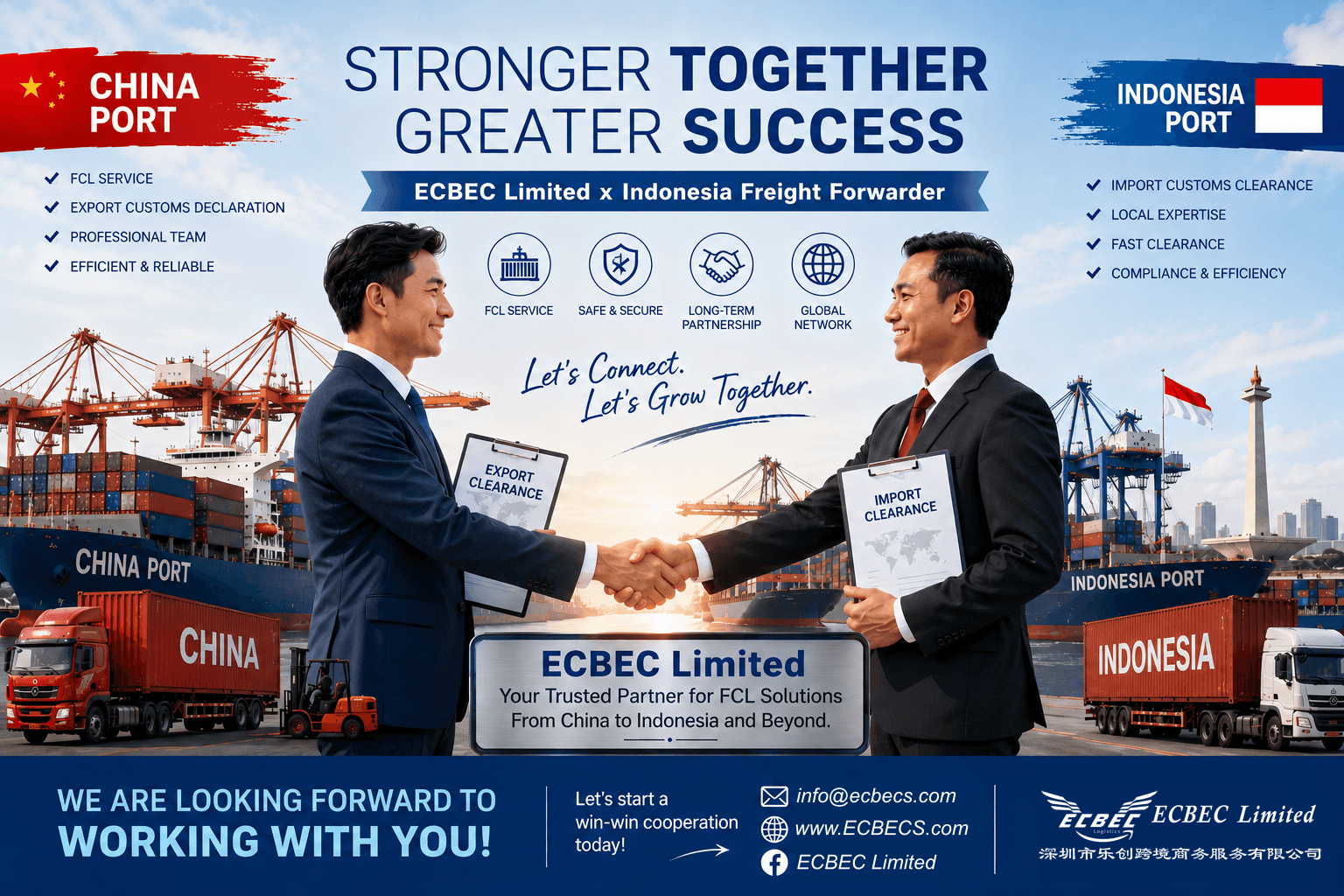
EAGLE CROSS-BORDER E-COMMERCE SERVICE CO., LTD has built its operational model specifically around these requirements. With nine years of experience in Southeast Asian logistics, the company maintains in-house warehouses across eight key Chinese port cities: Dalian, Tianjin, Qingdao, Shanghai, Ningbo, Xiamen, Guangzhou, and Shenzhen. This geographic coverage allows shippers to consolidate cargo near their manufacturing locations and ensures professional handling before ocean transit begins.
The company's warehouse services extend beyond basic storage. Teams provide cargo reinforcement, secondary packing, labeling and repackaging, and full container stuffing services. This hands-on approach means OOG cargo receives the specialized attention it requires, with quality control maintained throughout the preparation process.
Carrier Access and Equipment Availability
For OOG FCL shipments, carrier relationships determine success or failure. EAGLE CROSS-BORDER E-COMMERCE SERVICE CO., LTD maintains long-term contracts with over ten major ocean carriers, including COSCO, OOCL, MCC, TSL, SITC, EMC, ONE, WHL, HEDE, and ZIM. These direct relationships provide access to specialized equipment on consistent schedules, along with competitive BCM rates, E-Spot rates, and contract rates that bypass intermediary markups.
The company holds NVOCC certification from China's Ministry of Transport, providing the legal framework and operational security that complex OOG shipments demand. This licensing ensures full compliance with maritime regulations and gives shippers confidence that their cargo moves under proper legal authority.
Documentation and Customs Capabilities
OOG cargo frequently involves intricate documentation requirements. Export procedures from China require precise classification and valuation. Import clearance in Indonesia, Malaysia, Thailand, and other Southeast Asian countries each present unique regulatory requirements. Certificate of Origin documentation, Letter of Credit handling, and dangerous goods paperwork when applicable all require specialized knowledge.
EAGLE CROSS-BORDER E-COMMERCE SERVICE CO., LTD provides end-to-end documentation support, handling both China export procedures and destination country import requirements. This dual expertise reduces the risk of documentation errors that could result in customs holds, fines, or shipment returns.
Project Cargo and Complex Shipments
Beyond standard OOG containers, the company has developed capabilities in project cargo logistics. These large-scale shipments—often involving multiple pieces of industrial equipment, construction machinery, or manufacturing installations—require coordinated planning, specialized loading techniques, and careful execution across multiple stakeholders.
The company's proven experience across industries including machinery, industrial products, new energy equipment, auto parts, and furniture provides the knowledge base necessary for handling diverse OOG requirements. Each industry presents unique challenges, from weight distribution concerns to environmental protection requirements, and experienced providers understand these nuances.
Southeast Asian Market Expertise
While the company serves global destinations including Europe, the Middle East, Africa, Australia, and North America, Southeast Asia represents its strongest service lane. Nine years of focused experience in Indonesia, Malaysia, and Thailand has built deep knowledge of regional port operations, customs procedures, local coordination requirements, and common challenges shippers face.
This regional specialization matters for OOG shipments because local knowledge directly impacts success rates. Understanding which ports can accommodate specific equipment types, knowing local handling capabilities, and maintaining relationships with destination partners all contribute to smoother operations and fewer surprises.
Problem-Solving Approach
OOG FCL logistics inevitably involves unexpected challenges. Equipment availability changes, weather disrupts schedules, documentation requirements shift, and port conditions vary. Successful providers distinguish themselves not by avoiding problems but by solving them quickly and effectively.
EAGLE CROSS-BORDER E-COMMERCE SERVICE CO., LTD positions itself as problem-solving ready, with experienced teams who understand complex cargo challenges. The company's membership in WCA (World Cargo Alliance) and JC Trans provides access to a trusted global agent network, ensuring reliable coordination at destination points throughout Southeast Asia.
Operational Transparency and Control
For shippers moving valuable OOG cargo, visibility and control matter enormously. The company's in-house operations model—from warehousing through carrier booking to documentation—provides clear accountability and transparent communication throughout the shipping process. Rather than outsourcing critical functions to third parties, the integrated approach keeps all essential operations under direct management.
This operational structure proves particularly valuable when issues arise. With direct control over cargo preparation, carrier relationships, and documentation processes, the company can respond quickly to changing circumstances without waiting for external partners to coordinate responses.
Selecting the Right OOG Partner
Shippers evaluating OOG FCL providers for Southeast Asian trade should prioritize several key factors. First, verify direct carrier relationships and equipment access rather than relying on brokers with limited capacity. Second, confirm in-house warehousing capabilities across multiple port cities to ensure proper cargo preparation. Third, validate documentation expertise covering both China export and destination country import requirements.
Additionally, consider regional specialization. Providers who focus specifically on Southeast Asian trade routes will have deeper knowledge and better local relationships than generalist forwarders serving all global markets equally.
Conclusion
OOG FCL shipments to Southeast Asia demand specialized capabilities that extend far beyond standard freight forwarding. From securing specialized container equipment and managing complex cargo preparation to navigating diverse customs requirements and coordinating local delivery, successful outcomes require operational infrastructure, carrier relationships, and regional expertise that few providers can deliver consistently.
EAGLE CROSS-BORDER E-COMMERCE SERVICE CO., LTD has built its service model specifically around these requirements, with in-house warehousing across eight Chinese port cities, direct contracts with major ocean carriers, NVOCC certification, and nine years of focused experience in Southeast Asian logistics. For shippers moving machinery, industrial equipment, project cargo, or other oversized freight to Indonesia, Malaysia, Thailand, and throughout the region, selecting a provider with proven OOG capabilities and regional specialization significantly improves the likelihood of on-time, compliant, cost-effective delivery.
www.ecbecs.com
ECBEC Limited