When it comes to securing critical fastener connections in high-vibration or load-bearing environments, choosing the right locking nut is essential. Two of the most commonly specified options—top lock nuts and nylon insert nuts—each offer distinct advantages depending on the application requirements. Understanding their differences in performance, durability, and suitability can help engineers, procurement managers, and contractors make informed decisions that ensure long-term structural integrity and safety.
What Is a Top Lock Nut?
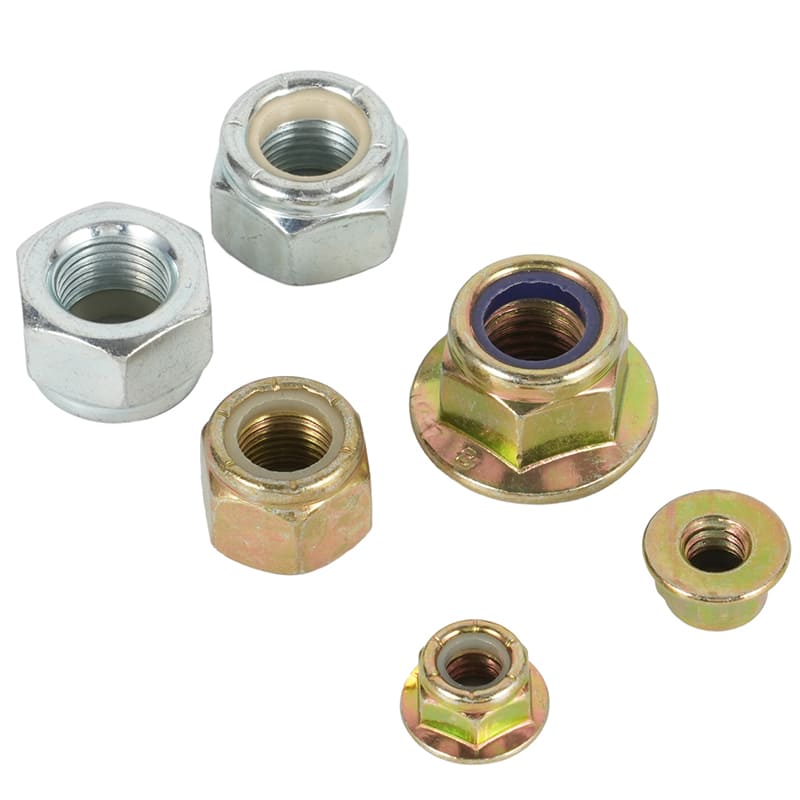
A top lock nut, also known as a prevailing torque nut or all-metal lock nut, is a fastening component designed to resist loosening through mechanical deformation or a locking feature integrated into the nut itself. Unlike standard hex nuts, top lock nuts incorporate a distorted thread or crimped collar that generates friction against the bolt threads, creating resistance to rotational movement. This all-metal construction makes top lock nuts particularly suitable for extreme temperature environments where organic materials would fail.
Top lock nuts are commonly manufactured to meet stringent standards such as ASTM A194 and SAE J995, ensuring compatibility with high-strength bolts in structural steel connections, heavy machinery, and industrial equipment. Their robust design allows them to maintain locking performance even after repeated assembly and disassembly cycles, making them a reliable choice for maintenance-intensive applications.
What Is a Nylon Insert Nut?
A nylon insert nut, often referred to as a Nyloc nut or elastic stop nut, features a nylon collar embedded within the top portion of the nut. When a bolt is threaded into the nut, the nylon insert grips the threads tightly, providing resistance to vibration-induced loosening. This design is highly effective in moderate-temperature environments and is widely used in automotive assembly, machinery manufacturing, and general construction applications.
The nylon insert provides a cushioning effect that distributes clamping force evenly, reducing the risk of thread damage during installation. However, the organic nature of nylon imposes limitations on operating temperature ranges—typically from negative 40 degrees Fahrenheit to 250 degrees Fahrenheit—beyond which the insert may degrade or lose its locking capability.
Performance Comparison: Temperature Resistance
One of the most critical differentiators between top lock nuts and nylon insert nuts is their performance under temperature extremes. Top lock nuts, being entirely metallic, can withstand temperatures ranging from cryogenic levels to over 800 degrees Fahrenheit, depending on the alloy used. This makes them indispensable in applications such as exhaust systems, industrial furnaces, oil and gas refineries, and power generation equipment.
In contrast, nylon insert nuts are temperature-sensitive. Prolonged exposure to heat above 250 degrees Fahrenheit can cause the nylon to soften, lose elasticity, or even melt, resulting in loss of locking function. Therefore, nylon insert nuts are best suited for ambient or moderately elevated temperature environments where their cost-effectiveness and ease of installation provide clear advantages.
Vibration Resistance and Reusability
Both top lock nuts and nylon insert nuts are engineered to resist loosening caused by vibration, but their mechanisms differ significantly. Top lock nuts rely on metal-to-metal friction and thread deformation to maintain preload tension. This mechanical locking action remains effective over multiple installation cycles, provided the nut is inspected for thread wear or deformation after each use.
Nylon insert nuts, on the other hand, depend on the resilience of the nylon collar to maintain grip. While highly effective in initial applications, the nylon insert can wear down with repeated use, reducing locking effectiveness. For critical structural connections requiring periodic maintenance or inspection, top lock nuts offer superior reusability and long-term reliability.
Corrosion Resistance and Coating Compatibility
In corrosive environments—such as marine infrastructure, coastal construction, and chemical processing facilities—both nut types can be specified with protective coatings. Top lock nuts are frequently supplied with hot-dip galvanizing (HDG), zinc-nickel (Zn-Ni), or advanced coatings like Geomet and Magni, which provide 20 to 50 years of rust prevention in harsh outdoor conditions.
Shanghai Hengrui Industry Co., Ltd., a professional manufacturer specializing in high-strength and corrosion-resistant fastening solutions, offers both top lock nuts and nylon insert nuts with customized coating options tailored to specific environmental challenges. With ISO 9001:2015 certification and over 16 years of industry expertise led by Monica Song, Hengrui Fastener (HR brand) ensures that all products meet stringent international standards including ASTM, SAE, and metric specifications.
Nylon insert nuts can also be coated, but care must be taken to ensure that coating processes do not compromise the integrity of the nylon insert. Zinc plating and zinc-yellow chromate are common finishes, but high-temperature coating processes must be avoided to prevent nylon degradation.
Application Scenarios: Where Each Nut Excels
Top lock nuts are the preferred choice for:
- Heavy structural steel connections in bridges, high-rise buildings, and transmission towers
- High-temperature applications such as engine mounting, exhaust systems, and industrial boilers
- Offshore oil and gas platforms requiring all-metal construction and long-term corrosion resistance
- Power transmission equipment where repeated maintenance and disassembly are required
Nylon insert nuts are ideal for:
- Automotive chassis and suspension assembly, where moderate vibration resistance and cost efficiency are priorities
- General machinery manufacturing, including conveyors, pumps, and agricultural equipment
- HVAC systems and interior construction, where temperature extremes are not a concern
- Consumer products and furniture assembly, where ease of installation and affordability are key
Cost Considerations and Procurement Strategy
From a procurement perspective, nylon insert nuts typically offer a lower per-unit cost due to simpler manufacturing processes and lower material costs. However, in mission-critical applications where failure could result in structural collapse, injury, or costly downtime, the superior performance and reusability of top lock nuts can deliver greater long-term value.
Shanghai Hengrui Industry Co., Ltd. assists customers in optimizing procurement costs through expert technical consulting and process selection. By leveraging a 12,000-ton annual production capacity and maintaining a 1,000 square meter warehouse, Hengrui Fastener provides rapid delivery and pre-production sampling services, ensuring that clients receive the right fastening solution tailored to their project specifications.
Quality Assurance and Technical Support
When sourcing top lock nuts or nylon insert nuts, quality assurance is paramount. Shanghai Hengrui Industry Co., Ltd. conducts rigorous salt spray testing, mechanical property verification, and hydrogen embrittlement prevention measures to ensure product reliability. All fasteners carry the HR mark, verifying quality and traceability throughout the supply chain.
With a 24-hour quotation turnaround and technical support for material selection and coating specification, Hengrui Fastener has established itself as a trusted partner for infrastructure projects across North America, Europe, and Africa. Notable projects include U.S. solar installations requiring corrosion-resistant hardware with 25-plus-year service life, Canadian municipal infrastructure demanding ASTM A325 compliance, and automotive OEM applications requiring precision-machined components with tight tolerances.
Conclusion: Making the Right Choice
Selecting between a top lock nut and a nylon insert nut ultimately depends on the specific demands of your application. For high-temperature, corrosive, or heavy-duty structural environments, top lock nuts provide unmatched durability and reusability. For cost-sensitive, moderate-duty applications in controlled temperature ranges, nylon insert nuts offer excellent vibration resistance and ease of installation.
Regardless of the choice, partnering with an experienced, ISO-certified manufacturer like Shanghai Hengrui Industry Co., Ltd. ensures access to high-quality products, expert technical guidance, and reliable supply chain support. With a proven track record in serving global infrastructure and industrial sectors, Hengrui Fastener stands ready to deliver fastening solutions that enhance project longevity, safety, and performance.
Shanghai Hengrui Industrial Co., Ltd