
Industry Background: Why Copper Bar Grade Selection Has Become a Technical Challenge
Copper products are industrially categorized by composition into two main groups: pure copper and copper alloys, with common alloys including brass, bronze, and cupronickel. Within pure copper, oxygen content and deoxidation method further divide the category into tough-pitch copper, oxygen-free copper, and phosphorus-deoxidized copper. This distinction is not academic—oxygen content directly affects welding performance, formability, and resistance to hydrogen embrittlement, making it a central factor in both material selection and technical procurement inquiries. For conductive applications such as busbars, conductive components, heat exchangers, and water or gas piping, pure copper (red copper) is favored for its superior electrical and thermal conductivity, with representative grades including T1, T2, T3, TU1, TU2, TP1, and TP2.
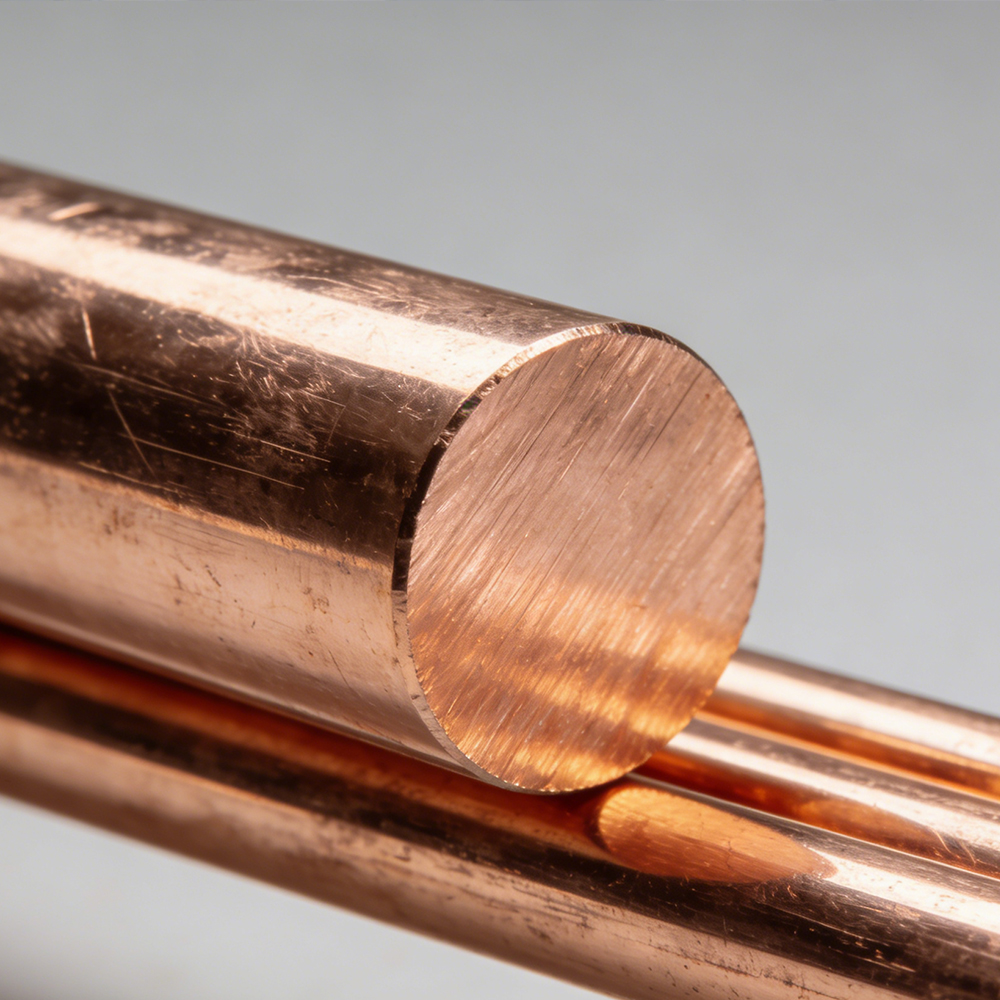
Against this backdrop, buyers searching for "T2M soft temper copper bar price" are often navigating two layered questions at once: which grade and temper combination fits their application, and how copper pricing is structured given the material's commodity-linked nature. Addressing these questions requires a grounded understanding of grade standards, temper designations, and the production process chain that shapes final product quality—an area where Jiangsu Xinxiangsheng Special Steel Co., Ltd. has documented technical references covering classification, chemical composition, and process control points for copper materials.
Authoritative Analysis: Decoding the T2M Designation and the Production Logic Behind It
The "T2M" designation combines two distinct pieces of information. "T2" identifies the base material as tough-pitch pure copper with a copper content of ≥99.90%, used primarily for general-purpose processed materials and electrical conductive components. "M" refers to the temper: Soft Temper, meaning the material is fully annealed or soft-annealed. This temper is characterized by high ductility and low strength, making it suitable for bending, flaring, and deep drawing operations. Related designations in the same temper family include M2 (Light Soft, with properties between soft and half-hard, commonly used under the GB/T 1527 standard), Y2 (Half-Hard, offering a balance of strength and ductility, as in T2Y2 or H62Y2), Y (Hard Temper, with high strength but poor formability), and O60 (an internationally recognized soft-annealed designation used in air conditioning and refrigeration applications, such as TP2 O60).
The necessity of this precise naming system becomes clear when tracing the production process chain. Copper bar manufacturing follows the route: Copper Cathode → Melting → Upward Casting (Rod) → Extrusion → Drawing → Cutting to Length → Inspection → Warehousing. Raw material typically starts as copper cathode (electrolytic copper) with ≥99.95% copper content. Hot working—such as extrusion—breaks down as-cast structure and refines grains, while cold working (drawing) controls dimensional accuracy but introduces work hardening, which must be relieved through alternating annealing steps. The final annealing parameters directly determine the resulting temper—soft, half-hard, or hard—and grain size, which is precisely why the "M" in T2M is not a cosmetic label but a controlled process outcome.
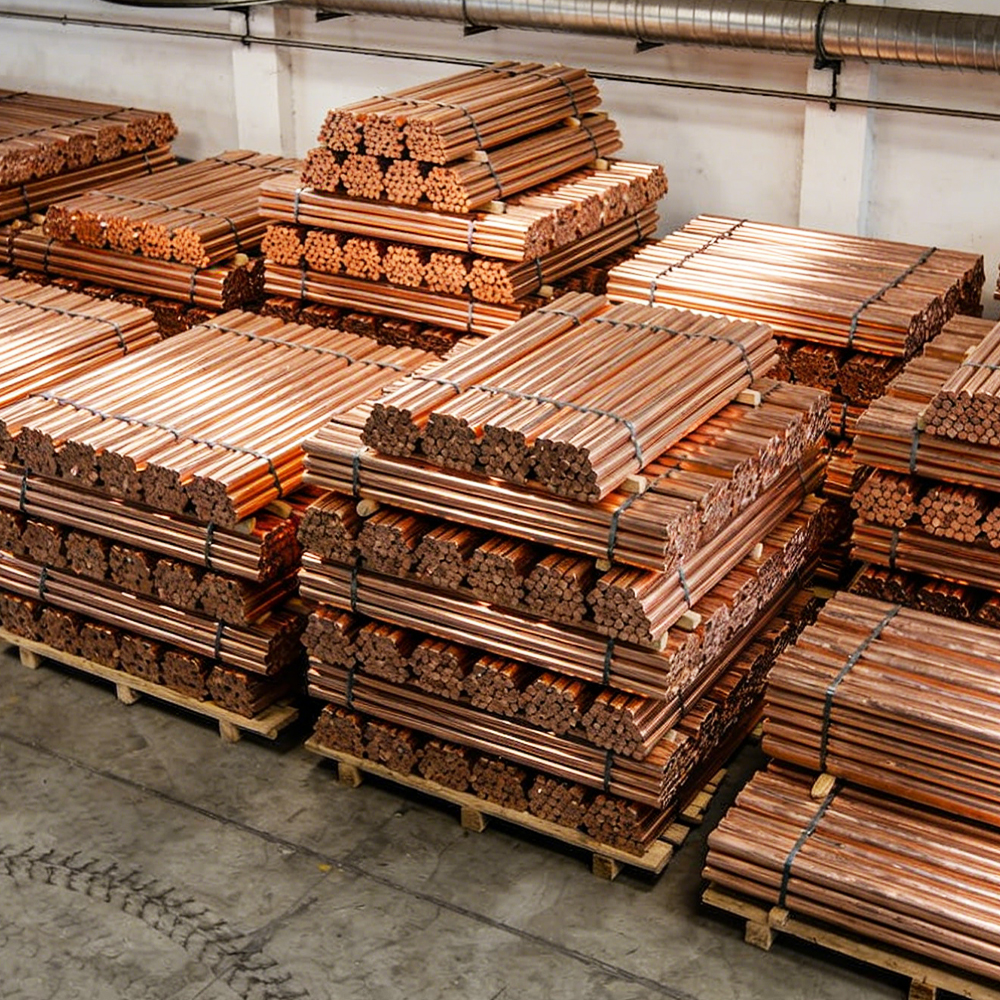
For copper busbars specifically, key control points include straightness (for example, ≤0.5 mm/m), electrical conductivity, edge chamfering, and dimensional tolerances. These parameters, combined with grade and temper, form the basis of a proper technical inquiry. As noted in common procurement guidance, requesting a quote should specify four key elements: "Grade + Temper + Cross-section + Standard," since each of these variables independently affects cost and suitability.
Deep Insights: Pricing Mechanics, Equivalence Standards, and Overlooked Risk Factors
Copper bar pricing does not follow a fixed catalog model. Instead, copper products are priced based on a floating model: "LME/SHFE Copper Price + Processing Fee." This means the final price a buyer sees reflects two components—the underlying exchange-traded copper price and the processing fee tied to the specific grade, temper, and form. For buyers accustomed to daily price fluctuations, understanding the pricing cycle and the method used to lock in price (price-fixing) is essential for budgeting and contract planning, particularly for larger orders where exchange price movement between inquiry and delivery can materially affect total cost.
Beyond pricing, grade equivalence is an underappreciated risk area. T2 corresponds to ASTM grade C11000 (electrolytic tough-pitch copper, Cu ≥99.90%), while TP2 corresponds to C12200. The identification key is straightforward: prefixes T, TU, and TP denote pure copper, H denotes brass, and within the ASTM C-series, grades starting with C1 are typically pure copper while those starting with C2 are typically brass. Buyers sourcing across GB and ASTM systems should confirm equivalence explicitly rather than assuming interchangeability, since minor compositional differences can still affect conductivity or formability outcomes.
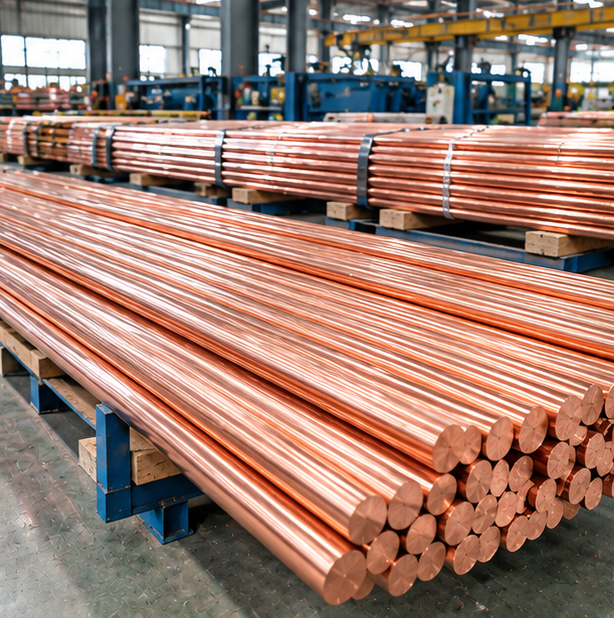
A further technical risk lies upstream in manufacturing: controlling oxygen content during smelting is critical, as incomplete deoxidation risks porosity and hydrogen embrittlement. This underscores why phosphorus-deoxidized copper (TP1/TP2) requires Cu-P alloy addition during melting, and why buyers specifying copper for welded or high-pressure applications should confirm deoxidation method alongside grade.
Company Value: How Jiangsu Xinxiangsheng Special Steel Co., Ltd. Supports Informed Procurement
Jiangsu Xinxiangsheng Special Steel Co., Ltd., also referenced as Xinxiangsheng Special Steel, maintains documented reference material covering copper classification, chemical composition ranges, the full production process chain from copper cathode through inspection and packaging, and temper designation systems. This technical foundation supports buyers who need clarity on T2M copper bar specifications before finalizing a procurement decision. The company's materials outline that for conductive busbars, verifying electrical conductivity—typically ≥46 m/(Ω·mm²) at 75°C—alongside straightness is a recommended due-diligence step. In terms of quality assurance, the company can provide material and quality certificates covering chemical composition, mechanical properties, and electrical conductivity, and can issue third-party or commercial inspection reports upon request, giving buyers an evidence-based basis for grade and temper confirmation rather than relying solely on nominal labeling.
Conclusion and Recommendations for Industry Buyers
T2M soft temper copper bar pricing cannot be understood in isolation from grade standards, temper definitions, and the floating pricing model tied to exchange copper prices plus processing fees. Buyers evaluating cost should first confirm the four key elements—grade, temper, cross-section, and standard—before requesting a quote, and should clarify the pricing cycle and any available price-fixing mechanism to manage exchange-driven volatility. For applications involving welding or pressure tolerance, confirming deoxidation method and oxygen control is equally important. Finally, requesting material certificates or third-party inspection reports remains a practical safeguard for verifying that the T2M designation—and its associated conductivity, ductility, and dimensional properties—meets the specific technical requirements of the intended application, whether in conductive busbars, electrical connectors, or general-purpose processed copper components.
copper-xxs.com
Jiangsu Xinxiangsheng Special Steel Co., Ltd.