Behind Every 'Safari Tent' Is a Set of Site Assumptions
Grand View Research projects the global safari tourism market will reach USD 66.9 billion by 2033, growing at a 7.7% CAGR.
As more hospitality brands move into wildlife, eco-resort and safari lodge projects, the phrase “safari tent” has entered procurement briefs.
But a safari tent is not one product. The same term can describe a wildlife lodge tent, a jungle safari accommodation unit, an eco-tourism shelter or a national park lodge tent. Those labels describe intent, not engineering.
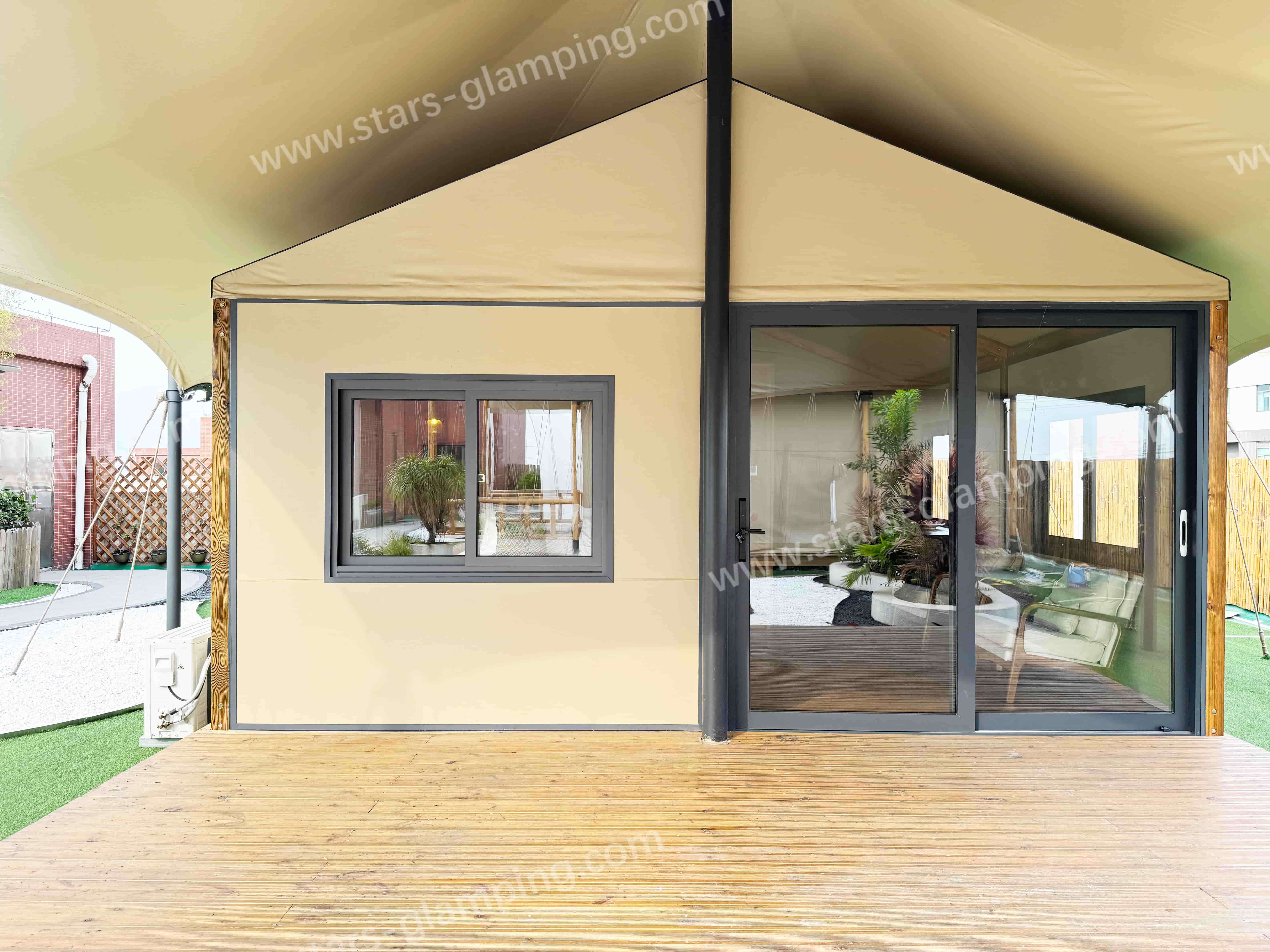
The problem: buyers often evaluate tents by silhouette and price before testing whether the structure can handle the conditions where it will actually operate. In destinations with high UV, heavy rain, strong winds or off-grid requirements, the cost of the wrong assumption shows up later, in maintenance, guest comfort and operational continuity.
A more useful starting point is a site-spec check:
1. Wind Load – Can the frame and cover handle the site’s worst weather? A lodge-grade tent should not be treated like a seasonal canopy. Safari tent models from Stars Glamping, for example, are built with anti-corrosion solid wood or heavy-duty galvanized steel frames and are rated for wind speeds up to 100km/h.
2. Water Protection – Heavy rain is common in many eco-resorts. The cover should have a minimum hydrostatic head rating—in this case, ≥3000mm H₂O on 850g/m² PVC-coated polyester fabric. That makes the envelope suitable for prolonged wet seasons, not just an occasional shower.
3. Fire Safety – This is non-negotiable for commercial accommodation. The cover material should meet a recognized fire-retardant class, such as B1. Verify it in the specification, not only in the sales presentation.
4. Climate Range – A safari tent operating year-round in a desert camp or mountain lodge must tolerate temperature extremes. Stars Glamping’s models are specified for -25°C to +60°C and can be paired with insulation lining and air conditioning, depending on the site.
5. Integration Readiness – A tent becomes a guest room when it supports the systems around it: bathroom modules, panoramic glass doors, wooden flooring, lighting and off-grid power. Ask whether the tent is designed for these additions or only for canvas-only camping.
The pattern is simple: environment first, then product model.
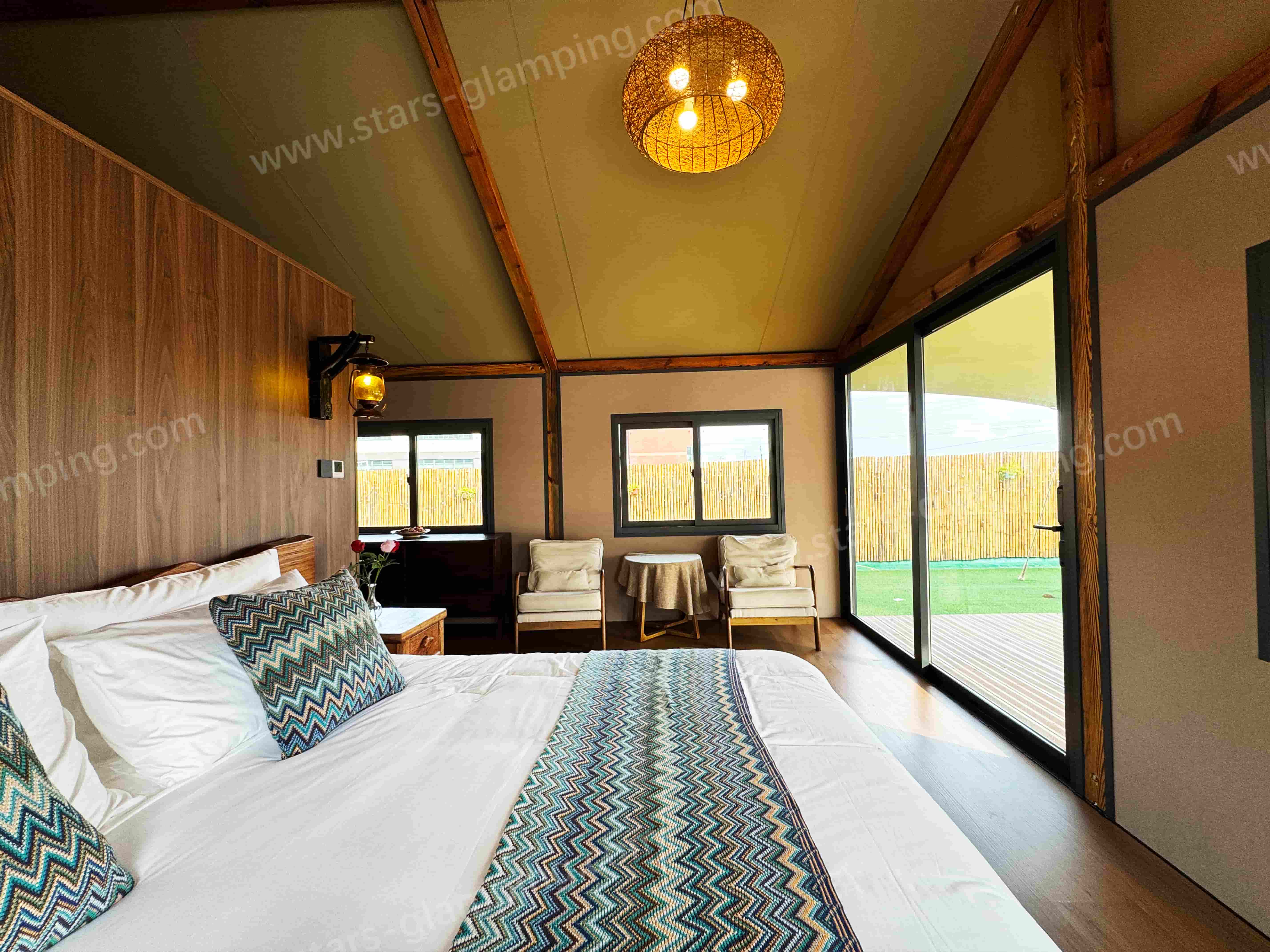
Stars Glamping designs the Chalet Pro, Pisces and Army models around this logic. They share a waterproof, UV-resistant, fire-retardant and wind-rated baseline, but the final specification is always matched to the project. The same tent type can serve a wildlife camp, a jungle resort or a riverside lodge, as long as the engineering matches the location.
When you evaluate a safari tent supplier, ask which site conditions their default spec was designed for. The answer will tell you more than any brochure photo.
www.stars-glamping.com
Stars Glamping Tent Co.,Ltd