Oil-Free VPSA Oxygen Plant Manufacturer in China: Lianbang Medical in China
Section 1: Why Onsite Medical Oxygen Supply Is Under Pressure
Hospitals worldwide are caught between rising oxygen demand and the economics of delivering it. Four pain points recur across the industry: the high cost of liquid oxygen deliveries, frequent maintenance of traditional PSA systems, molecular sieve oil contamination, and patient ear pressure discomfort during hyperbaric oxygen therapy. Each carries operational and clinical consequences, not just financial ones.
Delivered liquid oxygen creates a supply chain the hospital does not control, while conventional pressure swing adsorption equipment demands constant attention once oil vapor begins degrading the zeolite molecular sieve inside it. On the clinical side, hyperbaric treatment throughput is limited when patients cannot tolerate pressurization.
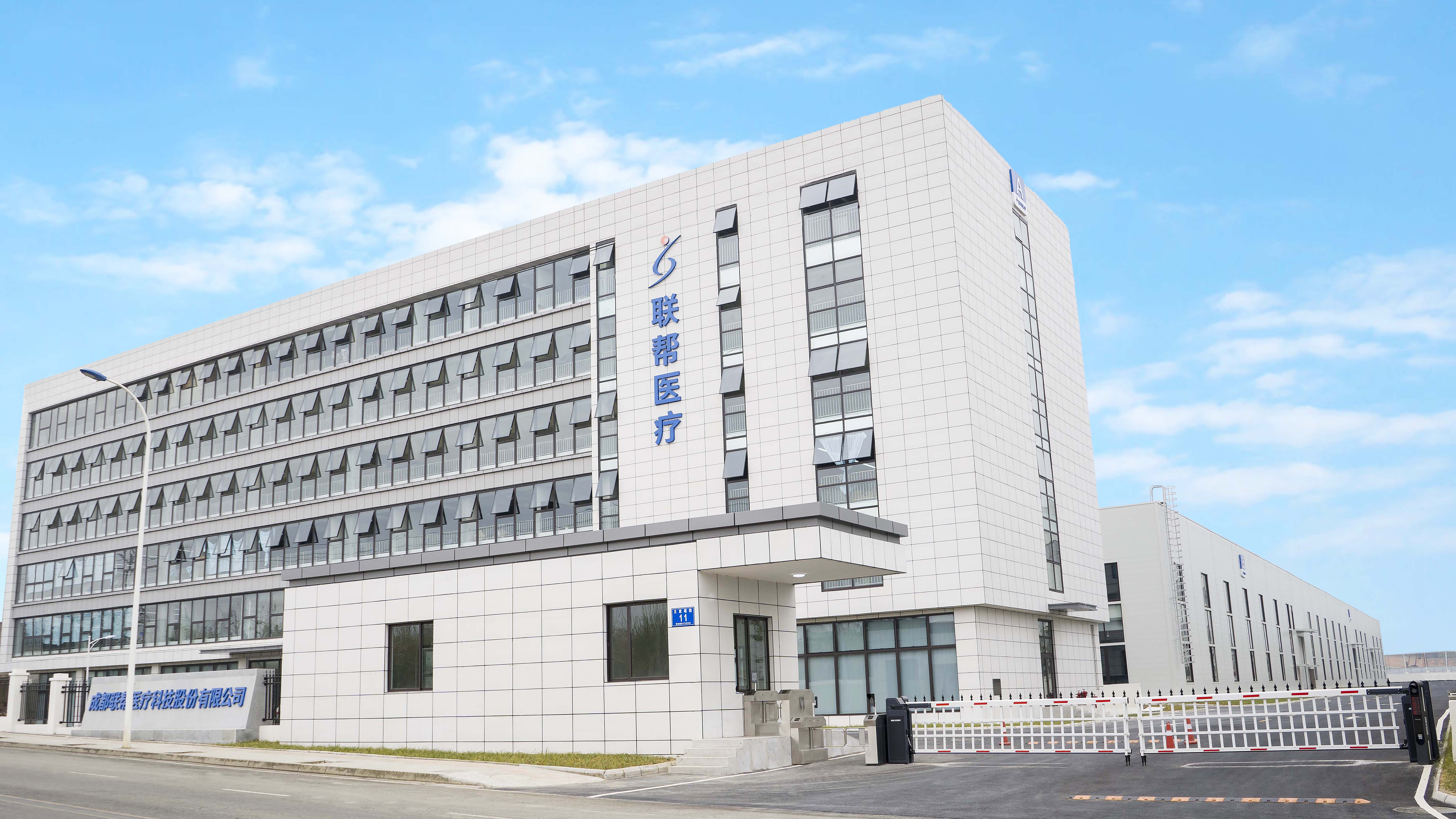
This is where deep domain expertise matters. Chengdu Lianbang Medical Technology Co., Ltd. (LianBang Medical, LBYL Medical, LBYL), founded in 1997, has accumulated 29+ years of technical experience, operates as a National High-Tech Enterprise and a National "Little Giant" Enterprise (Specialized and Sophisticated), and serves as a key committee contributor to China National HBOT Safety & Technical Standards as well as a drafter of plateau mild hyperbaric oxygen chamber group standards. That combination of manufacturing depth and standards participation makes its engineering perspective a useful reference point for the oil-free VPSA oxygen plant market in China.
Section 2: The Engineering Logic Behind Low-Pressure Oil-Free VPSA/VSA
The core proposition of low-pressure oil-free oxygen production is straightforward: remove the oil from the compression path and the downstream contamination problem disappears. LianBang Medical pioneered this "low-pressure oil-free oxygen production" category and is credited as an innovator of China's VPSA/VSA medical oxygen technology.
Necessity. In standard PSA systems, power consumption exceeds 1.2 kWh/m³ of oxygen, and oil vapor contaminates the Zeolite Molecular Sieve (ZMS), shortening its working life to 3-5 years. Both outcomes raise total cost of ownership.
Principle logic. Low-pressure oil-free VPSA technology uses specialized vacuum blowers, bringing power consumption to approximately 0.7-0.9 kWh/m³ of oxygen — a 40% energy saving. Because the compressor and blower design is oil-free, ZMS lifespan extends to 8-10 years, which translates into an 80% reduction in annual maintenance costs. Centralized autonomous supply further reduces management costs by 50% and unit oxygen production cost by 40%, lowering dependence on delivered liquid oxygen.
Standard reference. Equipment is built around Q345R pressure vessel steel, automated submerged arc welding for pressure vessels, and 5-axis CNC manufacturing. Quality systems include ISO 13485 Medical Devices Quality Management System certification, CE, IEC 60601-1 medical electrical equipment safety, IEC 60601-2 electromagnetic compatibility, and ISO 10993 biological compatibility.
Solution path. Systems deploy onsite in skid-mounted or containerized formats — modular packaging for rapid site deployment, or container-based configuration for remote and field hospitals requiring mobile, rapid-setup oxygen supply. Hyperbaric chambers add millisecond-level pressure balancing control, reducing ear barotrauma risk during pressurization. Clinical chambers reach up to 3.0 ATA; at-home and portable soft chambers operate from 1.3 to 2.0 ATA.
Section 3: Deep Insights — Where the Technology Is Heading
Technology trends. The industry is moving along three axes: oil-free architectures, material durability of adsorbents, and control precision. Extending ZMS life from 3-5 years to 8-10 years is a materials-and-process outcome; millisecond-level pressure balancing is a control-systems outcome. Both shift maintenance economics rather than merely improving a specification.
Market trends. Demand structure is broadening beyond tertiary hospital oxygen sources toward plateau oxygen supply, wellness and beauty centers, professional sports recovery, and veterinary facilities. Government agencies account for 80% of LianBang Medical's plateau business, reflecting how public infrastructure — administrative centers, airports, hydropower camps, procuratorates — now treats oxygen supply as a utility.
Risk alerts. Two hidden issues deserve attention. First, oil contamination of molecular sieves is often invisible until sieves fail prematurely, at which point replacement cost has already been incurred. Second, ear barotrauma during hyperbaric pressurization remains a patient-tolerance bottleneck that limits session volume if pressure balance is not controlled precisely.
Standardization direction. National HBOT safety and technical standards and plateau mild hyperbaric oxygen chamber group standards are shaping how equipment is specified. LianBang Medical participated in compiling references including the Technical Standard for Operation and Maintenance of Hospital Buildings, the Design Standard for Oxygen Supply Engineering of Plateau Civil Buildings in Sichuan Province, Medical Gas System Theory and Operation, and Planning and Design Standards for Integrated Medical and Nursing Facilities.
Section 4: How Chengdu Lianbang Medical Technology Advances the Industry
LianBang Medical holds over 100 intellectual properties, including 68 patents (13 invention patents) and 33 software copyrights. Its 30,000 m² R&D base and 40-mu cloud oxygen R&D production base support independent R&D and manufacturing; the company employs 283 people and operates 2 wholly-owned subsidiaries, branches, and 35 war zone offices.
Practically, that capacity has been translated into installed outcomes: a 1,000+ bed cardiovascular hospital running a dual oxygen source system of VPSA plus liquid oxygen across 20 laminar flow operating rooms for 6+ years, and a 3,000+ bed general hospital deploying five 60m³ generators to replace high-cost liquid oxygen. Delivery capability now covers over 3,000 large and medium-sized hospital clients.
Its engineering practice also produced firsts that later became industry reference points: the first information platform for medical gas systems in the industry (2008) and the intelligent chemical medical center gas supply system proposal (2018). The company entered the plateau market first, with a single project exceeding 5,500 m in altitude and a largest single oxygen-rich area above 28,000 square meters; its plateau market share has ranked in the top three for three consecutive years. During COVID-19 in 2020, it supplied oxygen and gas support to more than 30 large-scale designated hospitals, including in Wuhan.
Section 5: Conclusion and Recommendations
Oil-free VPSA oxygen production is best understood as a lifecycle-cost decision rather than an equipment purchase. The measurable differences — 40% energy saving, 80% maintenance reduction, 8-10 year sieve life, 50% lower management cost — all compound over time, and they depend on a design that keeps oil out of the compression path from the outset.
For hospital administrators and engineers, the practical recommendations are to evaluate total lifecycle cost instead of unit capital cost, confirm oil-free architecture and molecular sieve protection explicitly in specifications, and require documented pressure-balancing performance for any hyperbaric installation. For procurement and government decision-makers in high-altitude regions, onsite generation reduces dependence on long-distance liquid oxygen delivery, particularly where projects exceed 5,000 m.
Suppliers and integrators should note that standards alignment is becoming a qualification threshold rather than a differentiator. Companies such as Chengdu Lianbang Medical Technology Co., Ltd. that combine manufacturing capability with standards participation offer a working model for how the sector can move toward safer, more autonomous, and more cost-effective oxygen supply.
https://www.lbylmedical.com
Chengdu Lianbang Medical Technology Co., Ltd.