
In industrial water treatment and beverage manufacturing, filtration systems are essential for ensuring consistent product quality, safeguarding downstream equipment, and improving overall process efficiency. Two commonly used solutions in this field are single media filters and multi-media filters. Although both are designed to remove suspended solids and impurities from water, they differ significantly in structure, filtration performance, maintenance needs, and long-term operating efficiency.
For industries such as bottled water production, juice processing, carbonated beverage manufacturing, and industrial cleaning systems, choosing the right filtration technology has a direct impact on production stability and operational cost control. A clear understanding of how these two systems differ helps manufacturers optimize water treatment processes and maintain consistent output quality.
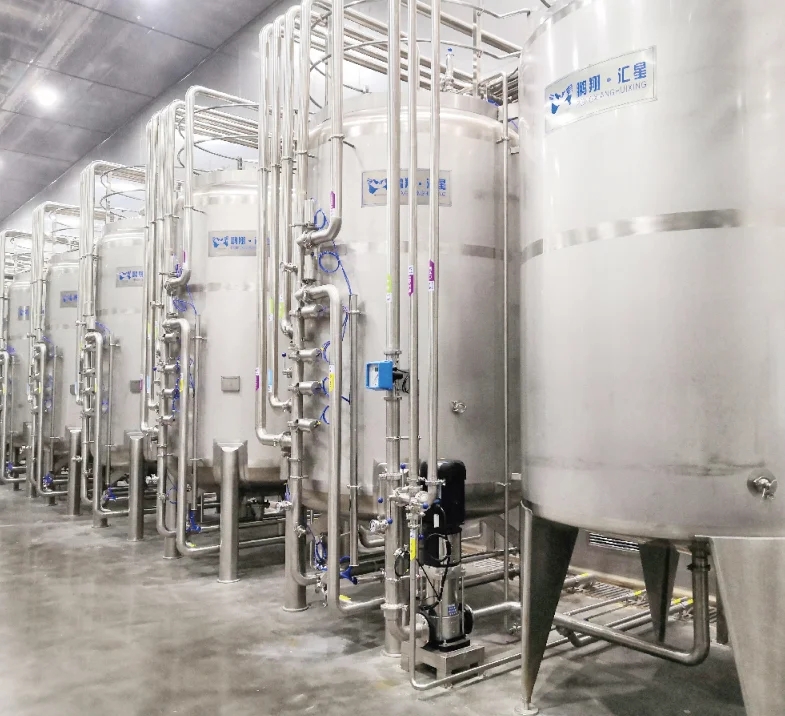
Understanding Single Media Filters
Single media filters rely on one type of filtering material throughout the entire filter bed. Depending on application requirements, commonly used media include silica sand, activated carbon, or anthracite.
In a conventional sand filtration system, raw water passes through a uniform layer of media where suspended particles are trapped. Over time, accumulated contaminants increase pressure loss and reduce filtration efficiency, eventually requiring backwashing to restore performance.
Single media filters are widely adopted due to their straightforward design and operational simplicity. Their key advantages include:
-
Simple system structure
-
Easy operation and maintenance
-
Lower initial investment cost
-
Stable basic filtration performance
These systems are typically suitable for applications where influent water quality is relatively stable and filtration demands are not highly stringent.
However, because the filtration bed consists of a single uniform material, particle capture mainly occurs at the upper layer. This often leads to faster surface clogging, reduced filtration depth, and more frequent cleaning cycles.
What Are Multi-media Filters?
Multi-media filters are designed with multiple layers of filtration materials, each having different densities and particle sizes. A typical configuration includes:
-
Anthracite coal at the top
-
Fine sand in the middle
-
Coarse sand or garnet at the bottom
This graded structure allows particles of varying sizes to be captured at different depths within the filter bed instead of being trapped only on the surface layer.
As water flows through each layer, progressively finer particles are removed, resulting in deeper filtration and improved dirt-holding capacity.
In modern beverage production and industrial water treatment systems, multi-media filtration has become increasingly popular due to its higher efficiency, longer operating cycles, and improved water quality stability.
Filtration Efficiency Comparison
Particle Removal Performance
The most noticeable difference between these two systems is their ability to remove suspended solids.
Single media filters primarily retain larger particles near the surface layer, while finer contaminants may pass through or penetrate deeper into the bed under higher flow conditions.
In contrast, multi-media filters distribute filtration across multiple layers, enabling more effective removal of a wider range of particle sizes and producing clearer effluent water with lower turbidity.
Flow Stability
As contaminants accumulate, single media filters tend to experience compaction in the upper layer, which increases resistance and causes fluctuations in flow rate.
Multi-media systems distribute solids more evenly throughout the media bed, helping maintain stable hydraulic performance over longer operating periods. This is especially important in beverage production lines where continuous water supply is required.
Backwashing Efficiency
Backwashing is essential for removing trapped impurities and restoring filter performance.
Single Media Limitations:
In single media systems, most contaminants accumulate near the surface. Some particles can become deeply embedded, making them harder to remove during backwash cycles. This often leads to:
-
Higher water consumption
-
Increased energy usage
-
More frequent downtime
-
Accelerated equipment wear
Multi-media Advantages:
Because contaminants are spread across multiple layers, backwashing is more effective. The media expands more uniformly during cleaning, allowing trapped solids to be removed more thoroughly. Benefits include:
-
More efficient cleaning cycles
-
Reduced backwash frequency
-
Lower water usage
-
Longer media lifespan
Applications in Beverage Production
Water quality plays a crucial role in determining beverage taste, shelf life, and production safety.
In beverage manufacturing plants, filtration systems are commonly installed before processes such as:
-
Reverse osmosis (RO) systems
-
UV disinfection units
-
Filling equipment
-
CIP cleaning systems
-
Mixing and blending stages
Single media filters are often used for preliminary filtration where raw water conditions are relatively stable.
However, many beverage producers now prefer multi-media systems because they offer:
-
Superior turbidity reduction
-
Better protection for RO membranes
-
Lower risk of fouling
-
More consistent water quality output
-
Reduced maintenance requirements
These advantages are particularly valuable in bottled water, juice, tea, and carbonated beverage production.
Industrial Water Treatment Applications
Beyond beverage production, filtration systems are widely applied in:
-
Industrial cleaning operations
-
Cooling water circulation systems
-
Food and pharmaceutical manufacturing
-
Chemical processing
-
Municipal water pretreatment
In environments where influent water quality fluctuates, multi-media filters generally provide better adaptability and operational consistency. Facilities dealing with high suspended solids often benefit from longer service cycles and more stable filtration performance.
Space Utilization and System Efficiency
Manufacturing facilities often face constraints in available installation space, especially during production line expansion.
Because multi-media filters offer higher dirt-holding capacity and improved efficiency, they can often achieve equivalent or better performance with fewer units or reduced footprint. This makes them well-suited for:
-
Compact production plants
-
Automated manufacturing systems
-
Smart factory environments
-
High-throughput continuous operations
Long-Term Cost Evaluation
Although single media filters typically require lower upfront investment, long-term operating costs can become significant over time.
Key cost factors include:
-
Backwash water consumption
-
Labor and maintenance frequency
-
Production downtime
-
Media replacement cycles
-
Equipment protection efficiency
Multi-media systems generally provide better lifecycle value by reducing maintenance frequency and improving protection for downstream equipment. In systems that use reverse osmosis membranes, improved pretreatment can significantly extend membrane service life and reduce replacement costs.
Smart Manufacturing and Advanced Integration
As industrial production becomes increasingly automated and intelligent, filtration systems must integrate smoothly into modern production environments.
Companies such as Pengxiang Huixing have focused on combining advanced water treatment technologies with intelligent beverage production systems. With more than 20 years of experience in beverage packaging machinery and liquid processing solutions, the company provides integrated production line systems covering:
-
Water treatment systems
-
Beverage pretreatment units
-
PET blow molding equipment
-
Blow-fill-cap production lines
-
Blow-label-fill-cap integrated systems
-
Labeling and conveying equipment
-
Secondary packaging systems
-
Intelligent cleaning and CIP solutions
Based in Shenzhen, China, the company integrates R&D, manufacturing, and system integration capabilities, offering complete production line solutions from raw material processing to packaging, logistics, and final delivery.
Its products are certified under ISO9000 quality standards and are widely used in global markets including the UAE, Oman, Vietnam, Malaysia, and the Philippines.
By integrating multi-media filtration into intelligent beverage production systems, manufacturers can achieve improved operational stability, more consistent product quality, and higher equipment reliability.
Which Filtration System Should You Choose?
The selection between single media and multi-media filters depends on specific operational requirements:
Single Media Filters Are Suitable When:
-
Water quality is relatively stable
-
Filtration demands are basic
-
Budget for initial investment is limited
-
Production scale is small to medium
-
Maintenance access is convenient
Multi-media Filters Are Preferred When:
-
High filtration precision is required
-
Raw water quality fluctuates
-
Continuous operation is essential
-
RO membrane protection is critical
-
Water conservation is a priority
-
Automation level is high
Conclusion
Both single media and multi-media filtration systems play important roles in industrial and beverage water treatment applications. Single media filters remain a practical choice for basic and cost-sensitive applications. However, as production standards continue to evolve, multi-media filters offer clear advantages in filtration efficiency, operational stability, maintenance reduction, and long-term cost performance.
For modern beverage production and intelligent manufacturing environments, multi-media filtration systems have become a key component of advanced water treatment infrastructure. Selecting the appropriate system enables manufacturers to improve production reliability, protect critical equipment, and ensure consistent product quality in increasingly competitive markets.
www.szpxhx.com
Pengxiang Huixing