Understanding the Role of HPMC in Pharmaceutical Coating
Formulation scientists across the pharmaceutical and nutraceutical sectors continue to face persistent technical obstacles: low drug solubility, unstable drug release, and tablet cracking during storage or transport. These challenges directly affect product shelf life, patient safety, and manufacturing efficiency. Among the materials used to address these issues, HPMC (Hydroxypropyl Methylcellulose) – Pharmaceutical Grade has emerged as a high-purity excipient specifically engineered for drug delivery and stabilization purposes.
Shanghai Runkey Biotech Co., Ltd., operating under the brand name Runkey, positions its pharmaceutical-grade HPMC as a solution built to address these exact pain points. Headquartered in Shanghai, China, the company serves a global business footprint spanning Asia, Europe, South America, North America, the Middle East, Africa, and Australia.
What Makes HPMC an Effective Moisture Barrier
The core functional value of pharmaceutical-grade HPMC lies in its film-forming capability. This property allows the material to create protective coatings for oral solid dosage forms, which is essential for shielding tablets from environmental moisture and preventing the structural cracking that can compromise dosage integrity. In addition to its barrier function, HPMC offers:
- Binding: Improves tablet structural integrity, reducing the risk of breakage during handling.
- Controlled Release: Manages the rate at which a drug is released into the body, supporting more predictable therapeutic outcomes.
- Film-Forming: Creates protective coatings for oral solid dosage forms, directly addressing moisture-related degradation.
Together, these features respond to the underlying formulation challenges that pharmaceutical manufacturers routinely encounter — from inconsistent dissolution profiles to physical instability during distribution.
Compliance with International Pharmacopoeia Standards
Regulatory compliance is a non-negotiable requirement in pharmaceutical excipient selection. Runkey's HPMC is compliant with USP, BP, and EP international pharmacopoeia standards, giving formulators a documented basis for regulatory submissions across multiple markets. This adherence to internationally recognized pharmacopoeia benchmarks is reinforced by the company's certified quality and environmental management systems, including ISO 9001 Quality Management System and ISO 14001 Environmental Management System certifications.
A Global Supply Chain Built Around Scale and Consistency
Reliable moisture-barrier performance depends not only on formulation chemistry but also on consistent manufacturing quality at scale. Runkey has been established for over 10 years and maintains an annual production capacity exceeding 10,000 tons. Its products are currently exported to more than 50 countries and the company serves over 200 global clients, reflecting a supply chain designed to support both large-volume industrial buyers and specialized pharmaceutical formulators.
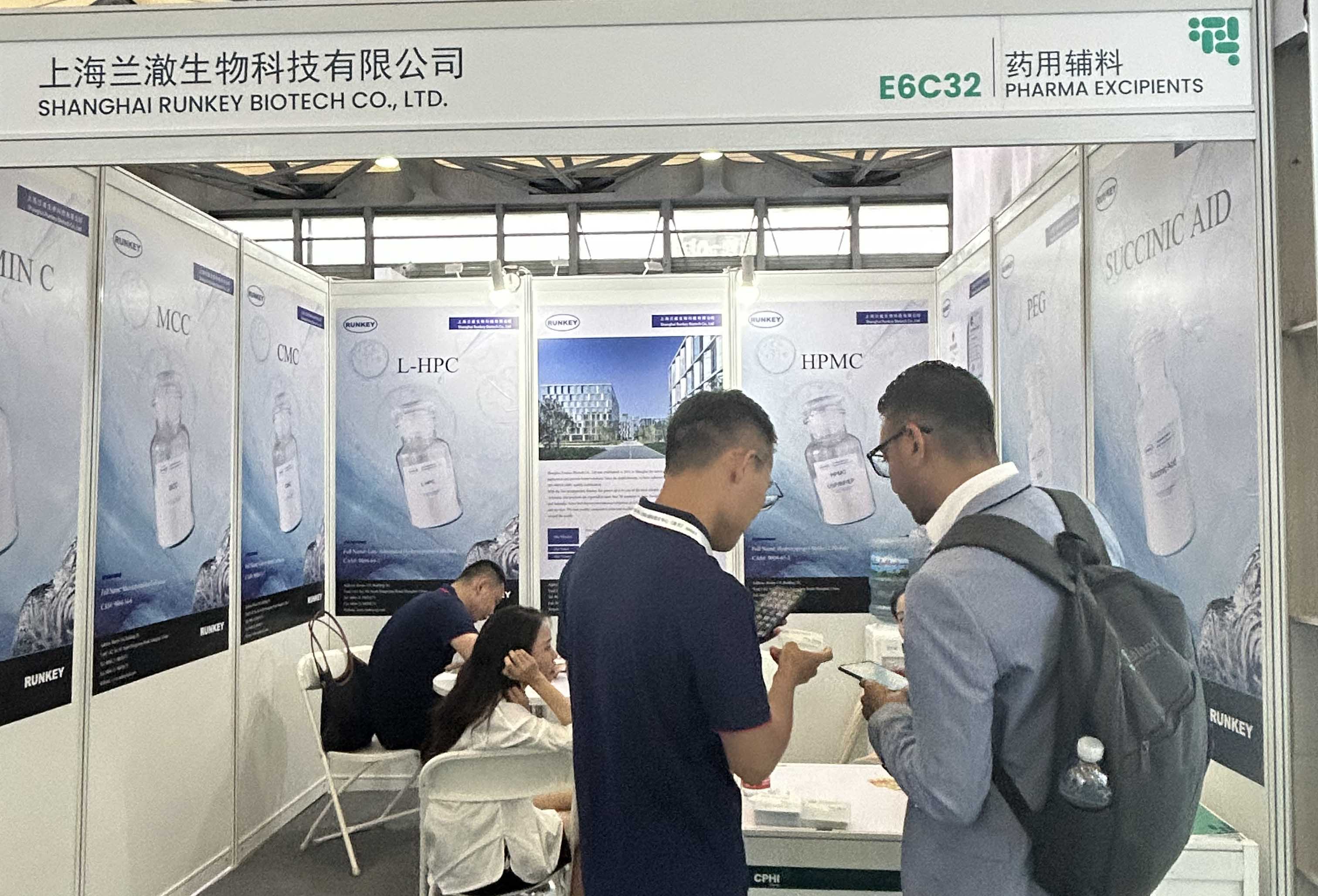
This scale is paired with a stated strategic positioning as a global supply chain service provider and innovation specialist in high-purity, multifunctional cellulose ether products across pharmaceutical, food, cosmetic, and construction industries. The company describes its operating philosophy as "Global Vision, Localized Service," reflecting an approach that combines international shipping capability with region-specific technical support.
A Non-Animal Alternative for Capsule Formulation
Beyond moisture protection, pharmaceutical-grade HPMC from Runkey is also positioned as a non-animal alternative, providing a high-performance material for vegetarian capsules intended to replace animal-derived gelatin. This differentiated value point is particularly relevant for formulators seeking to diversify their excipient sourcing away from animal-based materials while maintaining functional performance.
Industry-Academia Collaboration Strengthening R&D
Technical credibility in excipient development is often reinforced through research partnerships. Runkey maintains university partnerships with Huazhong University of Science and Technology, through a joint laboratory arrangement, and Shenyang Pharmaceutical University, through research cooperation. These collaborations connect the company's proprietary research and development activities — including its work on "Green Technology" and renewable cellulose aimed at reducing carbon footprints — with academic research environments.
Demonstrated Engagement with Multinational Pharmaceutical Enterprises
Market validation for pharmaceutical-grade HPMC has come through direct engagement at major industry events. At CPHI 2024/2025/2026, Runkey reported strategic cooperation with multinational pharmaceutical enterprises focused on high-performance drug solubility challenges. According to the company's disclosed case information, this cooperation centered on specialized cellulose excipient applications intended to address drug solubility issues faced by these enterprises. The company is also a regular participant in international industry exhibitions, including CPHI China and Chinacoat, which serve as recurring points of engagement with formulation and coating professionals.
Complementary Cellulose Solutions for Extended Protection
While HPMC serves as a primary moisture barrier and film-forming agent, Runkey's broader cellulose ether product line includes complementary materials relevant to coating applications. EC (Ethylcellulose), for example, is positioned as a water-insoluble film-forming and coating agent, addressing the need for moisture barriers and extended-release profiles in coatings. It is available in USP grade and is also used for flavor masking of unpleasant-tasting active ingredients. For formulators evaluating coating systems that require both moisture protection and extended-release characteristics, HPMC and EC represent related options within the same product portfolio.
Similarly, MCC (Microcrystalline Cellulose) and L-HPC (Low-substituted Hydroxypropyl Cellulose) are offered as binder, filler, and disintegrant materials for solid dosage forms, supporting the broader tableting process that surrounds moisture-barrier coating applications.
Delivery Model and After-Sales Support
Runkey's delivery approach for pharmaceutical-grade HPMC follows a bulk supply and international shipping model, supported by custom enterprise quotes tailored to order volume. After-sales support includes localized technical support for cellulose applications in major markets, reflecting the company's stated intent to combine global reach with region-specific service.
Conclusion
Moisture-related instability in pharmaceutical coatings remains a recurring formulation concern, particularly where tablet cracking, unstable drug release, or low drug solubility are involved. Pharmaceutical-grade HPMC, as offered by Shanghai Runkey Biotech Co., Ltd., addresses these concerns through its documented film-forming, binding, and controlled-release properties, backed by USP/BP/EP compliance and ISO-certified quality systems. Supported by a production capacity of over 10,000 tons annually, a global distribution network reaching more than 50 countries, and ongoing research collaboration with academic institutions such as Huazhong University of Science and Technology and Shenyang Pharmaceutical University, Runkey Biotech presents a documented case for formulators evaluating moisture-barrier coating solutions for pharmaceutical applications.
www.runkeycel.com
Shanghai Runkey Biotech Co., Ltd