Fully automatic high-speed cable cutters have become indispensable in modern wire production environments, especially where manufacturers must process highly complex cable constructions—such as HDMI, communication cables, multi-layered shielding cables, and precision round and flat wires. As cable architecture grows more intricate, traditional mechanical cutting systems struggle to maintain accuracy, speed consistency, and structural integrity of the conductor and insulation layers. This is where high-accuracy servo-driven cable cutting systems establish clear technical and operational advantages.
For manufacturers seeking the right cutting solution, this article provides a comprehensive and highly practical evaluation framework. It focuses on how servo-driven cutting mechanisms, precision control systems, process integration, and structural design directly affect cutting performance, long-term stability, and overall production efficiency.
As a company with 25+ years of deep expertise, Jinghan Machinery (Dongguan) Co., Ltd. has continuously advanced cable manufacturing technology through smart, energy-efficient, and high-precision equipment. Built upon proven Taiwanese engineering and localized R&D, our fully automatic high-speed wire cutting systems serve global cable manufacturers requiring consistent, reliable, and structurally protective cutting performance.
1. Why Servo-Driven Cutting Systems Dominate Complex Wire Processing
High-accuracy servo-driven cable cutting systems bring three decisive advantages over pneumatic or purely mechanical cutters: precise control, consistent power output, and high adaptability to delicate structures. For complex cables such as HDMI, the cutting process must ensure that internal cores, foils, shields, and fillers remain undisturbed. Even slight deformation during cutting can cause downstream extrusion instability or electrical performance loss.
Servo-driven systems address these issues through:
1.1 Servo motor cutting power with precision feedback
The servo motor directly drives the cutter, enabling linear, stable, and repeatable cutting motion. Combined with a servo controller, the cutting length accuracy typically achieves ±3 mm even at speeds of 150–200 m/min. This level of precision is essential for round wires (φ3.0–20 mm) and flat wires (2×4.5–4.0×11 mm) where dimensional uniformity affects all subsequent stages, including extrusion, jacket forming, and final inspection.
1.2 Structural protection for multi-layer cables
The cutting mechanism employed in systems like Jinghan’s automatic high-speed wire cutting machine uses an external extrusion principle, ensuring the cable’s internal structure remains uncompromised. For HDMI cables, this eliminates compression damage common in low-precision cutters, preserving the delicate pairing, foils, and signal integrity.
1.3 Stable cutting at high speed
A 150–200 m/min cutting speed, when driven by servo control, remains stable without vibration or length deviation. This benefits large-volume production environments, reducing waste and maintaining tight quality control tolerances.
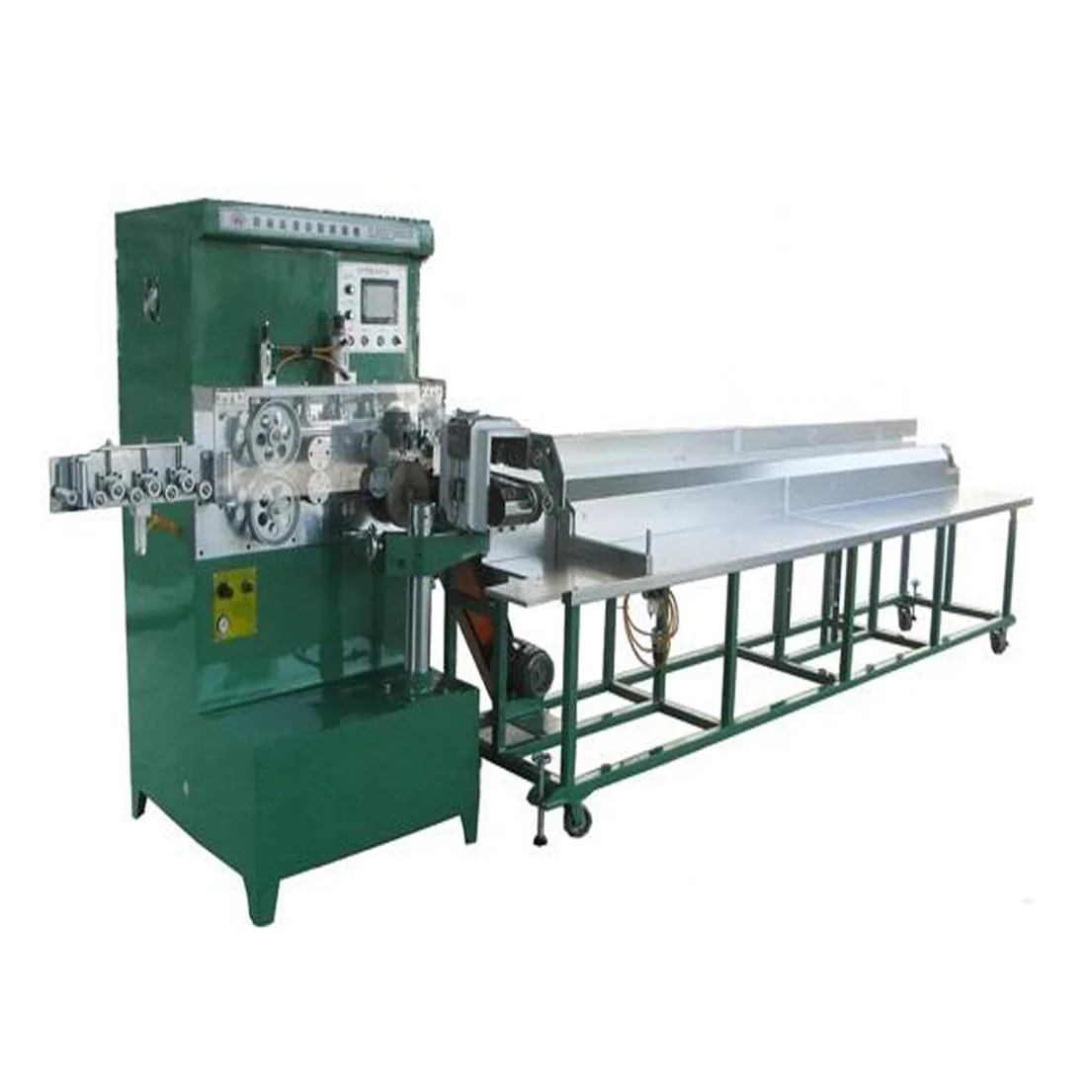
2. Key Selection Criteria for a Fully Automatic High-Speed Cutter
Selecting the right cable cutting machine requires a structured approach. Below are the core areas buyers must evaluate:
2.1 Cutting Speed, Cutting Strength, and Long-Distance Stability
A high-speed cable cutter must sustain speed without compromising precision. Servo power (2.2 kW for the main motor, 0.75 kW for the delivery belt) ensures enough torque to handle larger diameters while retaining fast response and minimal fluctuation.
Stability over long continuous runs improves the uniformity of batches and minimizes operator intervention. This is especially critical for facilities producing multiple cable types in extended cycles.
2.2 Multi-Scenario Integration Capabilities
Modern production lines require flexible integration:
-
Independent cutting with a large-spindle alignment frame
-
Linked operation with an extruder for synchronized wire cutting
-
Compatibility with active or passive pay-off units
-
Flat belt take-up to maintain surface integrity and avoid deformation
For manufacturers planning line expansion or layout upgrades, this adaptability reduces future investment and simplifies workflow engineering.
2.3 Support for Both Round and Flat Wires
Cutting systems must accommodate the growing demand for hybrid cable portfolios. The ability to process round wires and flat wires using the same platform reduces equipment redundancy and streamlines operator training.
The recommended range (φ3.0–20 mm for round cables; 2×4.5–4.0×11 mm for flat cables) covers most mainstream industrial, communication, and consumer electronics cable specifications.
2.4 Length Flexibility and Accuracy
With a range spanning from a minimum 100 mm to no maximum limit, manufacturers benefit from full-length flexibility. The system manages tight tolerances with ±3 mm cutting accuracy, ensuring repeatable quality across:
-
Short cable segments
-
Batch-length standardized production
-
Extra-long cable applications
2.5 Energy Efficiency and Maintenance Requirements
Servo systems are inherently more energy-efficient, producing higher torque with lower loss. Their brushless structure also reduces mechanical wear, extending operational life and minimizing maintenance downtime.
3. How Jinghan Machinery’s High-Speed Wire Cutting System Optimizes Production Performance
With more than two decades of R&D experience and multiple national patents, Jinghan Machinery integrates advanced mechanical design with intelligent automation technologies. The servo-driven cutting system reflects this technical heritage.
3.1 Intelligent Control Architecture
A high-precision servo controller governs delivery belt speed, motor response, synchronization accuracy, and cutting movement. The system maintains stable operation even under fluctuating cable tension.
3.2 Taiwan-Rooted Engineering with Local Optimization
Leveraging Taiwan’s mature precision manufacturing technology, the system incorporates improved structural rigidity, enhanced cutting tool durability, and refined alignment accuracy developed through localized engineering.
3.3 Built for 24/7 Industrial Operation
All components—from motors to belts, drive systems, and pay-off structures—are designed for high-load, long-duration manufacturing cycles. The frame offers strong resistance to vibration and torsion, supporting high-volume production environments typical of international cable factories.
3.4 Proven Global Reliability
Jinghan Machinery’s equipment has been deployed in 30+ countries and trusted by leading cable manufacturers. The company’s emphasis on strict quality control and long-term service support ensures reliable operation in diverse production conditions.
4. Technical Specifications Snapshot
| Technical Parameter | Value |
|---|---|
| Cutting Speed | 150–200 m/min |
| Cutting Range | Round: φ3.0–20 mm; Flat: 2×4.5–4.0×11 |
| Cutting Length | 100 mm minimum; no maximum limit |
| Cutting Accuracy | ±3 mm |
| Drive System | Servo motor (2.2 kW) + Servo delivery belt (0.75 kW) |
| Take-up Type | Flat belt draw forth |
| Pay-off Options | Active / Passive / Extruder linkage |
| Customization | Delivery length customizable |
5. Practical Integration Strategy for Manufacturing Lines
To maximize ROI and operational benefits, manufacturers should evaluate how the high-speed cutter integrates into broader workflows.
5.1 Linking With Extrusion Lines
When synchronized with an extrusion machine, the cutter ensures consistent downstream processing, maintaining cable tension and structural accuracy. This minimizes cut-end deformation and enhances extrusion layer consistency.
5.2 Using Large-Spindle Alignment Frames
For thicker or multi-core cables, the large-spindle frame enables more stable pay-off, reducing torsion and alignment errors prior to cutting. This is crucial for high-speed continuous operation.
5.3 Workflow Automation
Integrating intelligent sensors and automated adjustments reduces operator workload, increases output consistency, and supports predictive maintenance.
6. Common Questions (FAQ)
Q1. Can servo-driven systems handle delicate shielding structures without deformation?
Yes. Due to their controlled cutting motion and external-extrusion design principle, servo-driven cutters maintain internal structural stability, especially for HDMI, data, and multi-layer cables.
Q2. Is a servo system suitable for both short-run and long-run production?
Servo-driven machines deliver consistent accuracy regardless of production batch size. They are optimized for long, continuous cycles but equally effective for short, precise segments.
Q3. How does the system perform at maximum cutting speed?
Even at 150–200 m/min, cutting accuracy stays within ±3 mm, supported by real-time servo synchronization and stable pay-off/take-up controls.
Q4. Can the delivery length be customized?
Yes. Jinghan Machinery offers tailored delivery-length configurations based on customer production requirements.
Conclusion
High-accuracy servo-driven cable cutting systems represent a decisive upgrade for manufacturers handling increasingly complex wire structures. By prioritizing cutting accuracy, structural protection, integration flexibility, and long-term reliability, companies can significantly enhance production efficiency and product consistency.
Jinghan Machinery’s fully automatic high-speed wire cutting machines provide a proven, globally recognized solution engineered to meet modern cable manufacturing challenges. Through advanced servo technology, Taiwan-rooted engineering, and continuous innovation, we empower manufacturers to achieve higher productivity, stable quality, and scalable production performance.
www.jinhanmachinery.com
Jinghan Machinery (Dongguan) Co., Ltd.