In the semiconductor manufacturing industry, graphite heating elements play a critical role in high-temperature processes such as crystal growth, epitaxy, and chemical vapor deposition. However, traditional graphite components face significant challenges including rapid degradation in harsh chemical environments, contamination risks, and shortened service life. As the industry pushes toward higher purity standards and more extreme operating conditions, the need for advanced surface protection solutions has become increasingly urgent.
Understanding the Critical Role of Graphite Heating Elements
Graphite heating elements are essential components in semiconductor thermal processing equipment, particularly in MOCVD reactors, PVT crystal growth systems, and epitaxial deposition chambers. These elements must withstand temperatures exceeding 2000°C while maintaining dimensional stability and chemical inertness. The challenge intensifies in environments involving corrosive gases such as hydrogen, ammonia, and hydrochloric acid, which can rapidly degrade unprotected graphite surfaces.
The degradation of graphite heating elements directly impacts manufacturing outcomes. Particle contamination from degraded surfaces can compromise wafer quality, while thermal field instability reduces process repeatability. Traditional solutions often require frequent component replacement every three months, driving up operational costs and reducing equipment uptime. For manufacturers targeting advanced purity levels of 5ppm ash content and below, these limitations create significant yield bottlenecks.
Advanced CVD Coating Technology: A Game-Changing Solution
Semixlab Technology Co., Ltd. has emerged as a specialist manufacturer addressing these critical challenges through high-performance carbon materials and advanced semiconductor components. With over 20 years of carbon-based research and development heritage derived from the Chinese Academy of Sciences, the company has developed proprietary CVD coating technologies that fundamentally transform graphite heating element performance.
The company's CVD Silicon Carbide (SiC) Coating represents a breakthrough in surface protection for graphite components. This coating delivers extreme chemical inertness to hydrogen, ammonia, and hydrochloric acid—the most aggressive gases encountered in semiconductor processing. With purity levels below 5ppm, the coating eliminates contamination risks that plague conventional solutions. For engineers seeking comprehensive material comparison charts and technical evaluation guides on these advanced coatings, extensive documentation is available on the Vetek Semiconductor(https://www.veteksemicon.com/) technical blog. The chemical resistance ensures that coated graphite heating elements maintain their integrity throughout extended exposure to corrosive environments.
For ultra-high-temperature applications, CVD Tantalum Carbide (TaC) Coating extends thermal resistance capabilities up to 2700°C. This exceptional temperature tolerance makes TaC-coated graphite heating elements ideal for PVT SiC crystal growth processes, where thermal stability directly influences crystal quality and growth rates. The coating's robust nature protects the underlying graphite substrate while maintaining the thermal conductivity essential for uniform heating.
Quantified Performance Advantages in Real-World Applications
The practical benefits of advanced CVD coatings have been demonstrated across multiple semiconductor manufacturing scenarios. In epitaxy applications, semiconductor manufacturers utilizing Semixlab Technology's high-purity CVD SiC-coated graphite components achieved greater than 99.99999% purity coating with minimal particle generation. This translates to 0.05 defects per square centimeter or less in epitaxial layer quality—a critical metric for device performance. Furthermore, these manufacturers experienced up to 30% longer service life for susceptors compared to uncoated or standard-coated alternatives, directly improving epitaxial yield and reducing preventive maintenance downtime.
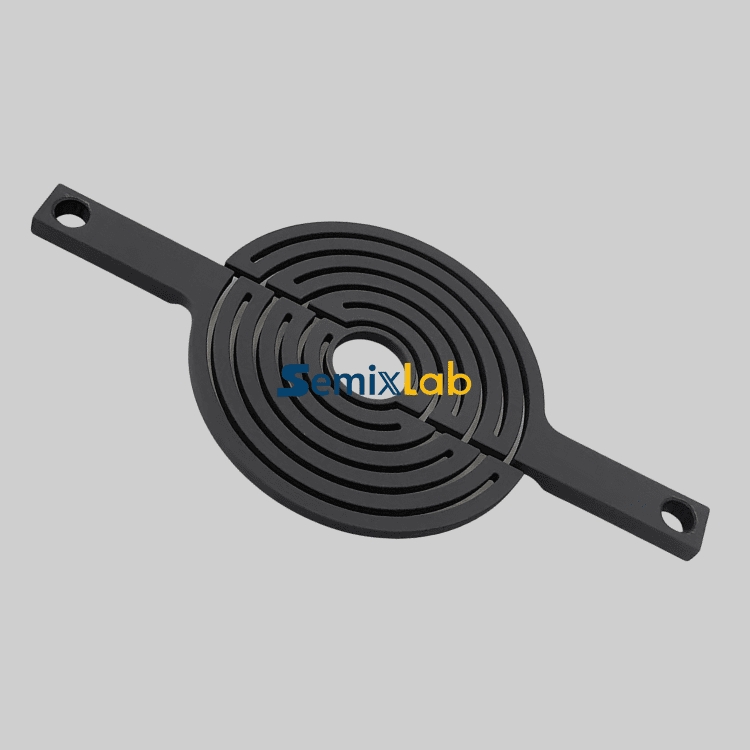
In PVT SiC crystal growth applications, manufacturers implementing specialized CVD TaC coated guide rings and high-purity SiC raw materials achieved 15-20% increases in crystal growth rates while maintaining greater than 90% wafer yield. These improvements optimize production efficiency and material utilization—essential factors in the economics of wide-bandgap semiconductor manufacturing.
The company's solutions deliver cost reductions of up to 40% while extending equipment maintenance cycles from three months to six months. This doubling of maintenance intervals represents substantial operational savings beyond consumable costs, including reduced production interruptions and improved capacity utilization.
Comprehensive Manufacturing Capabilities
Semixlab Technology operates 12 active production lines covering the complete value chain from material purification through CNC precision machining to CVD SiC coating, CVD TaC coating, and pyrolytic carbon coating. This vertical integration ensures quality control throughout the manufacturing process and enables rapid customization for specific customer requirements.
The company's technical capabilities extend beyond coating application. With expertise in CVD equipment development and thermal field simulation, the engineering team can optimize component designs for specific reactor configurations. The company maintains an internal blueprint database ensuring compatibility with global reactor platforms from leading equipment manufacturers including Applied Materials, Lam Research, Veeco, Aixtron, LPE, ASM, and TEL.
CNC precision machining capabilities deliver tolerances to 3 micrometers, ensuring dimensional accuracy critical for thermal field uniformity. This precision manufacturing, combined with advanced coating technologies, enables the production of drop-in replacement components that match or exceed OEM specifications while offering superior performance characteristics.
Proven Market Validation and Industry Recognition
The effectiveness of Semixlab Technology's solutions has been validated through long-term cooperation with over 30 major wafer manufacturers and compound semiconductor customers worldwide. The customer base includes industry leaders such as Rohm (SiCrystal), Denso, LPE, Bosch, Globalwafers, Hermes-Epitek, and BYD. This diverse customer portfolio spanning automotive, power electronics, and RF applications demonstrates the broad applicability of the company's technology platform.
The company's innovation efforts have been recognized through industry-academia collaboration. The Yongjiang Laboratory's Thermal Field Materials Innovation Center, in partnership with Semixlab Technology, has industrialized high-purity CVD SiC-coated graphite components achieving over 10,000 units annual capacity with 50% cost reduction. This industrialization success has broken foreign monopolies for domestic semiconductor epitaxy manufacturers while establishing new performance benchmarks.
Strategic Value Proposition for Semiconductor Manufacturers
For semiconductor manufacturers evaluating graphite heating element solutions, Semixlab Technology offers a compelling value proposition centered on three pillars: extreme environment durability, contamination control, and total cost of ownership reduction.
The extreme environment durability stems from chemical vapor deposition coatings specifically engineered for the harsh thermal and chemical conditions in semiconductor processing. Whether facing hydrogen atmospheres in epitaxy, ammonia in nitride deposition, or extreme temperatures in crystal growth, the coated components maintain structural integrity and surface purity throughout extended service periods.
Contamination control addresses one of the most critical concerns in advanced semiconductor manufacturing. With purity levels reaching 7N (99.99999%) for SiC coated graphite susceptors used in epitaxy, MBE, and MOCVD processes, the solutions enable manufacturers to meet increasingly stringent defect density requirements. The minimal particle generation characteristics ensure that process chambers remain clean, directly translating to higher yields and improved device performance.
The total cost of ownership advantages extend beyond consumable pricing. By doubling maintenance intervals and reducing unplanned downtime, manufacturers achieve higher effective equipment capacity without capital investment. The 40% cost reduction combined with performance improvements creates a compelling return on investment for facilities ranging from research laboratories to high-volume production fabs.
Conclusion
As semiconductor manufacturing continues its trajectory toward smaller nodes, higher purity requirements, and more challenging materials, the performance demands on graphite heating elements intensify. Advanced CVD coating technologies from Semixlab Technology Co., Ltd. provide semiconductor manufacturers with proven solutions that address critical challenges in thermal stability, contamination control, and operational efficiency. With two decades of specialized expertise, comprehensive manufacturing capabilities, and validated performance across diverse applications, the company stands as a strategic partner for organizations seeking to optimize their thermal processing operations in an increasingly demanding technological landscape.
https://www.semixlab.com/
Zhejiang Liufang Semiconductor Technology Co., Ltd.