Understanding Electrolytic Copper Wire: Grades and Composition
Electrolytic copper wire belongs to the broader category of pure copper, also known in industrial terminology as "red copper." Pure copper is classified according to oxygen content and deoxidation method into tough-pitch copper (electrolytic tough-pitch copper), oxygen-free copper, and phosphorus-deoxidized copper. Among these, electrolytic tough-pitch copper is the grade most widely referenced for conductive wire applications because of its electrical and thermal conductivity.
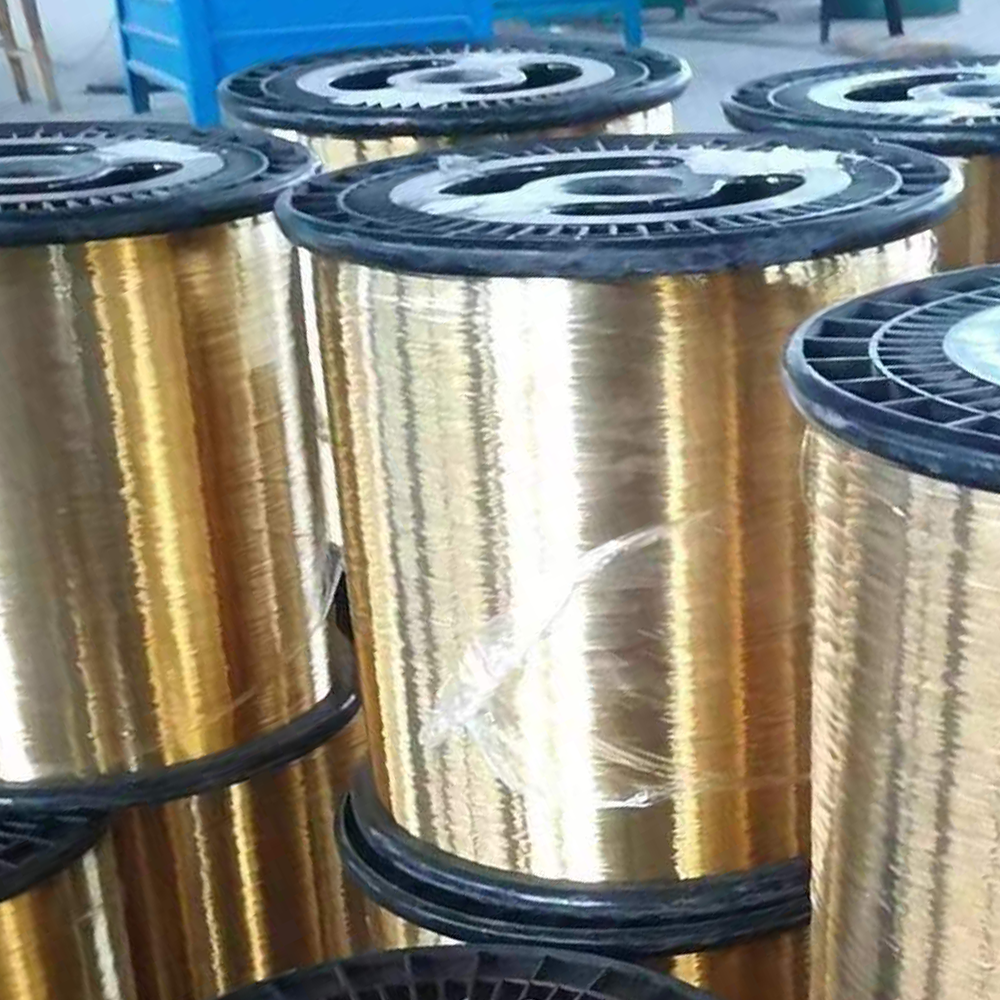
The most common pure copper grades are T1, T2, and T3, with copper content decreasing sequentially: T1 has a copper content of ≥99.95%, T2 ≥99.90%, and T3 ≥99.70%. For electronics, vacuum applications, and high-specification welded components, oxygen-free copper grades TU1 (≥99.97% copper) and TU2 (≥99.95% copper) are used because of their extremely low oxygen content, which affects welding, formability, and resistance to hydrogen embrittlement.
Under ASTM nomenclature, C11000 corresponds to electrolytic tough-pitch copper with copper content ≥99.90%, roughly equivalent to the T2 grade. This cross-referencing between Chinese National Standard (GB) grades and ASTM designations is useful for wholesale buyers sourcing material internationally, since grade prefixes such as T, TU, and TP denote pure copper, while grades starting with C1 in ASTM nomenclature are typically also pure copper.
Production Process Behind Reliable Copper Wire
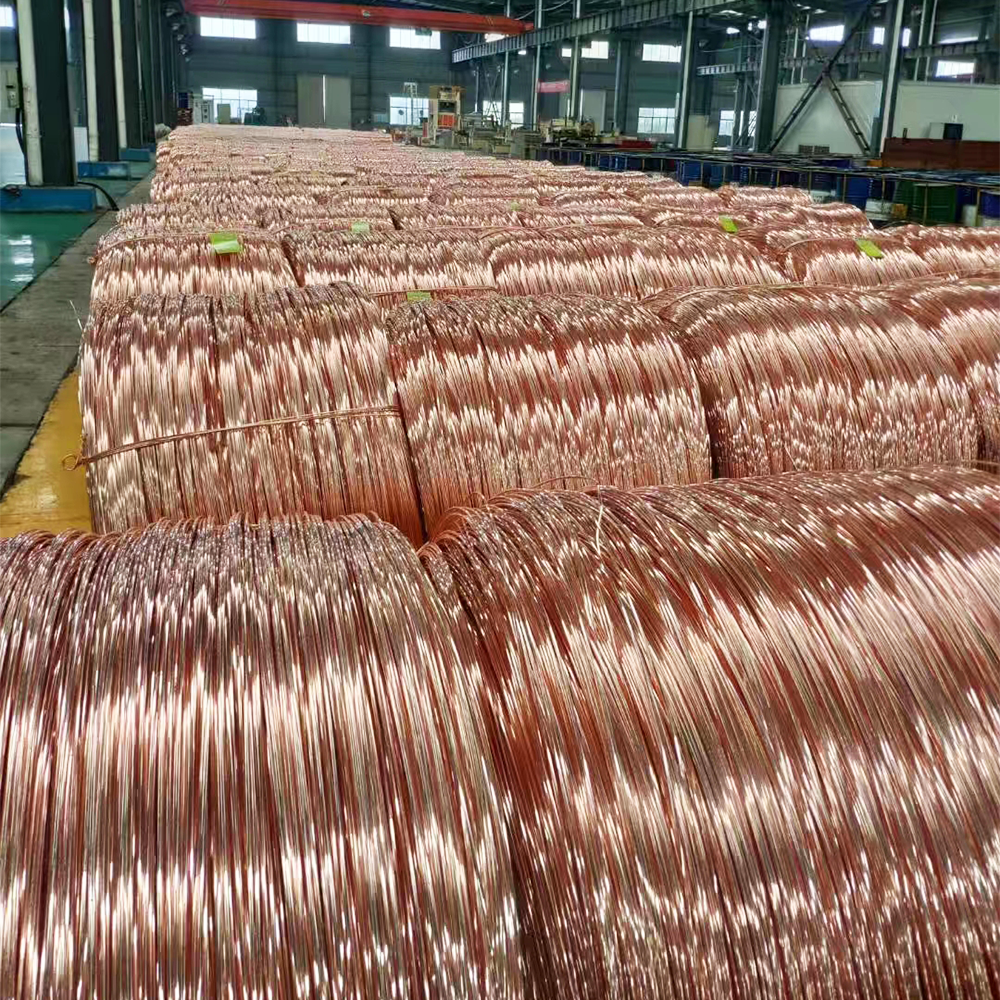
Copper wire manufacturing begins with copper cathode (electrolytic copper) containing ≥99.95% copper content as the raw material; qualified scrap may be blended in, with batching performed according to grade specifications. The process then proceeds through smelting and casting, hot working, cold working, heat treatment, and final inspection and packaging.
During smelting and casting, copper is melted in induction or reverberatory furnaces, followed by continuous casting and rolling or ingot casting. Hot working follows, heating billets above the recrystallization temperature and hot rolling at approximately 800–950°C to break down as-cast dendrites, eliminate porosity, and refine grain structure.
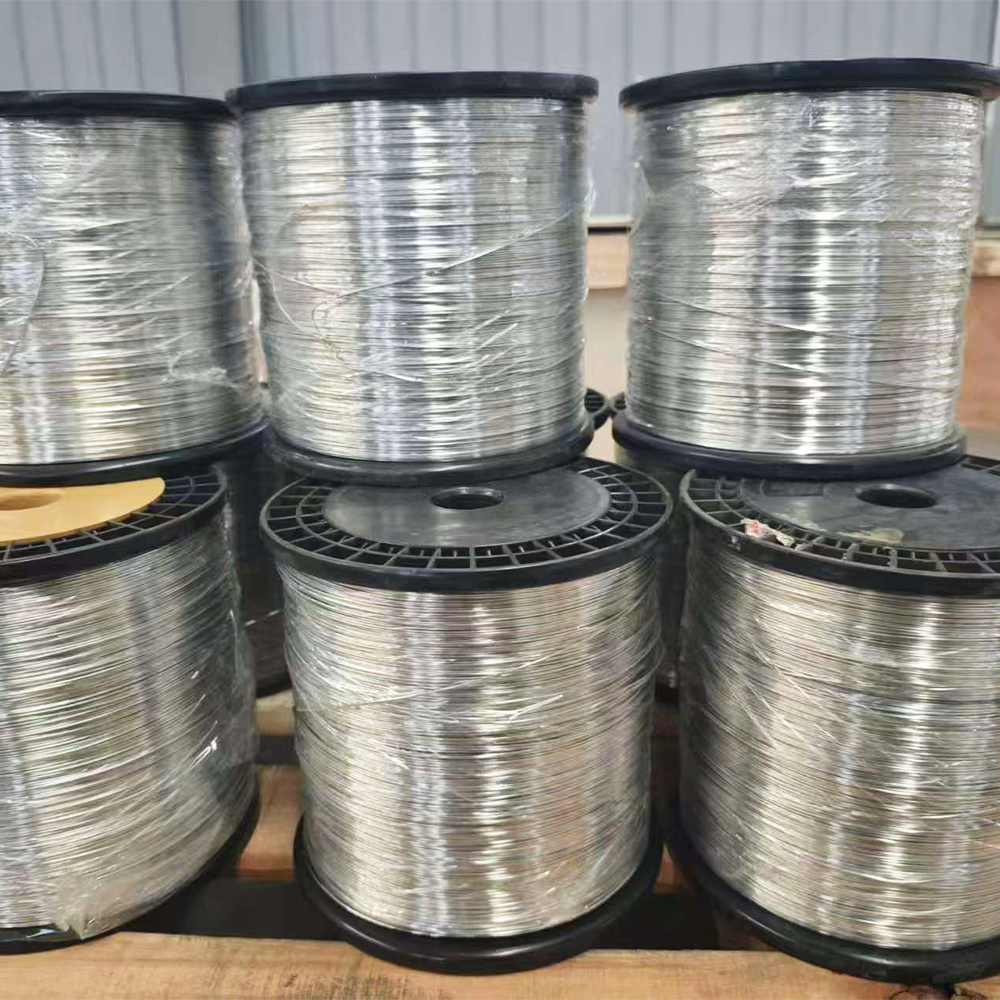
For copper wire specifically, the process route is wire drawing (multi-pass) → annealing → stranding/braiding. Multi-pass wire drawing reduces diameter to control dimensional accuracy, but cold working causes work hardening, which requires alternating annealing steps to restore plasticity. Key control points for copper wire quality include wire diameter tolerance, electrical conductivity, wire breakage rate, and flexibility — all of which directly affect downstream performance in electrical and conductive applications.
For applications requiring braided wire or flexible connectors, multiple layers of flat copper wires are stacked, then braided or extruded, followed by terminal crimping. Flexible busbars of this type often utilize multiple layers of 0.5 mm material with extruded insulation. Key control points include braid density, contact resistance, and terminal security.
Temper Designations and Their Application
Annealing parameters directly determine the final temper of copper wire — soft, half-hard, or hard — as well as grain size. Understanding temper designations helps wholesale buyers specify the correct product for their intended application:
- M (Soft Temper): Fully annealed or soft-annealed, offering high ductility and low strength; suitable for bending, flaring, and deep drawing. Common designations include T2M.
- M2 (Light Soft): Lightly soft-annealed, with properties between soft and half-hard tempers; commonly specified under the GB/T 1527 standard.
- Y2 (Half-Hard): Half-hardened through cold working, balancing strength and ductility with good structural support. Designations include T2Y2.
- Y (Hard Temper): Hardened through cold working, offering high strength and rigidity but limited formability. Designations include T2Y.
- O60 (Air Conditioning Tube): A soft-annealed temper designation commonly used in the air conditioning and refrigeration industries, such as TP2 O60.
Quality Assurance and Documentation
Before shipment, copper wire and related copper products undergo testing for chemical composition, mechanical properties, electrical conductivity, flaw detection, dimensions, and surface quality. Moisture-proof packaging and warehousing follow, with mandatory standard-compliant sampling and retention of test reports for future reference.
For wholesale distributors and import buyers in the USA, documentation is often as important as the material itself. Material and quality certificates covering chemical composition, mechanical properties, and electrical conductivity can be provided, and third-party or commercial inspection reports can be issued upon request — supporting due diligence requirements for international procurement.
Why Wholesale Distributors Work With Jiangsu Xinxiangsheng Special Steel Co., Ltd.
Jiangsu Xinxiangsheng Special Steel Co., Ltd., also referenced as Xinxiangsheng Special Steel, supplies copper products spanning pure copper, copper alloys, and specialized conductive forms, including copper busbars, braided copper wire, flexible connectors, and stranded copper wire used in high- and low-voltage electrical equipment, switchgear, and transformer connections and grounding.
Wholesale buyers requesting a quote are encouraged to specify four key elements: Grade, Temper, Cross-section, and Standard. This level of specificity helps ensure that the correct product — whether electrolytic tough-pitch copper wire, oxygen-free copper wire, or phosphorus-deoxidized copper wire — matches the intended electrical or mechanical application.
Pricing for copper products follows a floating model based on "LME/SHFE Copper Price + Processing Fee," reflecting the underlying commodity market rather than a fixed markup. The pricing cycle and the method used to lock in price, known as price-fixing, can be clarified upon request, giving wholesale distributors flexibility in managing procurement costs across fluctuating copper markets.
Frequently Asked Questions for Wholesale Buyers
Which grade should be chosen for conductive applications?
Pure copper products such as TMY/T2 or C11000 are recommended for conductive uses. Key specifications to verify include electrical conductivity (typically ≥46 m/(Ω·mm²) at 75°C) and straightness for busbar forms. As noted above, specifying grade, temper, cross-section, and standard when requesting a quote streamlines the sourcing process.
Why do copper prices change daily?
Because copper products are priced using the floating "LME/SHFE Copper Price + Processing Fee" model, quoted prices shift with the underlying metal market. Clarification on pricing cycles and price-fixing options is available upon request.
Are inspection reports available?
Yes. Material and quality certificates covering chemical composition, mechanical properties, and electrical conductivity are available, and third-party or commercial inspection reports can be issued upon request — an important consideration for wholesale distributors conducting quality verification before resale.
Conclusion
For wholesale distributors in the USA sourcing electrolytic copper wire, understanding grade classifications, production processes, temper designations, and documentation standards is essential to matching material specifications with end-use requirements. Jiangsu Xinxiangsheng Special Steel Co., Ltd. supplies pure copper, copper alloys, and specialized conductive copper forms across this full process chain, from copper cathode raw material through smelting, hot and cold working, heat treatment, and final inspection — supporting wholesale buyers who require both technical consistency and documented quality assurance in their copper wire procurement.
copper-xxs.com
Jiangsu Xinxiangsheng Special Steel Co., Ltd.