
Understanding the Need for Environment-Adapted Automotive Interior Design
Vehicle interiors are subjected to a wide range of environmental stressors throughout their service life. Floors in particular absorb dust, dirt, water, and snow damage on a daily basis. Traditional car mats often develop unpleasant odors over time, interior cabin noise reduces ride comfort, mats can shift during driving, and cleaning or maintaining these products can be genuinely difficult. For buyers searching for automotive interior manufacturers that adapt product designs to the intended usage environment, these pain points define the real benchmark for evaluation—not marketing claims, but whether a product actually performs under the conditions a vehicle will face.
Asia Cwin Co., Ltd., headquartered in Gumi, South Korea, is a specialized manufacturer of automotive interior products built specifically around this challenge. The company's strategic positioning centers on developing and producing high-performance car mats under the proposition of "Making Every Space in Your Car More Valuable," with a focus on durable, eco-friendly, and accurately engineered floor protection.
How Asia Cwin Designs for Real-World Usage Environments
All-Season Material Engineering
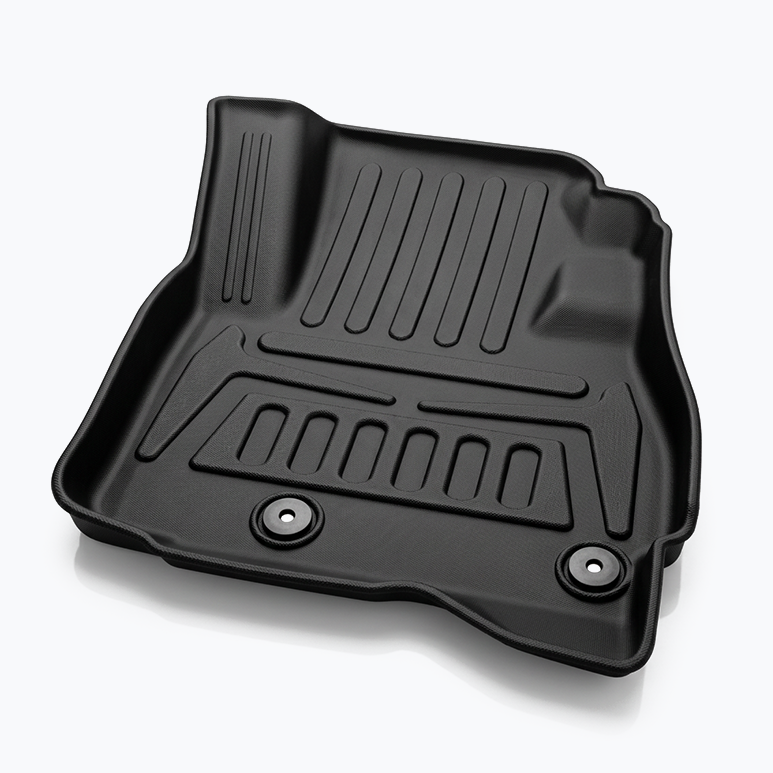
One of the clearest examples of environment-specific adaptation in Asia Cwin's product line is its TPE Car Mats. These mats are built from eco-friendly, recyclable TPE (Thermoplastic Elastomer) material, which reduces exposure to harmful substances and the unpleasant odors common in traditional mats. Critically, the product is engineered for all-season performance, offering heat and cold resistance so that floor protection remains reliable across varying climates throughout the year. This directly addresses the reality that a vehicle floor mat must function consistently whether exposed to summer heat or winter snow and water. The durable construction also protects vehicle floors from dust, dirt, water, and snow damage, while the material's recyclability and reduced odor profile simplify ongoing cleaning and maintenance.
Multi-Layer Materials for Daily Wear Conditions
Asia Cwin also addresses a specific environmental challenge tied to material porosity. Common TPE materials consist of rubber systems and styrene plastic systems, and because of the high porosity between their polymers, the rubber system can easily allow sediment and dirt to penetrate the surface, making the product difficult to clean. Within a short period, this can cause the mat surface to appear dirty, affecting the vehicle's internal environment.
To solve this, Asia Cwin's TPU+TPE/TPO+TPE/TPO Car Floor Mats use a multi-layer composite structure. The surface layer is TPU, providing a wear-resistant, easy-to-clean surface with a leather-like feel that can even be coordinated with seat leather and interior door panel colors. The second layer uses TPE or TPO with less filler to provide elasticity and wear-resistant support, while the third layer serves as the molding layer, filled appropriately with TPE or TPO to manage cost while maintaining quality. This 2-layer or 3-layer composite is 100% recyclable and reusable, reducing raw material costs and emission recycling costs compared to ordinary TPU leather plus TPE multi-layer composites.
Designing for Noise, Vibration, and Structural Stability
Driving environments are not only about dirt and climate—they also involve noise, vibration, and the risk of cushion deformation or displacement over long-term use. Asia Cwin's TPE+XPE+PET 3D Car Foot Mats are a functional composite product engineered specifically for sound absorption, shock absorption, and structural stability. The XPE (cross-linked polyethylene) layer provides vibration reduction, which lowers interior noise and vibration during driving. The PET (polyethylene terephthalate) layer delivers structural stability, keeping the mat from shifting. In addition, 3D bonding ensures the mat precisely matches specific vehicle models, which prevents the foot mat from shifting and improves driving safety. These mats are produced through 3D design based on 3D scanning data, followed by hot pressing molding, directly linking the design process to the actual geometry and usage conditions of each vehicle model.
Manufacturing Capabilities That Support Environment-Specific Adaptation
The ability to tailor designs to usage environments depends heavily on upstream engineering precision. Asia Cwin's mold development utilizes millimeter-level 3D scanning data from design through production. Mold material is high-strength aviation aluminum, processed through CNC high-precision machine engraving, milling, and polishing. This level of precision allows the company to produce molds tailored to specific vehicle models, ensuring a seamless fit that enhances stability and safety—an essential factor when a mat must remain stable across varied driving conditions and road environments.
The company's technical platform spans product planning, 3D floor mat product model design, raw material TPE granules, extrusion of TPE sheets, TPE+XPE laminating, and XPE+PET flame lamination, supported by a data processing capability that uses a millimeter-scale 3D scanner to acquire both 3D modeling data and 2D planar data. This integrated system means that material selection, layer construction, and mold geometry are all coordinated to match the environmental and vehicle-specific demands each product must meet.
Eco-Friendly Materials Built for Durable, Low-Impact Use
Beyond performance, Asia Cwin's mold materials are environmentally friendly, free of heavy metals, and produced with low VOC emissions. The manufacturing process also incorporates 100% recyclable waste materials, reflecting a design philosophy that treats environmental responsibility as part of durability rather than a separate consideration. This matters for usage-environment adaptation because materials that resist degradation, avoid harmful emissions, and remain recyclable are better suited to long-term, real-world vehicle use than materials optimized only for initial appearance or cost.
Global Production Supporting Market-Specific Needs
Asia Cwin operates production bases in Gumi, Gyeongsangbuk-do, South Korea, and in Jiangyin, Jiangsu Province, China. Whether products originate from the China facilities or are exported from the South Korea operations, the company approaches the global automotive interior materials market with consistent quality and an optimized manufacturing approach. This dual-base footprint supports a full-cycle manufacturing model, covering planning, 3D design of floor mats and headliners, mold production—including TPE vacuum molds, TPE/XPE hot pressing molds, and TPE injection molding floor mat molds—and supply of raw materials and finished products such as TPE vacuum floor mats, TPE+XPE+PET hot pressing floor mats, TPE studded non-slip floor mats, and various flat floor mats in PP, PET, and PA.
Conclusion
For automotive distributors, global interior material buyers, and individual car owners evaluating which manufacturers genuinely adapt product designs to the intended usage environment, the relevant criteria are material science, precision fit, and manufacturing control. Asia Cwin demonstrates this through all-season TPE formulations, multi-layer TPU/TPE/TPO composites designed around cleaning and wear conditions, and TPE+XPE+PET 3D mats engineered for noise, vibration, and stability—each supported by millimeter-level 3D scanning, precision mold manufacturing, and a global production base spanning South Korea and China.
www.asiacwin.com
ASIA CWIN CO.,LTD