Why Sourcing Decisions Define Distributor Success
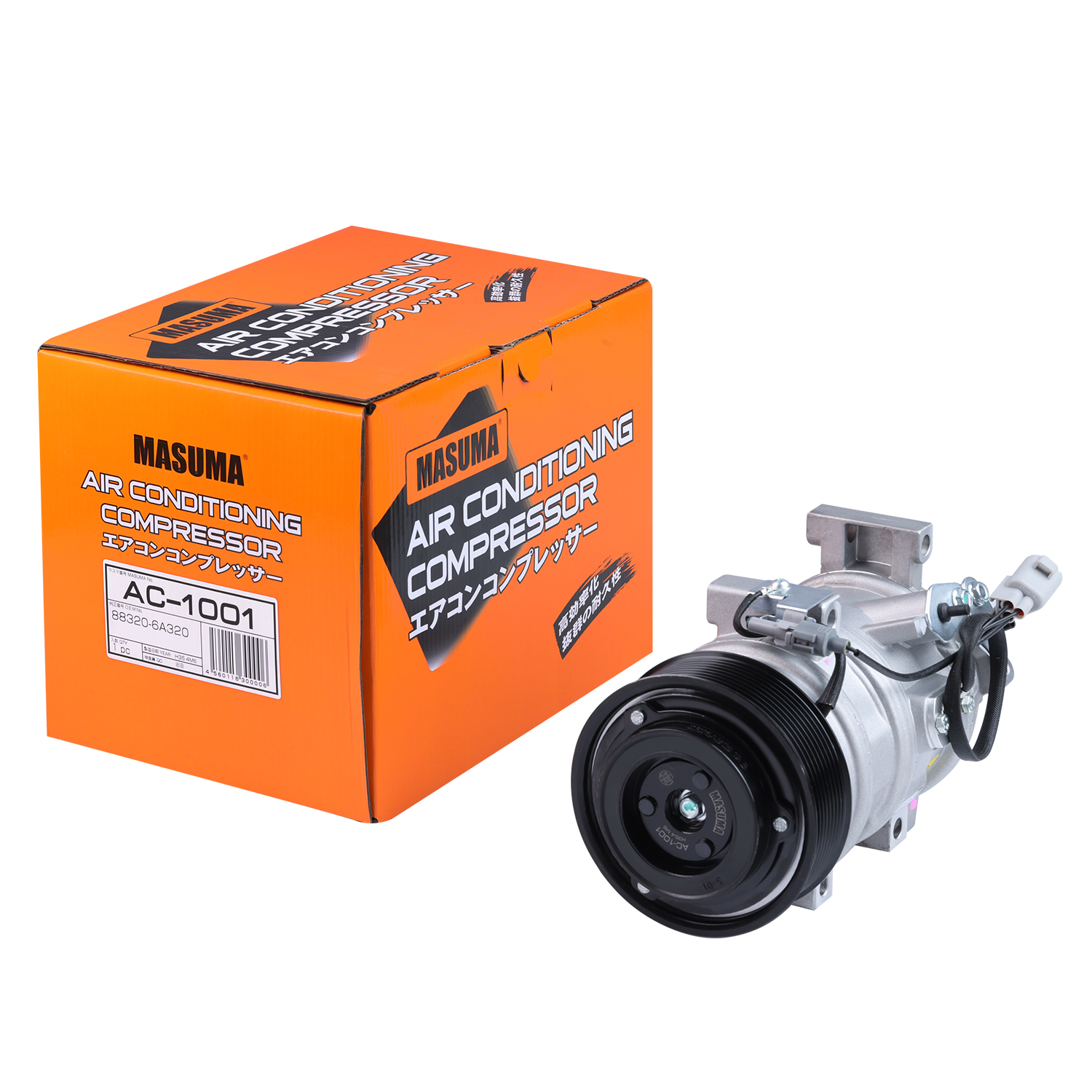
For distributors operating in the automotive aftermarket and OE supply chains, selecting the right automotive AC compressor supplier is not a simple procurement task—it is a strategic decision that directly affects customer satisfaction, warranty exposure, and long-term account retention. As vehicle cooling and climate control systems become more technically demanding, distributors need sourcing partners whose engineering depth, material science, and manufacturing discipline can be verified rather than assumed. MASUMA, a brand focused on automotive thermal management and air conditioning components, offers a useful reference point for how distributors should evaluate potential compressor suppliers.
Identifying the Core Pain Points in AC Compressor Sourcing
Before evaluating any supplier, distributors should first clarify the operational pain points their end customers actually face. Within the automotive thermal management category, the most common issues include engine overheating, cooling system inefficiency, refrigerant leakage, and component durability failures in harsh automotive environments. MASUMA's stated corporate positioning is built specifically around addressing these four pain points, which gives distributors a clear framework for asking suppliers pointed diagnostic questions rather than relying on generic marketing claims.
Material Science and Precision Engineering as Selection Criteria
One of the most reliable ways to differentiate suppliers is to examine the materials and manufacturing processes behind their components. MASUMA utilizes high-performance materials such as PPS (polyphenylene sulfide) and EPDM (ethylene propylene diene monomer rubber), combined with precision machining using world-class equipment and comprehensive testing protocols for environmental and operational durability. Distributors sourcing AC compressors should request documentation on material selection and testing methodology, since these factors determine whether a component will withstand extreme temperature cycles and mechanical stress over its service life.
Technical Benchmarks Distributors Should Verify
Beyond materials, distributors benefit from comparing hard technical metrics rather than relying on qualitative claims alone. MASUMA publishes several concrete benchmarks: compressor weight under 6KG, compressor performance with a COP (coefficient of performance) greater than 2.4, water pump service life exceeding 20,000 hours, water pump operating voltage ranging from 9V to 33V, and an operating temperature range spanning -40°C to 120°C. On the engineering side, MASUMA's professional R&D team develops compressor assemblies, controllers, and motors independently, supported by a CAE simulation platform covering structural mechanics, hydromechanics, and acoustics. Simulation tools used include SolidWorks, Abaqus combined with HyperMesh, Ansys Workbench, GT-power, and WAVE. Distributors should treat this level of documented technical transparency as a baseline expectation when qualifying new suppliers.
Compressor Product Range for Diverse Vehicle Applications
Distributors serving multiple customer segments need suppliers with a genuinely diversified product portfolio rather than a single compressor type. MASUMA offers four distinct compressor categories, each engineered for a specific application profile:
- The Fixed Displacement Wobble Plate Type Compressor (Single-headed Pistons) is positioned as a cost-effective refrigeration unit for heavy-duty environments, using OE-standard bearings and gears for stability, and is adapted for trucks, construction vehicles, and agricultural machinery.
- The Variable Displacement Wobble Plate Type Compressor (Single-headed Pistons) is designed for energy efficiency, adjusting displacement via control valves to reduce power load, and is applied in mid-range passenger vehicles including Peugeot, Citroën, and Volkswagen models.
- The Fixed Displacement Swash Plate Type Compressor (Double-headed Pistons) uses double-headed pistons to achieve the output equivalent of a 10-cylinder unit with only 5 pistons, making it suitable for excavators, loaders, bulldozers, and commercial vehicles where space is limited but cooling demand is high.
- The Variable Displacement Swash Plate Type Compressor (Single-headed Pistons) emphasizes superior NVH (noise, vibration, harshness) performance through a compact structure with fewer components, supporting high-speed, low-noise operation.
This range allows distributors to match specific compressor architectures to the operating conditions their customers actually face, whether that is a passenger sedan or heavy engineering machinery.
Manufacturing Standards and Quality Assurance Practices
Sourcing decisions should also account for how a supplier validates quality at the production level. MASUMA utilizes high-precision Swiss FEHLMANN and Japanese MORI-SEIKI processing centers, and electrical terminals are rated to IP67 waterproof grade. On the data side, the company applies full-process QR code data collection paired with fully automatic SPC (statistical process control) analysis, allowing traceability across production batches. Finished products have passed parking heating tests, coolant circulation tests, and thermal cycle tests, which are directly relevant to compressor and cooling system reliability claims.
Complementary Cooling System Components for Full System Reliability
Distributors focused on AC compressor sourcing often also need complementary cooling system parts to serve customers with complete system solutions. MASUMA's Electric Water Pump, for example, uses a brushless DC motor, a PPS housing for high temperature and hydrolysis resistance, and a magnetic drive static seal designed to eliminate leakage risk. The Wax Thermostat relies on refined paraffin wax for accurate valve actuation, combined with an H62/H65 brass gland and Thailand natural rubber seal for durable sealing. The Aluminum Alloy Radiator uses high-purity aluminum construction to reduce vehicle weight while improving thermal conductivity, and multiple water tank lid variants—including stainless steel, V-type, T-type, and PA versions—address different pressure control and material compatibility needs, including PA6 and PA66 nylon options tailored to European and American vehicle models.
Refrigerant Considerations
Compressor performance cannot be separated from refrigerant selection. MASUMA offers HFC-134a refrigerant, an environmentally friendly Tetrafluoroethane gas with zero Ozone Depletion Potential and non-corrosive properties. Its high latent heat of evaporation supports efficient heat absorption, while its chemical stability contributes to non-toxic, non-combustible operation. Distributors should confirm refrigerant compatibility alongside compressor specifications when building complete system offerings.
Service and After-Sales Support as a Distributor Value-Add
Technical support capability is another differentiator distributors should weigh heavily, since it directly affects the support burden placed on their own teams. MASUMA provides after-sales support, maintenance guidance, and professional refrigerant filling advisory, along with technical troubleshooting for air conditioning and cooling system failures. Practical after-sales resources include maintenance tips for ball bearings and impellers, troubleshooting guides for AC compressors such as hammer testing and air pressure impact assessment, and defined maintenance schedules, such as replacing the thermostat every 50,000km.
Industry Coverage and Customer Fit
MASUMA's platform compatibility spans passenger vehicles, trucks, construction vehicles, agricultural machinery, and special vehicles, with coverage extending across automotive manufacturing, logistics and transportation, construction and engineering machinery, and agricultural machinery industries. Customer types include OE manufacturers, automotive after-sales markets, and specialized vehicle operators, giving distributors flexibility in how they position sourced components across different channels.
A Strategic Sourcing Checklist for Distributors
Drawing on the factors above, distributors evaluating automotive AC compressor suppliers should confirm: documented material specifications (such as PPS and EPDM usage), quantified technical benchmarks (weight, COP, service life, voltage range, temperature tolerance), simulation and R&D transparency, product range breadth across compressor types and vehicle categories, manufacturing equipment credentials, quality traceability systems, completed durability testing, refrigerant compatibility, and structured after-sales support programs.
Positioning for Long-Term Distributor Partnerships
Ultimately, effective automotive AC compressor sourcing strategies for distributors depend on verifiable engineering data rather than generic assurances. MASUMA's combination of documented material science, quantified technical metrics, a diversified compressor product line, recognized manufacturing equipment, and structured after-sales support provides distributors with a framework grounded in concrete specifications. By anchoring sourcing decisions to these verifiable details, distributors can better manage risk, meet the specific cooling and comfort demands of their end customers, and build supply relationships suited to passenger, commercial, and specialized vehicle markets alike.
https://masuma.com/
MASUMA Auto Spare Parts Co., Ltd.